
 PDF Download
 PubReader
 Export Citation
 Email the Author
 Share Facebook
 Share Twitter
 Cited by 0 Article
 Metrics (View:3,927)







INTRODUCTION
Walking is a fundamental human locomotor function characterized by alternating lower-limb movements that enable forward progression while maintaining stability and minimizing metabolic cost. Gait impairments are closely associated with reduced mobility and diminished quality of life. As a result, gait analysis plays an essential role in identifying pathological gait patterns, evaluating postural stability, and determining the effectiveness of clinical and rehabilitation interventions.1-4
A wide range of technologies has been used for quantitative gait assessment. Force plate systems and pressure mat platforms provide accurate measurements of ground reaction forces and plantar pressure distribution, but they require fixed laboratory installations and allow only short walkway assessments, which reduces ecological validity. Three-dimensional motion capture systems, including both marker-based and markerless approaches, are considered the reference standard for kinematic analysis. However, they involve substantial equipment costs, lengthy preparation, controlled testing environments, and the need for trained personnel. Video-based gait analysis offers improved accessibility but reduced quantitative precision, while foot pressure measurement systems primarily evaluate plantar loading without capturing integrated kinematic–kinetic characteristics.5-9
Recent advances in wearable sensor technology, particularly inertial measurement units (IMUs), have enabled portable and ecologically valid gait assessment in clinical and community settings10-12. IMU-based systems allow the acquisition of spatiotemporal gait parameters in unrestricted environments, yet accuracy can be influenced by sensor placement.13-15 Multi-sensor configurations may enhance precision but introduce additional challenges related to calibration, synchronization, and post-processing.16,17 Although commercial platforms such as Xsens include internal motion compensation, interpretation of raw time-series data often requires advanced signal-processing expertise, which remains a practical barrier to broader clinical adoption.18,19
The StepLab system used in this study employs two foot-mounted IMU sensors positioned on the cuneiform region and performs Bluetooth-based data acquisition with automated filtering and calibration.20 This measurement setup is designed to simplify gait assessment procedures and reduce the technical workload associated with complex multi-sensor systems. In addition, StepLab provides real-time visual feedback and enables the generation of spatiotemporal gait parameters without the need for advanced post-processing. Its portability and minimal equipment requirements facilitate repeated assessments in various environments and support practical clinical applicability. However, despite these advantages, the test–retest reliability of spatiotemporal gait parameters obtained using StepLab has not yet been established. Therefore, the purpose of this study was to examine the test–retest reliability of gait parameters measured with the StepLab IMU-based system in healthy adults under standardized conditions. It was hypothesized that the StepLab system would demonstrate good to excellent reliability across repeated gait assessments performed under identical measurement conditions.
METHODS
This study included 40 healthy adults in their 20s (20 males and 20 females). The participants had a mean age of 21.7±3.44 years, a mean body weight of 67.53±17.61 kg, and a mean BMI of 23±4.26 kg/m2. The mean shoe size was 272.72±11.67 mm for males and 236.5±8.53 mm for females, with all values reported as mean±standard deviation. Inclusion criteria were the ability to walk for 20 minutes without pain or discomfort, absence of neurological problems, no history of ankle joint weakness occurring at least twice, and no prior episodes of ankle joint instability.21 The minimum required sample size was calculated using G*Power software 3.1.6 (Franz Faul, University of Kiel, Germany), which indicated a minimum of 13 participants (effect size=0.50, α=0.05, power=0.80). To increase the accuracy of the estimates and account for potential attrition, 40 participants were recruited, consistent with the number approved by the Institutional Review Board (IRB). No participants withdrew or were lost to follow-up; therefore, all 40 participants were included in the final analyses. All participants were informed of the study objectives and procedures, provided written informed consent, and voluntarily agreed to participate. Ethical approval for this study was granted by the Institutional Review Board.
The StepLab system used in this study is based on the Xsens-DOT wearable inertial sensor platform (Movella Inc., Henderson, NV, USA) (Figure 1. A). Two IMU sensors were used in this study, with one sensor secured to the dorsum of each foot. Each sensor measured 3×3.5×1 cm and enabled real-time acquisition of 3D linear acceleration, angular velocity, and magnetic field signals. An internal Kalman filter and Zero Velocity Update (ZUPT) processing are applied to correct drift and enhance signal accuracy, and the integrated Heltec algorithms generate spatiotemporal gait parameters.
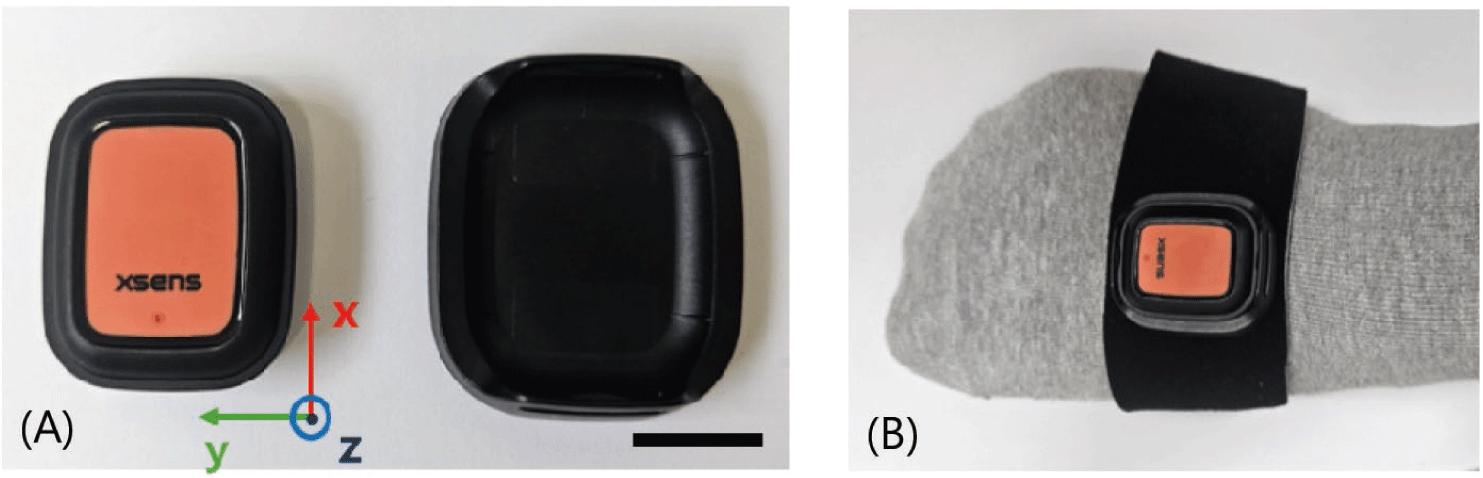
Data were collected through three walking trials and transmitted to the StepLab application (HELTEC Co., Ltd., Tokyo, Japan) for analysis. Results were exported in raw CSV and PDF formats. The StepLab system is compatible with iOS 13 or later and requires an iPad or iPhone with Bluetooth 4.2 or higher (Bluetooth 5.0 recommended) and Wi-Fi internet connectivity. The application provides automated calculation of spatiotemporal gait variables including walking speed, swing and stance ratio, gait cycle time, cadence, stride length, and step length. The sensor was attached on the dorsum of the foot at the medial cuneiform level, corresponding to a point approximately 6-8 cm proximal to the anterior edge of the shoe.13,22 The sensors were secured using Velcro straps specifically designed for sensor attachment while participants wore socks (Figure 1. B). Following sensor placement, housing stability was manually checked by lateral and vertical manipulation to ensure relative displacement was ≤ 1–2 mm.
Prior to the gait assessment, participant-specific anthropometric data, including height, weight, shoe size, and the distance from the tip of the foot to the distal end of the sensor, were entered into the StepLab application and linked to the IMU devices. These data were used by the built-in scaling algorithm to normalize stride-related spatial parameters (stride length and step length) according to each participant’s foot size. After paring the sensors with Steplab, each participant stood still at the starting line for a 3-second calibration period. The calibration was performed only once prior to the first of the three walking trials. When the calibration was completed and the inspector announced “start,” the participant began walking at a comfortable, self-selected pace. As soon as the participant crossed the endpoint with both feet, the inspector pressed the stop button in the application to terminate the measurement. Each participant performed three 10-meter walking trials, with a 1-minute rest interval between trials, and the average of the three trials was used for data analysis. During the 10-meter walk test, each trial was visually inspected for sensor attachment issues, communication interruptions, and irregular signal patterns. Trials affected by technical errors or gait disturbances were excluded and repeated following a rest interval. No additional outlier removal was required because all retained trials satisfied predefined signal quality criteria.
To evaluate test-retest reliability, the same participants were re-assessed by the same examiner one week later, using identical procedures. Variables such as flooring surface, lighting, temperature, and noise levels were controlled and kept constant across test-retest sessions. A one-week interval between assessments was intentionally selected to minimize potential learning or familiarization effects associated with repeated measurements, while reducing physiological or functional changes that may occur over longer testing intervals. Based on these methodological considerations and previous reliability studies that adopted week-to-week retest intervals, the retest session in the present study was conducted one week after the initial measurement.23,24
To enhance methodological transparency, the spatiotemporal gait parameters measured by the StepLab system are defined as follows. StepLab automatically calculates gait variables based on IMU-derived acceleration, angular velocity, and magnetic orientation data. Gait speed (m/s) was defined as the total distance divided by the time elapsed between gait initiation and termination. Swing duration (%) was calculated as the proportion of the gait cycle during which the foot was not in contact with the ground, determined using IMU-detected toe-off and heel-strike events. Stance duration (%) was defined as the portion of the gait cycle during which the foot remained in contact with the ground, measured between heel strike and toe off. Cycle time (s) represented the temporal interval between two consecutive heel-strike events of the same foot. Cadence (steps/min) was calculated as the total number of steps taken divided by walking time, multiplied by 60 to convert to steps per minute. Stride length (cm) was computed using StepLab’s algorithm integrating linear acceleration with anthropometric scaling parameters (height and shoe size), representing the distance between successive heel strikes of the same foot. Step length (cm) was defined as the distance between heel strikes of opposite feet and derived from IMU-based kinematic integration and anthropometric scaling. All parameters were automatically generated by the StepLab software without additional external processing.
Statistical analyses were conducted using SPSS version 29.0 for Windows (IBM Corp., Armonk, NY, USA). To determine the test–retest reliability of the gait parameters, intraclass correlation coefficients (ICC 3,2) were calculated. The ICC values range from 0 to 1, with values closer to 1 indicating greater measurement consistency and higher examiner reliability. Previous studies have classified ICC values<0.5 as indicating poor reliability, values between 0.50–0.75 as moderate reliability, values between 0.75–0.90 as good reliability, and values>0.90 as excellent reliability.25
Each participant completed three 10-meter walking trials during both the initial test and the retest session conducted one week later, and the mean value of the three trials from each session was used for the reliability analysis. Test–retest reliability was quantified using ICC (3,2), a two-way mixed-effects model assuming absolute agreement and based on the average of repeated measurements, which appropriately reflects the reliability of averaged values across multiple trials rather than a single observation. In addition to ICC, Bland–Altman analysis was conducted to determine the level of agreement between the two testing sessions and to identify any systematic bias. The standard error of measurement (SEM) was calculated to evaluate absolute reliability and measurement precision.
RESULTS
Descriptive statistics and test–retest reliability outcomes for the spatiotemporal gait parameters are presented in Table 1. Speed demonstrated excellent reliability with an ICC of 0.94 and a SEM of 0.03 m/s, with a mean difference of 0.00 m/s and limits of agreement ranging from –0.11 to 0.11 m/s. Swing (%) showed the highest reliability among all variables (ICC=0.99), with a SEM of 0.92 and mean difference of –0.03, and limits of agreement from –3.65 to 3.60. Stance (%) also demonstrated high reliability (ICC= 0.89, SEM=0.59), with a mean difference of 0.04 and limits of agreement between –2.18 and 2.27.
Mean±standard deviation of gait variables measured during the pre- and post-test sessions. ICC,intraclass correlation coefficient (two-way mixed-effects model, absolute agreement, average measures). SEM, standard error of measurement; Diff, post–pre difference; LOA, limits of agreement (mean difference±1.96×SD of the difference). All values are rounded to two decimal places.
Cycle time exhibited good reliability (ICC=0.84, SEM=0.02), with a mean difference of -0.01 and limits of agreement from -0.09 to 0.08. Cadence presented an ICC of 0.86 and SEM of 1.24, with a mean difference of 0.19 and limits of agreement between –4.41 and 4.79 steps/min. Stride length showed excellent reliability (ICC=0.93, SEM=3.14), with a mean difference of –0.12 and limits of agreement ranging from –12.15 to 11.92 cm. Step length also demonstrated excellent reliability (ICC=0.94, SEM= 1.42), with a mean difference of –0.32 and limits of agreement ranging from –5.75 to 5.11 cm.
DISCUSSION
The spatiotemporal characteristics of human gait provide essential information regarding neuromuscular control and locomotor function.26 In the present study, the StepLab IMU-based gait assessment system demonstrated good to excellent test–retest reliability across all measured spatiotemporal gait parameters, with ICC values ranging from 0.84 to 0.99. The small standard error of measurement (SEM) values and minimal mean differences confirmed through Bland–Altman analyses support the stability and consistency of repeated measurements, indicating that the system is capable of producing reproducible gait data over short retest intervals.
Among the measured parameters, swing and step length demonstrated the highest reliability (ICC=0.99 and 0.94, respectively), whereas cycle time and stance showed comparatively lower but still acceptable reliability (ICC= 0.84 and 0.89). These findings are consistent with previous IMU-based gait studies reporting greater reliability for temporal parameters compared with spatial measures.27-30 The reliability range obtained in this study is comparable to or slightly higher than values reported for established gait analysis systems, including GAITRite (ICC=0.90–0.98) and OptoGait (ICC=0.785–0.952).24,31 While GAITRite is widely used for clinical gait evaluation due to its analytical accuracy, its lack of portability, high installation and maintenance cost, and restricted walkway length limit its applicability beyond laboratory settings.33,34 Similarly, OptoGait provides precise optical sensor-based measurements but is generally confined to controlled indoor environments.32 In contrast, the StepLab system utilizes only two foot-mounted sensors, allowing rapid deployment in various settings with minimal spatial or technical requirements and enabling repeated assessments without specialized equipment or operator expertise.22,32 Other wearable IMU systems, such as MoveSole, have demonstrated excellent reliability (ICC>0.99), although these systems focus primarily on plantar pressure analysis rather than comprehensive spatiotemporal gait evaluation.35
Several methodological factors may have contributed to the high reliability observed in this study. First, the placement of IMU sensors on the cuneiform region of the foot has been reported to enhance measurement stability and reduce motion artifacts by minimizing soft-tissue movement relative to underlying bony structures.13,22 Appropriate sensor positioning is critical for accurate IMU-based gait assessment, and stable attachment likely reduced interference and improved signal consistency across repeated measurements. Second, the StepLab system incorporates automated filtering and calibration algorithms designed to correct sensor drift and remove high-frequency noise during data acquisition, reducing variability associated with manual signal processing and improving measurement precision. In addition, the homogeneous sample of healthy young adults used in the present study may have contributed to lower inter-individual gait variability, as this population typically demonstrates stable and symmetrical gait patterns. Finally, the one-week retest interval may have minimized learning effects and physiological changes while avoiding fatigue- or training-related adaptation, supporting consistent performance across testing sessions.23,24
Despite these strengths, several limitations should be acknowledged. First, this study did not include comparison with a gold-standard optical motion capture system, limiting the ability to determine concurrent validity. Future research incorporating direct comparison with laboratory-grade systems is needed to establish measurement accuracy and confirm criterion validity. Second, the study sample consisted exclusively of healthy young adults, restricting generalizability to older adults or clinical populations whose gait variability may differ substantially. Subsequent studies should evaluate reliability in populations with neurological or musculoskeletal impairments. Third, gait assessment was conducted on a 10-meter walkway at a self-selected walking speed, and reliability should be examined over longer distances, variable speed conditions, or outdoor environments to enhance ecological applicability. Finally, sensors were attached only to the dorsum of the foot, and alternative attachment locations or multi-sensor configurations were not evaluated. Investigating optimal sensor placement strategies may support improved measurement robustness.
CONCLUSIONS
This study demonstrated good to excellent test–retest reliability of spatiotemporal gait parameters measured using the StepLab IMU-based system in healthy young adults. The consistency of repeated measurements, supported by intraclass correlation coefficients, standard error of measurement values, and Bland–Altman analyses, indicates that StepLab can provide stable and reproducible gait data under controlled assessment conditions. Given its portability, minimal setup requirements, and feasibility for repeated testing, the system may serve as a practical tool for gait assessment in clinical and research environments. Future studies including diverse populations and direct comparisons with reference laboratory-grade gait analysis systems are warranted to establish validity and broaden clinical applicability.


