
 PDF Download
 PubReader
 Export Citation
 Email the Author
 Share Facebook
 Share Twitter
 Cited by 0 Article
 Metrics (View:2,941)







INTRODUCTION
Abnormal head and neck posture is a significant risk factor for cervical spine dysfunction, with forward head posture being the most prevalent finding among individuals with headache and neck disorders.1,2 In forward head posture, the head and cervical spine are displaced anterior to the body’s gravity line, altering the curvature of the upper and lower cervical as well as thoracic regions.3 This maladaptive alignment disrupts normal muscle function around the head and cervical spine, increases compressive loading on the cervical segments, and modifies normal movement patterns.4 Consequently, neuromuscular control is impaired, predisposing individuals to neck pain and dysfunction.5 To address these issues, studies investigating the distinct biomechanical alterations of the upper and lower cervical spine are essential for developing strategies to correct posture and restore optimal spinal function.
In addition to abnormal posture, reduced cervical range of motion (ROM) is a commonly observed characteristic in patients with neck pain.6 Accordingly, exercise programs targeting improvements in cervical ROM are widely recommended in clinical practice.7 Although various approaches have been used to measure cervical ROM, most studies model the cervical spine as a single functional unit, typically quantifying only the angle between the head and the trunk.8-10 However, the cervical spine is anatomically and functionally divided into two regions: the upper and the lower cervical spine.11 The upper cervical spine is often implicated in cervicogenic headache, whereas the lower cervical spine is more frequently associated with nonspecific neck pain.12,13 Importantly, the biomechanics of these regions differ substantially, yet conventional ROM assessments rarely distinguish between them. Objective methods that can separately evaluate upper and lower cervical movements are therefore critical for accurately characterizing dysfunction and guiding targeted treatment strategies. Such differentiation may provide deeper insight into the pathomechanics of neck pain and enhance the precision of intervention planning.
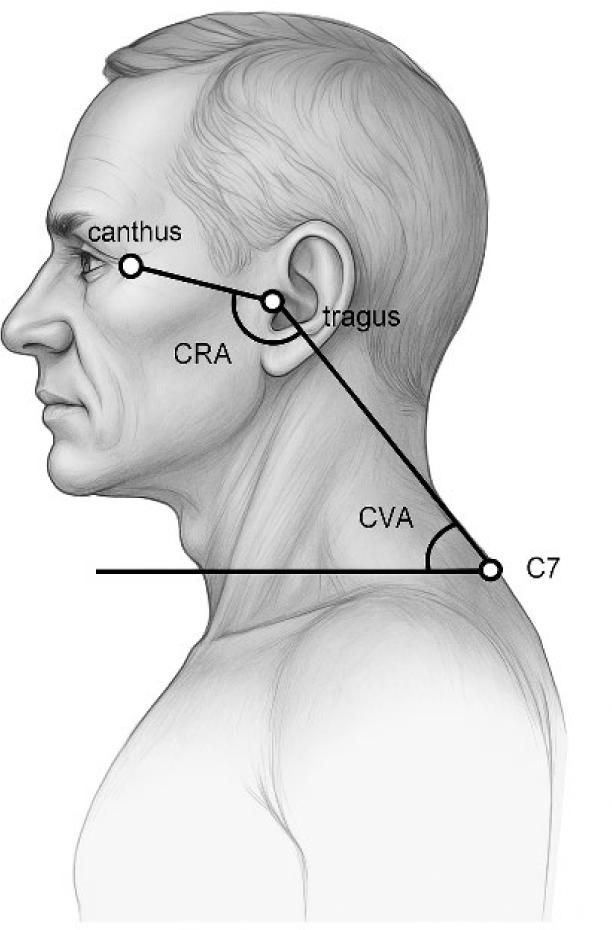
The cranial vertical angle (CVA) and cranial rotation angle (CRA) are widely used photographic indices of head and neck alignment. Both can be derived from lateral-view photographs and demonstrate high measurement reproducibility.14-16 Theoretically, these measures reflect sagittal alignment of different cervical regions: the CVA corresponds primarily to the mid-to-lower cervical spine, whereas the CRA reflects alignment of the upper cervical spine.17 Specifically, the CVA is defined as the angle formed between a line from C7 to the tragus of the ear and a horizontal reference line, representing flexion alignment of the mid-to-lower cervical spine. By contrast, the CRA is defined as the angle formed by a line from the tragus to the lateral canthus of the eye relative to the mid-lower cervical slope, representing extension alignment of the upper cervical spine.17 While both measures have been used extensively to assess static posture, little is known about how CRA and CVA change dynamically during sagittal plane motion.
One of the advantages of CRA and CVA is their accessibility. With only a camera and adequate space, clinicians may be able to assess upper and lower cervical motion separately. To investigate this potential, the present study employed the Cervical Range of Motion (CROM) device, a validated clinical tool, to examine the relationship between sagittal plane cervical ROM and dynamic changes in CRA and CVA.18-20 We hypothesized that total cervical ROM would be significantly correlated with changes in both CRA and CVA. Findings from this study may provide foundational evidence supporting the use of simple photographic methods to differentiate upper and lower cervical movements in clinical practice, thereby contributing to more precise assessment and management strategies for patients with neck pain.
METHODS
Eighteen healthy individuals without neck pain participated in this study (Table 1).21 Recruitment was conducted via poster advertisements, and all procedures were explained in detail prior to participation. Written informed consent was obtained from each participant. The inclusion criterion was the absence of neck pain within the past three months. Exclusion criteria included: history of trauma or spinal fracture; inflammatory arthritis (e.g., ankylosing spondylitis); ossification of the posterior longitudinal ligament; scoliosis; congenital spinal deformity; excessive thoracic kyphosis; neurological impairment related to the spine; rheumatoid arthritis; prior spinal surgery; or pain symptoms in the neck or shoulder region. All participants provided written informed consent, and this study protocol was approved by the Joongbu University Institutional Review Board (No: JIRB-2025081101-01).
| Gender (male/female) | Age (years) | Body mass (kg) | Height (cm) |
|---|---|---|---|
| 14/4 | 21.39 (1.50) | 65.0 (8.33) | 171.78 (7.34) |
After providing informed consent, participants were given a detailed explanation of the experimental procedures. To measure cervical ROM, participants stood while a CROM device (Performance Attainment Associates, 3550 LaBore Rd, Suite 8, St. Paul, MN, USA) was secured to the head. The device was fixed with Velcro straps, centered over the bridge of the nose and the ears. To measure changes in CRA and CVA during sagittal plane neck movements, 8-mm diameter markers were placed on the spinous process of C7. The C7 level was identified using the flexion-extension palpation technique.22 Briefly, with the participant seated and the neck flexed, the examiner palpated the two most prominent cervical spinous processes using the index and middle fingers. The participant was then asked to perform accessory neck extension movements. If the upper spinous process moved anteriorly while the lower one remained stationary, the stationary process was designated as C7. If all palpable spinous processes remained stationary, the upper process was considered C7. This palpation procedure was repeated while progressively extending the neck to confirm the level of C7.
Lateral-view images were obtained using a smartphone. The smartphone was positioned 3 m from the participant at lateral eye level, ensuring that the lateral canthus was centered in the frame. Participants were seated on a 40-cm high chair with the trunk and head upright, arms relaxed, and hands resting beside the body.23 To standardize image acquisition, the same smartphone and settings were used throughout the study, with the lens kept parallel to the participant and perpendicular to the floor.24 In this study, participants were instructed to maintain a neutral sitting posture during measurement, and the examiner stabilized the T1 vertebra to restrict trunk movement, limiting compensatory trunk movements during active neck flexion and extension. The order of movement testing (flexion or extension) was randomized by having each participant draw a card indicating the initial motion. Cervical flexion and extension ROM was recorded in real time using the CROM device.
Following data collection, photographic images were analyzed to determine changes in CRA and CVA. Angles were calculated as the difference between the resting and ending postures for each direction of motion. The resting position was set to 0 degrees of cervical flexion-extension using the CROM device. The CVA was defined as the angle formed between a line drawn from C7 to the tragus of the ear and a horizontal reference line. The CRA was defined as the angle between a line connecting the tragus of the ear to the lateral canthus of the eye and a line from C7 to the tragus (Figure 1).14-16 The angle measurements were performed using ImageJ software (National Institutes of Health, Bethesda, MD, USA). Each measurement was repeated three times per motion direction by the same examiner, and mean values were used for analysis.
Descriptive analyses were performed for all variables, with results presented as means and standard deviations (SD). The Shapiro–Wilk test was used to evaluate the normality of the data. Pearson’s correlation analyses were conducted to assess the relationships between sagittal plane cervical ROM and dynamic changes in CRA and CVA. Statistical significance was set at p<0.05.
RESULTS
Table 2 presents the mean (SD) values of cervical ROM and changes in the CRA and CVA during flexion and extension. As shown in Table 3, cervical ROM exhibited strong positive correlations with CVA (r=0.86, p<0.01) and CRA+CVA (r=0.96, p<0.01) during flexion, while CRA showed no significant correlation with CVA. During extension, cervical ROM was significantly correlated with CRA (r=0.54, p<0.05), CVA (r=0.71, p<0.05), and CRA+CVA (r=0.85, p<0.01). Importantly, the combined angular change (CRA+CVA) showed the highest correlation with CROM in both flexion and extension.
DISCUSSION
In the present study, cervical ROM was compared with previously reported normative data. Several studies and systematic reviews have described active cervical ROM in healthy individuals and proposed reference values. 25-28 While normative values for cervical flexion and extension ROM in adults in their twenties, measured using a CROM device, were reported as 58.4° and 76.8°,28-31 respectively, the corresponding values in the present study were lower (48.2° and 68.4°). This discrepancy may be attributed to differences in participant characteristics, measurement posture, or experimental protocols. Specifically, in this study, the examiner stabilized the T1 vertebra to restrict trunk movement, minimizing compensatory thoracic motion, which likely resulted in smaller measured cervical ROM values.
This cross-sectional study examined correlations between sagittal plane cervical ROM, measured using a CROM device, and changes in CRA and CVA obtained from photographic analysis. Cervical flexion ROM showed strong positive correlations with changes in CVA (r=0.86) and with the combined angle (CRA+CVA; r=0.96), whereas CRA alone did not significantly correlate with CVA. Cervical extension ROM was significantly correlated with changes in CRA (r=0.54), CVA (r=0.71), and CRA+CVA (r=0.85). Notably, the combined angular change (CRA+CVA) exhibited the highest correlation with cervical ROM in both flexion and extension, suggesting that the sum of cranial and cervical angular displacements provides the most accurate representation of overall cervical mobility. The CVA reflects the flexion alignment of the mid-to-lower cervical spine, whereas CRA represents the extension alignment of the upper cervical spine. Although both measures are widely used to assess static posture, little is known about how CRA and CVA change during sagittal plane motion. While the individual changes in CRA and CVA cannot be directly interpreted as the ROM of the upper and lower cervical spine, respectively, the present findings demonstrate that the sum of CRA and CVA changes closely approximates total cervical ROM measured by a CROM device, representing the combined motion of the upper and lower cervical spines. This indicates that evaluating CRA and CVA together provides a more comprehensive reflection of cervical sagittal mobility than assessing either angle individually. Future studies are needed to explore methods for separately estimating upper and lower cervical ROM based on changes in CRA and CVA.
Several researchers have investigated upper and lower cervical ROM in the sagittal plane separately. Inoue et al.32 analyzed radiographic data from 600 asymptomatic participants to examine age-related changes and the relationship between upper and lower cervical ROM. They reported that, in individuals in their twenties, the mean normative values of upper and lower cervical flexion ROM were 5.1° and 28.8°, respectively (total flexion ROM= 33.9°), while the corresponding extension ROM values were 18.4° and 40.3° (total extension ROM=58.7°). Rodríguez-Sanz et al.29 found that in individuals with chronic neck pain, the mean upper and lower cervical flexion ROM were 11.6° and 51.2°, respectively (total flexion ROM=62.8°), and the corresponding extension ROM were 25.0° and 57.1° (total extension ROM=82.1°), as measured using a smartphone-based system. Rudolfsson et al.34 using an electromagnetic tracking system, reported mean upper and lower cervical flexion ROM of 33.9° and 21.1°, respectively (total flexion ROM=55.0°), and mean extension ROM of 50.9° and 5.4°, respectively (total extension ROM=56.3°). The discrepancies among these studies may be attributed to differences in measurement methods, devices used, participant characteristics, and definitions of the end ROM. Moreover, variations in head and trunk stabilization during measurement could also have influenced the recorded values. Based on these findings, this study hypothesized that the change in CRA would be correlated with upper cervical ROM, and the change in CVA would be correlated with lower cervical ROM. In this study, the mean change values of CRA and CVA during flexion were 16.8° and 32.9°, respectively (CRA+CVA=49.7°), and the corresponding values during extension were 34.9° and 32.1°, respectively (CRA+CVA=67.0°). However, given the considerable variability in the segmental contributions to cervical motion reported across previous studies, direct comparisons between CRA and upper cervical ROM or between CVA and lower cervical ROM were not feasible.
Despite these methodological limitations in comparing segmental ROM directly, the correlation analysis in this study (Table 3) provided additional insights into the kinematic relationships among variables. Cervical flexion ROM showed strong positive correlations with changes in CVA (r=0.86, p<0.01) and with the combined value of CRA+CVA (r=0.96, p<0.01), indicating that overall cervical mobility was more strongly associated with movements involving the lower cervical region. In contrast, the correlation between cervical flexion and CRA alone was moderate (r=0.31), suggesting that changes in head inclination contributed less to total motion than movements in the lower segments. These findings support the notion that lower cervical motion plays a dominant role in total sagittal plane movement during flexion. Cervical extension ROM demonstrated positive correlations with change in CRA (r=0.54, p<0.05), CVA (r=0.71, p<0.01) and CRA+CVA (r=0.85, p<0.01). Notably, the correlation with CRA during extension was stronger than that observed during flexion, indicating greater involvement of upper cervical motion during extension than flexion. Taken together, the findings emphasize the segmental specificity of cervical motion across flexion and extension phases and highlight the need to differentiate upper and lower cervical contributions in postural and kinematic assessments.
This study has several limitations. First, the study population consisted exclusively of healthy adults, so it remains uncertain whether these findings can be generalized to individuals with neck pain or other clinical conditions. Future research should include participants with cervical spine disorders to examine whether similar patterns are observed. Second, the sample size was relatively small, which may limit statistical power and the ability to detect subtle relationships. Larger-scale studies are therefore needed to confirm and generalize these findings. Finally, changes in CRA and CVA measured in this study cannot be directly interpreted as the exact ranges of motion of the upper and lower cervical spine, respectively. Further research is needed to develop methods that allow separate estimation of upper and lower cervical ROM based on CRA and CVA changes.
CONCLUSION
Evaluating CRA and CVA together provides a more comprehensive reflection of cervical sagittal mobility than assessing either angle individually. In addition, these results suggest that lower cervical motion contributes more prominently to total sagittal plane movement during flexion, whereas upper cervical motion plays a more dominant role during extension than during flexion. This highlights the segmental specificity of cervical motion and emphasizes the importance of separately assessing upper and lower cervical contributions when evaluating posture and kinematics.


