
 PDF Download
 PubReader
 Export Citation
 Email the Author
 Share Facebook
 Share Twitter
 Cited by 0 Article
 Metrics (View:2,346)







INTRODUCTION
Logistics service workers (LSWs) represent a substantial occupational population facing significant physical demands, including prolonged standing, repetitive movements, and extensive load-bearing activities. Previous research has indicated LSWs covered approximately 8 kilometers during each work period while handling diverse package loads in demanding environmental settings.1,2 The cumulative physical stress associated with these occupational demands contributes to a high prevalence of work-related musculoskeletal disorders, with ankle sprains ranking as the second most common injury among LSWs.3,4 These occupational injury patterns highlight the importance of understanding foot and ankle biomechanics in this vulnerable population.
Foot posture has been identified as a critical biomechanical factor influencing lower extremity function and injury risk. The medial longitudinal foot arch serves as supporting the foot’s shock-absorbing mechanism and plays a crucial role in force transmission during weight-bearing activities.5 Variations in arch height, classified as pronated, normal, or supinated foot types, have been associated with distinct biomechanical characteristics that may affect occupational performance and injury susceptibility.6 The navicular drop test has emerged as a reliable and valid method for assessing foot posture, with established criteria distinguishing foot types.7,8
The heel rise task represents a fundamental functional evaluation tool for examining coordinated foot-ankle system performance during load-bearing activities. This task requires coordinated movement of multiple foot segments and adequate strength of the plantar flexor muscles, making it particularly relevant for assessing functional capacity in occupational settings.9 Recent investigations have demonstrated that foot and ankle kinematics during heel rise can reveal important insights into musculoskeletal function and movement dysfunction.10,11 Furthermore, research has shown that individuals with different foot pathologies exhibit altered heel rise performance, suggesting the clinical utility of this assessment.12
Rearfoot kinematics during the heel rise task provide valuable information about hindfoot function and overall foot-ankle coordination. The movement patterns of the calcaneus in both sagittal and frontal planes reflect the complex interplay between passive structural support and active muscular control.13 Previous studies have documented that rearfoot movement during heel rise differs between individuals with various foot conditions and healthy controls, indicating the sensitivity of this measure to detect functional impairments.14 The rearfoot stance position angle (RSPA) and rearfoot movement during heel rise have been proposed as potential indicators of chronic ankle instability and foot dysfunction.14
Despite the established relationship between foot posture and functional performance, limited research has specifically examined rearfoot kinematics during heel rise in occupational populations. While recent evidence has demonstrated differences in dynamic balance performance among LSWs with varying foot postures,15 the kinematic characteristics of heel rise performance across pronated, normal, and supinated foot types remain unexplored in this high-risk occupational population. This knowledge gap is particularly significant given the high physical demands placed on LSWs and the potential implications for injury prevention and occupational health interventions.
Therefore, the purpose of this study was to compare rearfoot kinematics during the heel rise task among LSWs with pronated, normal, and supinated foot postures. Understanding foot type-specific movement patterns in this occupational population is essential for developing evidence-based screening protocols and targeted interventions. Based on the biomechanical properties of different foot types, we hypothesized that pronated feet, characterized by greater structural flexibility and reduced passive stability, would demonstrate larger rearfoot excursions during heel rise compared to normal and supinated feet.
METHODS
From an initial pool of 289 LSWs, we recruited 236 participants through screening procedures conducted at a corporate health facility during the period from August 2021 to March 2022. The screening assessments were conducted as part of industrial accident prevention initiatives. The study was reviewed by the Institutional Review Board (IRB) at Yonsei University Mirae campus (IRB no. 1041849-202301-BM-016-01), and informed consent was waived due to the retrospective nature of this secondary data analysis of previously collected occupational health screening data.
We categorized participants into three foot-type according to navicular displacement values: supinated foot (n=48), normal (n=111), and pronated foot (n=77). Demographic characteristics including work duration, age, height, weight, and body mass index (BMI) were recorded for all participants. Participants met the following inclusion requirements: (1) age exceeding 18 years, (2) capability to execute heel rise movements, and (3) employment duration in logistics exceeding six months. The exclusion criteria included: (1) history of lower extremity surgery within the past 3 months, (2) previous ankle surgery involving intra-articular fixation, (3) diagnosed ankle osteoarthritis, (4) acute musculoskeletal injury or pain in the lower extremities within the before 3 months, (5) history of vestibular disorders or balance impairments, and (6) any neurological conditions affecting lower extremity function.
The navicular drop test was conducted following standardized procedures to assess medial longitudinal arch mobility and classify foot type. For standardization, both limbs were measured for all participants. Each participant adopted a seated position with both feet positioned flat against the floor surface and knee joints maintained at 90-degree flexion.7,8 We located and marked the most prominent aspect of the navicular tuberosity using a pen while ensuring subtalar joint neutrality. To establish the subtalar neutral position, the foot was gently manipulated through eversion and inversion until the talus could be palpated equally on both medial and lateral aspects of the anterior foot.16 Once this position was achieved, the height of the navicular tuberosity from the floor was measured using a rigid ruler held perpendicular to the ground. This measurement was recorded as the neutral position height.
Participants were then instructed to stand in a relaxed bilateral stance position with feet shoulder-width apart and equal weight distribution. The new height of the marked navicular tuberosity was measured in this weight-bearing position.17 Navicular drop values were determined by calculating the differential between seated and weight-bearing measurements. Three measurements were taken for each foot, and the average value was used for analysis. Based on established criteria, participants were classified into three groups: supinated foot (navicular drop<0.6 cm), normal foot (navicular drop 0.6-0.9 cm), and pronated foot (navicular drop>1 cm).18-20 The measurement protocol has demonstrated high intra-rater reliability (ICC=0.91) and inter-rater reliability (ICC=0.87) in previous validation studies.7
We utilized dual smartphone devices (Galaxy S20; Samsung Inc., Seoul, Korea) equipped with high-definition video recording capabilities (4K resolution, 3,840×2,160 pixels, 60 fps) mounted on tripods. Camera positioning included posterior placement 150 cm from the step platform and lateral positioning, with both cameras elevated to 60 cm height. The video data were transferred to Kinovea® software (version 0.8.15; Kinovea, Bordeaux, France) for analysis. The Kinovea software employs automated tracking markers to detect and track movement, with the tracking process initiated when a marker is positioned by the user, enabling the detection of the coordinate system and commencement of analytical procedures.14 To establish the reliability of our kinematic measurement protocol, we conducted intra-rater reliability analysis using a subset of 82 participants. Intra-rater reliability for rearfoot movement measurements demonstrated excellent agreement with an intraclass correlation coefficient (ICC3,1) of 0.864 (95% confidence interval: 0.798-0.910).
Participants lay in a prone position on a bed horizontally aligned to the floor with their feet over the edge of the bed. The examiner drew a bisection line on the participants’ calcaneus, disregarding any adipose tissue, based on two dots marked on the upper and lower parts of the calcaneus.21 Additionally, round stickers (15 mm diameter) were attached to the two dots, fibular head, lateral malleolus, and base of the fifth metatarsal head when participants stood barefoot on the ground to facilitate video tracking (Figure 1).14
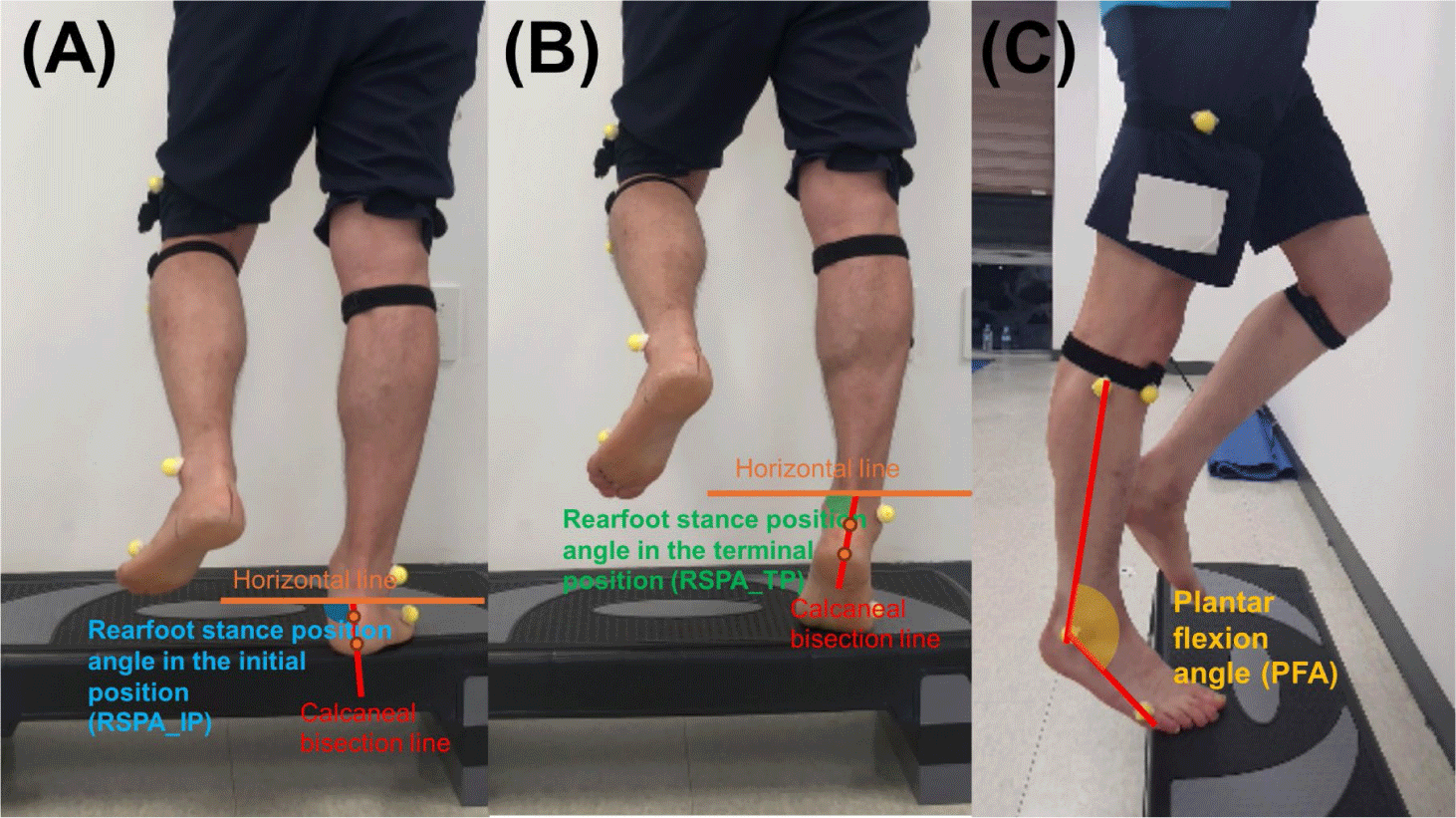
Participants were instructed to stand on a step box with their metatarsophalangeal joint and rearfoot positioned over the edge of the step box. The initial position was defined as the position in which the lateral side of the participant’s foot was parallel to the ground and the participant’s fibula was perpendicular to the ground (Figure 1). The terminal position was defined as the position of maximum peak heel height during the heel rise.14
For rearfoot kinematics, the RSPA was defined as the angle between the bisection line of the calcaneus and the horizontal line to the ground.21 The RSPA was analyzed at both the initial position (RSPA_IP) and terminal position (RSPA_TP) during heel rise (Figure 1). If the RSPA was less than 90 degrees, the calcaneus was considered inverted, whereas if the RSPA was greater than 90 degrees, the calcaneus was considered everted. Rearfoot movement during heel rise (RMHR) was calculated as the difference between the RSPA at the terminal position and the RSPA at the initial position (RMHR=RSPA_IP - RSPA_TP). Positive RMHR values indicated rearfoot inversion movement, while negative values indicated rearfoot eversion movement, consistent with the movement directions observed during the heel rise task.14 In addition, The plantar flexion angle (PFA) was determined by measuring the angle between the line connecting the fibular head to the lateral malleolus and the line from the base of the fifth metatarsal head, assessed in the terminal stance phase during a heel rise.
Participants executed single-limb heel elevation exercises, ascending the heel to maximum height while maintaining comfortable movement velocity within a 5-15 second timeframe. Participants completed three repetitions to minimize discomfort and maximize peak heel height. The non-tested leg was flexed to 90 degrees at the knee, with the foot positioned behind the stance leg. Participants were allowed to place two fingertips per hand at shoulder height against a support structure for balance. They were instructed to raise their heel as high as possible and then lower it back to the initial position with each repetition.14
The target limb for participants in each group was determined based on foot type classification. For participants with pronated or supinated feet, the more affected side was assessed. When bilateral involvement was present, the side with the more pronounced navicular drop (for pronated feet) or the lesser navicular drop (for supinated feet) was selected for analysis. For participants in the normal foot group, the dominant limb was used for assessment.
All kinematic data, including RSPA_IP, RSPA_TP, and RMHR, were analyzed using Kinovea® software. The average of the values from the three heel rise trials was calculated and used for statistical analysis. The reliability of two-dimensional video analysis for measuring foot and ankle kinematics has been established in previous studies, with standard error of measurement less than 2.0 degrees for all variables.10
Statistical analyses were executed utilizing PASW Statistics software (version 18.0; IBM Co.), with alpha levels established at 0.05. The Kolmogorov-Smirnov test was used to confirm the normal distribution of all variables. First, demographic characteristics (age, work duration, height, weight, and BMI) and navicular drop measurements were compared among the three groups (supinated, normal, and pronated foot) using one-way analysis of variance (ANOVA) to identify potential confounding variables. Variables showing significant differences among groups (p<0.05) were identified as covariates for subsequent analyses.
To compare rearfoot kinematics (RSPA_IP, RSPA_TP, RMHR and PFA) among the three foot type groups, we employed ANCOVA procedures, incorporating relevant demographic factors as covariates. When ANCOVA indicated significant differences, post-hoc analyses were conducted using Bonferroni correction to account for multiple comparisons. The significance level was adjusted to p<0.017 (0.05/3) to maintain the family-wise error rate for all pairwise comparisons between the three foot type groups. Effect sizes (partial eta squared, ηp2) were calculated to determine the magnitude of group differences, with values of 0.01, 0.06, and 0.14 representing small, medium, and large effect sizes, respectively.22
RESULTS
A total of 236 participants were included in the final analysis, with 48 participants classified as having supinated feet, 111 as having normal feet, and 77 as having pronated feet. The demographic and baseline characteristics of participants across the three foot type groups are presented in Table 1.
Significant age differences were observed among the three groups, with the normal foot group being older than both supinated and pronated foot groups. No significant differences were found among foot types for anthropometric measures or work duration. Navicular drop measurements confirmed appropriate group classification based on established foot type criteria (Table 1). Due to the significant age differences among groups, age was included as a covariate in all subsequent analyses of rearfoot kinematics.
The results of ANCOVA with age as a covariate for rearfoot kinematic variables are presented in Table 2. Significant differences among groups were observed only for RMHR, indicating a small to medium effect size. No significant differences were found among groups for rearfoot position at initial position, terminal position, or plantar flexion angle.
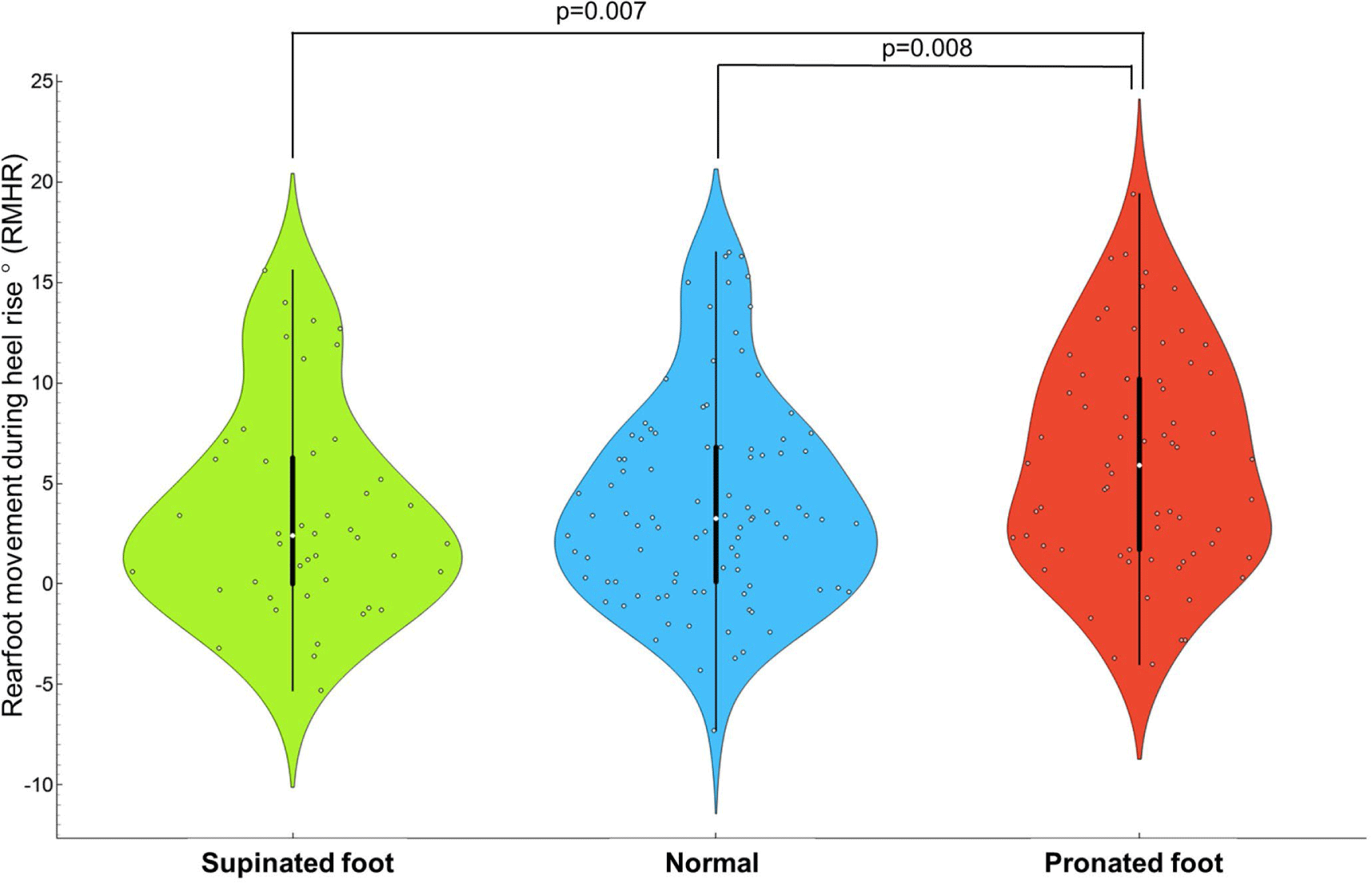
Post-hoc analysis revealed that the pronated foot group demonstrated significantly greater RMHR compared to both the supinated foot group (77% greater excursion) and the normal foot group (48% greater excursion) (Table 3, Figure 2). All groups showed rearfoot inversion movement during heel rise, but the pronated foot group exhibited significantly greater magnitude of this movement. No significant difference in RMHR was observed between the supinated and normal foot groups.
DISCUSSION
The current study is the first to systematically compare rearfoot kinematics during heel rise across all three foot type classifications in LSWs. The findings demonstrate that pronated feet exhibit significantly greater rearfoot movement compared to normal and supinated feet, even after controlling for age. Because foot posture has been suggested as a critical biomechanical factor influencing lower extremity function and injury risk, understanding foot type-specific movement patterns provides a foundation for targeted screening and intervention strategies.
Previous research examining heel rise kinematics has predominantly focused on populations with specific foot pathologies. Studies of participants with posterior tibial tendon dysfunction demonstrated altered forefoot movement during double-leg heel rise, with affected individuals achieving similar heel height as controls but exhibiting significant forefoot pronation at peak heel rise.10 Research examining single-leg heel rise in individuals with diabetes-related medial column foot deformity revealed reduced plantar flexion excursions, with 85% less foot plantar flexion and 65% less ankle plantar flexion compared to controls.13
The current findings extend these observations by demonstrating that variations in foot type influence rearfoot kinematics even in the absence of diagnosed foot pathology. All three groups exhibited rearfoot inversion during heel rise, consistent with expected biomechanical patterns of hindfoot supination.23 However, the pronated foot group demonstrated RMHR values of 6.37±5.76°, representing approximately 77% greater excursion than the supinated foot group (3.60±5.07°) and 48% greater excursion than the normal foot group (4.29±5.26°). These findings contrast with research on chronic ankle instability, which reported significant differences in both rearfoot position and movement.14 The present study’s finding of no significant differences in absolute rearfoot position among foot types, despite differences in movement magnitude, suggests that foot type primarily influences dynamic motion rather than static positioning, emphasizing the value of evaluating movement patterns rather than relying solely on postural measurements.
The significantly greater rearfoot movement observed in pronated foot can be attributed to several interconnected biomechanical factors. It is important to acknowledge that the observed mean differences of 2-3° in RMHR, while statistically significant, represent relatively small angular changes that may not constitute clinically meaningful differences for individual workers. However, several factors support the potential relevance of these findings: first, previous research has demonstrated that even small kinematic alterations (1-3°) in foot and ankle mechanics can accumulate over time in high-repetition occupational activities; second, the 77% relative increase in movement variability (rather than absolute degrees) may represent a more clinically relevant measure of movement dysfunction; and third, these kinematic differences may serve as early indicators of compensatory movement patterns before symptomatic presentation.
The medial longitudinal arch functions as both a passive structural support and an active system requiring muscular control during weight-bearing activities.24 In pronated foot, reduced arch height decreases inherent structural stability, necessitating greater muscular effort to control foot position during dynamic tasks.25 This biomechanical disadvantage may manifest as increased rearfoot excursion during heel rise as the foot attempts to achieve adequate rigidity for effective force transmission. Research examining intrinsic foot muscle function has revealed altered activation patterns in participants with pronated foot, particularly reduced activity of the abductor hallucis and flexor digitorum brevis muscles.26 These intrinsic muscles contribute to midfoot stability and arch support during weight-bearing activities. Decreased intrinsic muscle activity compromises the foot’s ability to resist deformation under load, potentially explaining the greater rearfoot movement observed during heel rise. Furthermore, the windlass mechanism, which normally provides passive stability through plantar fascia tensioning during heel rise, operates less effectively in pronated foot due to altered arch geometry.27 The combination of reduced intrinsic muscle support and compromised windlass function may necessitate greater compensatory rearfoot motion to achieve the foot rigidity required for heel rise performance.
The coupling relationship between hindfoot and forefoot motion provides additional insight into the observed differences. Biomechanical investigations have demonstrated that pronated foot posture alters joint axes and modifies coupling patterns between subtalar and midtarsal joints.28 In pronated feet, increased midfoot flexibility allows for greater compensatory motion at the hindfoot. During heel rise, as body weight shifts anteriorly and the heel elevates, individuals with pronated feet may require greater rearfoot inversion to compensate for midfoot instability and achieve adequate foot rigidity. This compensatory pattern likely accounts for the significantly larger RMHR values observed in the pronated foot group.
The restricted rearfoot movement in supinated feet reflects the biomechanical characteristics of high-arched foot structure. Research has established that supinated feet demonstrate enhanced passive stability due to elevated arch configuration and increased stiffness of plantar soft tissues.29 While this structural rigidity may effectively limit excessive motion, it simultaneously reduces the foot’s adaptability to varying surfaces and loading conditions. The finding that supinated feet exhibited the smallest rearfoot excursion during heel rise aligns with this biomechanical framework, suggesting that rigid arch structure constrains motion at the hindfoot during functional tasks. However, this movement restriction should not be interpreted as entirely beneficial, as previous research has associated supinated foot posture with increased risk for certain injury patterns, including stress fractures and lateral ankle sprains.30
Several limitations warrant consideration. The cross-sectional design precludes establishing causal relationships between foot type and rearfoot kinematics. Longitudinal studies examining how these patterns relate to injury development would provide valuable insights. Two-dimensional video analysis, while practical for occupational settings, captures only planar motion and may not fully represent three-dimensional hindfoot movement. Skin-mounted markers introduce potential soft tissue artifact. The study did not systematically assess factors such as lower extremity muscle strength, ankle range of motion, or daily activity levels, which may influence heel rise performance. Only unilateral heel rise on the dominant or affected limb was assessed, preventing examination of bilateral asymmetries. All measurements occurred in controlled laboratory conditions, which may not reflect movement patterns during actual work tasks under varying conditions of fatigue, footwear, and surface characteristics. Foot type classification based solely on navicular drop measurements represents a simplified categorization of foot structure. More comprehensive assessment incorporating multiple measures might provide nuanced understanding of structure-function relationships. The study population consisted exclusively of male LSWs, limiting generalizability to other populations and precluding examination of sex-related differences in foot type and movement patterns.
Future research should prioritize longitudinal prospective studies to establish whether the observed kinematic differences predict injury development in occupational populations, enabling the development of evidence-based risk stratification protocols. Additionally, intervention studies examining the effectiveness of foot type-specific strengthening and proprioceptive training programs could provide direct clinical applications for workplace injury prevention initiatives.
CONCLUSIONS
This study demonstrated that LSWs with pronated foot exhibit significantly greater rearfoot movement during heel rise compared to those with normal and supinated feet, even after controlling for age. The findings suggest that foot type influences dynamic rearfoot kinematics rather than static positioning, with pronated feet showing approximately 77% greater excursion than supinated feet. These results provide a foundation for developing foot type-specific screening protocols and targeted interventions to optimize occupational health outcomes in physically demanding work environments.


