
 PDF Download
 PubReader
 Export Citation
 Email the Author
 Share Facebook
 Share Twitter
 Cited by 0 Article
 Metrics (View:3,305)







INTRODUCTION
Low back pain (LBP) affects approximately 75%–84% of the global population, with 5%–10% experiencing severe pain that contributes to personal suffering, increased healthcare costs, and work absenteeism.1,2 During clinical movement tests, increased lumbopelvic motions, particularly early in trunk and limb movements, are associated with LBP. Compared with people without LBP, those with LBP demonstrate earlier and greater lumbopelvic rotations during hip lateral rotation.3 In patients with chronic LBP, the rotation–extension or rotation of the lumbar spine is a common cause of symptoms, and in > 50% of the patients, the cause is nonspecific.4 Thus, minimizing lumbopelvic motions during upper or lower limb movements could be an important component in the physical therapy of LBP.3 The performance of the abdominal muscles, particularly the external oblique (EO) and internal oblique (IO), is essential for preventing unnecessary lumbopelvic rotations by controlling rotational forces.5 Although the most effective intervention for LBP is not yet established, many studies have reported that lumbar stabilization exercises contribute to the improvement of functional mobility and reduction in impairments in patients with LBP.6
Lumbar stabilization exercises are recommended for patients with LBP to reduce pain and disability, improve quality of life, trunk muscle function, and lumbar segmental motion.7 The quadruped position is a low-load, non-anti-gravity posture that helps maintain neutral spinal alignment and postural balance with ease, and lower extremity exercises in this position are often used to enhance trunk muscle activity and stability.5,8 Stevens et al. reported that lifting a unilateral arm or leg in the quadruped position can more effectively activate trunk muscles.9
Previous studies on lumbar stabilization exercises in the quadruped position have primarily analyzed trunk muscle activities during movements, such as lifting one arm or one leg or lifting one arm and the contralateral leg, and suggested that adjusting the hip joint position in the sagittal plane can modulate the difficulty of exercises.5,9-11 Lee and Jo noted that in the quadruped position, increasing hip flexion > 90° in the sagittal plane shifts more weight toward the legs, facilitating the lifting of one arm. Conversely, when reducing hip flexion to <90°, more weight is shifted toward the arms, making it more challenging to lift one arm.11 However, no studies have compared the effect of varying hip joint positions in the frontal plane on trunk muscle activities during unilateral arm lifting or hip extension in the quadruped position. Modifications in the hip joint position in the frontal plane may alter the base of support and rotational moment during unilateral leg lift exercises in the quadruped position, potentially affecting trunk muscle activation. Thus, this study aimed to examine whether variations in contralateral hip abduction or adduction during unilateral leg lifting exercises in the quadruped position affect the electromyographic activity of the EO and IO and evaluate the potential application of these positional changes for adjusting the difficulty of spinal stabilization exercises. The hypothesis of this study was that the muscle activity of both the EO and IO would differ depending on contralateral hip abduction or adduction during unilateral leg lifting exercises in the quadruped position.
METHODS
This study included 25 healthy male participants. The necessary sample size was calculated a priori at a power of 0.80, effect size of 0.55, and alpha level of 0.05 by G*Power (version 3.1.9). As indicated, the necessary sample size was 21. The anthropometric details (mean ± standard deviation) of the participants were as follows: age, 23.64 ± 2.39 years; height, 1.74 ± 5.7 m; and weight, 70.56 ± 10.09 kg. This study included participants who did not present with any neuromuscular or musculoskeletal dysfunction affecting the lumbar spine or hip joint that could interfere with leg movements. Participants who had hip motion limitations were excluded.
The participants received detailed explanation of the experimental procedures. Each participant provided written informed consent on a form authorized by the Public Institutional Review Board (Certification no. P01-202503-01-052).
Electromyographic (EMG) data were collected using BTS FreeEMG100RT (BTS Bioengineering, Italy) and analyzed with EMG Analyzer software (BTS Bioengineering). A digital band-pass filter (Lancosh FIR) was used to eliminate movement artifacts (20–500 Hz), with the sampling rate at 1,000 Hz. The EMG signals were processed to calculate the root mean square using a moving 50-ms window. Electrodes were placed bilaterally on the EO (lateral to the rectus abdominis and directly above the anterior superior iliac spine, halfway between the crest and the ribs at a slightly oblique angle) and IO (1 cm medial to the anterior superior iliac spine, below a line connecting the left and right anterior superior iliac spines).12, 13 To reduce skin resistance, these electrode sites were shaved and cleaned with rubbing alcohol. For normalization, maximum voluntary isometric contraction (MVIC) was recorded for the gluteus maximus and erector spinae muscles. The MVIC measurement positions were based on the manual muscle testing guidelines outlined by Kendall.14 The examiner asked each participant to perform a 5-s MVIC three times in each position, with a 1-min rest period between the three trials to avoid muscle fatigue. The average EMG activity was expressed as a percentage of the MVIC value (%MVIC).
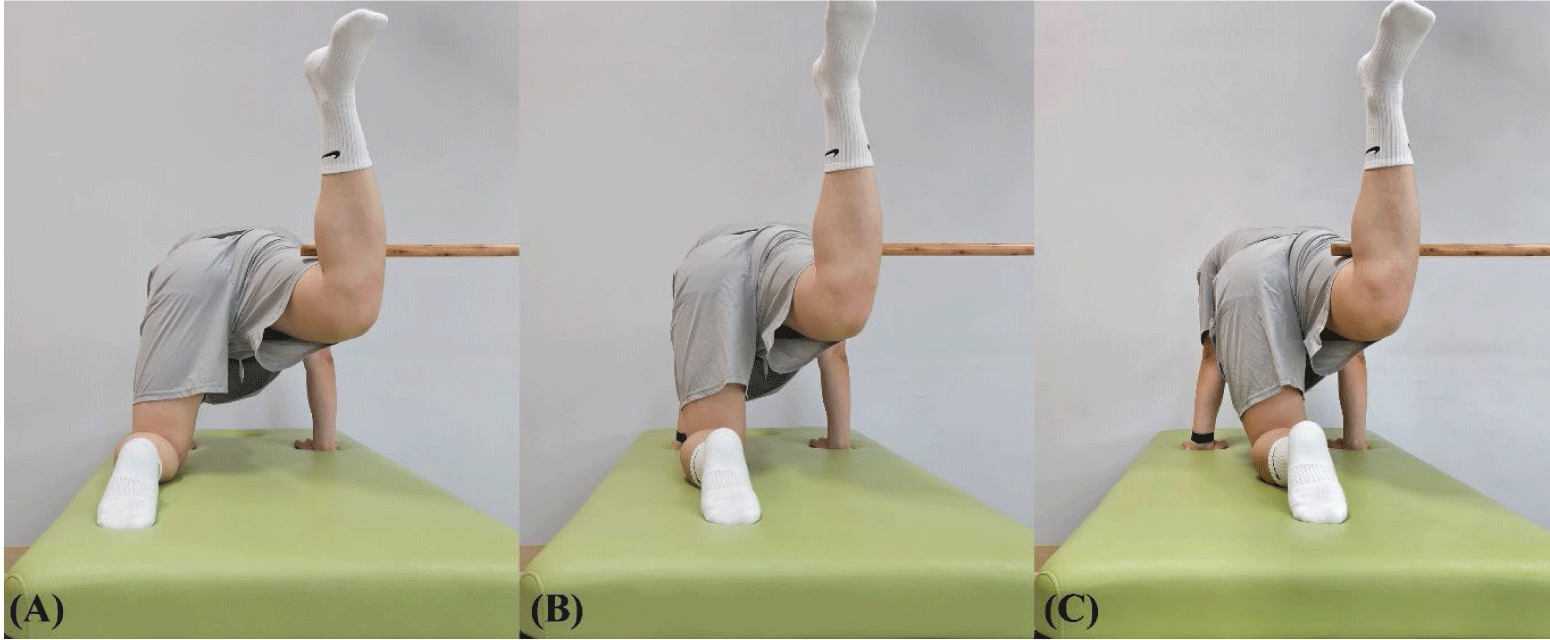
The participants were assisted into the quadruped position (both shoulder and hip joints flexed 90°). They were instructed to lift the dominant leg in the quadruped position until the hip joint reached 0°, aligning it parallel to the ground. A bar was installed at this position, and they were instructed to maintain contact between the leg and the bar for 5 s. Moreover, to control the pace of leg lifting movements, a metronome was used. During unilateral dominant leg lifting exercises in the quadruped position, the contralateral leg was positioned under three different conditions: (1) with 15° of hip abduction (HAB), (2) in a hip neutral position (HN), and (3) with 10° of hip adduction (HAD) (Figure 1). The reason for setting three different conditions is that each condition alters the base of support (BOS), which may consequently result in different center of gravity (COG) sway patterns. The participants performed unilateral dominant leg lift exercises under these three different conditions.
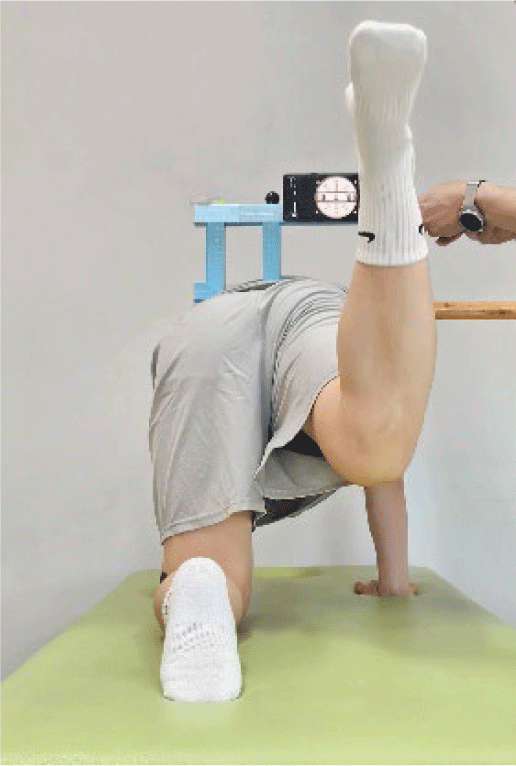
Unilateral dominant leg lifting exercises in the quadruped position may cause lumbar rotation due to inadequate lumbar stability, emphasizing the importance of controlling lumbar rotation for lumbar stabilization exercise. To control lumbar rotation, a smartphone was connected to the holder of a smartphone-based measurement tool (SBMT).15 The inclinometer application (clinometer level and slope finder; Paincode Software Solutions, Stephanskirchen, Germany) was calibrated by placing the SBMT on a level surface before adjusting lumbar rotation. The base of the SBMT was positioned at the lumbar spine, and the inclinometer application was used to control the lumbar rotation during unilateral leg lift exercises in the quadruped position (Figure 2). The participants received pretraining until they could perform unilateral dominant leg lifting exercises without lumbar rotation under the three aforementioned conditions.
The participants executed three trials under each condition randomly. The EMG activities of both EO and IO were evaluated during three trials for 5 s in each condition. To minimize muscle fatigue, the participants were allowed to rest for 1 min between trials and 5 min between two conditions.
The Kolmogorov–Smirnov test was conducted to determine whether the datasets were normally distributed. Repeated measures one-way analysis of variance was conducted to determine the muscle activities of the EO and IO across three different conditions. Bonferroni’s correction was used for post-testing. The significance level was set at p<0.05. Statistical analyses were performed using IBM SPSS Statistics for Windows version 19.0 (IBM Corp., Armonk, NY, USA).
RESULTS
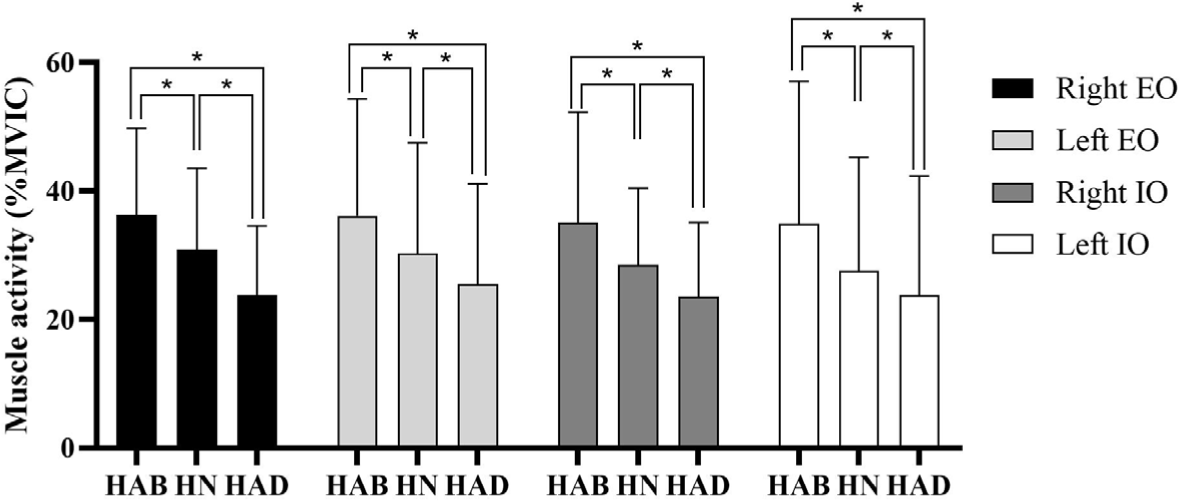
The difference in EO and IO muscle activities among the three conditions was significant (p<0.05) (Table 1). During unilateral dominant leg lifting exercises in the quadruped position with HAB, the muscles activities of both EO and IO increased more significantly than those with HN and HAD (p<0.05). When lifting the unilateral dominant leg in the quadruped position with HAD, the muscle activities of both EO and IO decreased more significantly than those with HN and HAB (p<0.05) (Figure 3).
DISCUSSION
This study investigated whether changes in contralateral hip abduction or adduction during unilateral leg lifting exercises in the quadruped position influence the EMG activity of the IO and EO muscles in healthy individuals. The results indicated significant differences in the muscle activities of both the EO and IO across the three conditions. Specifically, muscle activity was significantly higher when lifting the contralateral leg in the HAB position than in other positions. This observation is likely due to the increased rotational moment exerted on the spine by the lifted leg in the HAB position, which requires greater muscle activity to maintain trunk stability. To counterbalance this rotational force, the EO and IO muscles, which are involved in lumbar rotation, showed increased activity. In this regard, Neumann proposed that sit-ups performed with trunk lateral flexion generate greater torque than conventional sit-ups targeting the rectus abdominis, as the longer moment arms of the EO and IO muscles increase the leverage relative to the axis of rotation.16 From a biomechanical point of view, Alavi et al. also noted that in the supine position, hip joint abduction creates an additional rotational moment arm in the hip joint, which requires the abdominal muscles to act more to counteract this moment arm.17
When one limb is lifted in the quadruped position, the support base is reduced from 4 to 3 points, which increases sway in both the center of pressure and COG owing to a narrower support triangle.18,19 A recent review on quadrupedal movement training emphasizes that BOS reductions are directly associated with increased trunk muscle activation and positional instability, which reflects increased postural demands on the remaining support points.19,20 In the quadruped position, when the opposite leg is lifted in the HAB position, the knee of the supporting limb contacts the ground at a more lateral position compared with that in the HAD position, requiring a greater shift of the COG to lift one leg. Therefore, lifting the leg without pelvic lateral shift or lumbar rotation requires higher both the EO and IO muscle activities, resulting in significantly greater both the EO and IO muscle activities in the HAB position compared with those in other positions.
Spinal stabilization training is commonly implemented as a therapeutic and preventive approach for individuals with LBP.21 As a type of stabilization exercise, quadruped exercises involve maintaining a posture supported by both the upper and lower extremities, with all four limbs placed either entirely or partially on the ground.22 Quadruped exercises can be modified in various ways to adjust their difficulty. Previous studies have suggested increasing the difficulty by extending one arm and the contralateral leg simultaneously, altering the flexion angle of the contralateral hip, or limiting the weight shift distance when lifting one arm or leg, among other methods.11,23-24 The present study demonstrated that the activities of the EO and IO muscles during unilateral leg lift exercises in the quadruped position differ significantly depending on whether the contralateral hip is positioned in abduction, adduction, or neutral. These results imply that modifying the contralateral limb position in the frontal plane may help in adjusting exercise difficulty and could be utilized in lumbar stabilization training for patients with LBP. In lumbar stabilization training for patients with LBP, unilateral leg lift exercises can initially be performed with the contralateral hip in adduction, followed by progression to the neutral position, and finally to the hip abduction position.
This study has some limitations. First, the sample included only healthy male participants, limiting the generalizability of the findings to individuals with LBP. Second, the muscle activities of only the EO and IO during dominant leg lifting exercises were investigated. Therefore, the difference in muscle activation during nondominant leg lifting remains unclear. Third, among the abdominal muscles, only the EO and IO were examined during unilateral leg lifting exercises. Thus, further studies are needed to investigate muscle activation patterns in individuals with LBP, across different sexes and age groups, compare the effects of lifting the dominant and nondominant legs, and examine whether other core and back muscles such as the multifidus, erector spinae, and transverse abdominis respond differently depending on hip joint position.
CONCLUSIONS
This study investigated whether changes in contralateral hip abduction or adduction during unilateral leg lifting exercises in the quadruped position influence the EMG activity of the IO and EO and evaluated the potential application of these positional changes in adjusting the difficulty of spinal stabilization exercises. Results showed that muscle activities of the EO and IO differed significantly across the three conditions, and the greatest increase was observed during unilateral dominant leg lifting exercises in the quadruped position with HAB compared with those in HN and HAD. Thus, modifying the contralateral limb position in the frontal plane may help in adjusting exercise difficulty and could be utilized in lumbar stabilization training for patients with LBP.


