
 PDF Download
 PubReader
 Export Citation
 Email the Author
 Share Facebook
 Share Twitter
 Cited by 0 Article
 Metrics (View:4,930)







INTRODUCTION
Breast cancer is the most frequently diagnosed malignancy among women worldwide and remains the leading cause of cancer-related morbidity.9 While advances in surgical and adjuvant treatment, including mastectomy, breast-conserving surgery, chemotherapy, and radiation therapy, have significantly improved survival rates, these interventions often cause unintended physical complications.2 Among the most prevalent and debilitating sequelae is musculoskeletal dysfunction, particularly affecting the shoulder joint on the surgical side.1 Post-treatment complications such as shoulder pain, restricted range-of-motion, muscle weakness, and postural imbalances can severely impact daily functioning and overall quality of life.
Shoulder dysfunction occurs frequently in women who undergo axillary lymph node dissection or radiation therapy, as these procedures can damage peripheral nerves, reduce soft tissue elasticity, and promote fibrosis and adhesions.2 Without timely intervention, these impairments may persist for months or years, increasing the risk of chronic pain syndrome and long-term disability. Therefore, researchers have increasingly focused on exercise therapy as a key component of rehabilitation for breast cancer survivors. Structured exercise interventions, such as active range-of-motion training, stretching, and progressive resistance exercises, have demonstrated efficacy in improving shoulder mobility, reducing pain, and restoring muscular strength.3,4
Furthermore, early mobilization may be particularly beneficial. For example, Lauridsen et al.5 found significantly better shoulder flexion and abduction in patients who initiated physical therapy immediately after surgery compared with those who delayed treatment. Pain reduction remains a key therapeutic goal alongside functional restoration.7 Shamley et al.6 demonstrated that participants in a 12-week supervised rehabilitation protocol reported greater improvements in pain and shoulder function than those receiving standard care. Additionally, integrating sensorimotor and proprioceptive training can enhance neuromuscular control and reduce compensatory movements, thereby decreasing chronic pain risk.7 Although concerns persist regarding potential exercise-induced lymphedema exacerbation, recent evidence suggests that properly supervised exercise is safe and may even offer protective benefits.8 These findings support incorporating tailored exercise therapy into breast cancer rehabilitation. However, variations in treatment approaches, patient demographics, and rehabilitation protocols underscore the need for a comprehensive synthesis of current evidence. Therefore, the purpose of this literature review was to evaluate existing research on exercise-based interventions for shoulder dysfunction in patients with breast cancer, with a focus on pain reduction, functional improvement, and safety. We hypothesized that structured exercise interventions would significantly improve shoulder range-of-motion, reduce pain, and enhance functional capacity without increasing the risk of lymphedema.
Breast cancer, the most prevalent malignancy in women worldwide, represents a significant public health concern.9 This disease results from the uncontrolled proliferation of epithelial cells in breast tissue, primarily originating in the ducts or lobules.10 Globally, incidence rates vary based on genetic, environmental, hormonal, and lifestyle factors.11 While early detection through screening methods such as mammography has increased survival rates, treatment advances, including surgery, chemotherapy, radiation therapy, hormonal therapy, and targeted biologics, have also contributed to reduced mortality.12,13 However, despite these advancements, breast cancer remains the leading cause of cancer-related morbidity and mortality in women.14
Breast cancer classification depends on histological type, hormone receptor status (estrogen and progesterone receptors), and human epidermal growth factor receptor 2 (HER2) expression, which guide treatment decisions and prognosis.15 Common symptoms include palpable breast lumps, nipple discharge, skin changes, and pain, although early-stage cancers frequently present asymptomatically. Treatment goals extend beyond tumor eradication to include functional preservation and quality-of-life enhancement. However, treatment-related complications, such as lymphedema, fatigue, and musculoskeletal dysfunction, including shoulder joint impairment, remain significant challenges for survivors.1,7 Understanding breast cancer epidemiology, pathology, and clinical course is essential for developing tailored rehabilitation strategies for this increasing patient population.
Breast cancer management requires a multidisciplinary approach based on tumor stage, biology, and patient-specific factors. Surgical options include breast-conserving procedures such as lumpectomy or mastectomy, with or without axillary lymph node dissection. Adjuvant therapies, including chemotherapy, radiation therapy, hormone therapy, and targeted biological agents, are used to reduce recurrence risk and improve survival outcomes.12 Recent advances in personalized medicine have enabled molecular tumor profiling, facilitating targeted therapies like HER2-directed agents (e.g., trastuzumab) and CDK4/6 inhibitors for hormone receptor-positive cancers.16,17 Immunotherapy has also shown promise for specific subtypes by enhancing immune-mediated tumor destruction.18
Furthermore, minimally invasive techniques and sentinel lymph node biopsy have reduced treatment-related morbidity compared to traditional methods, decreasing complications, such as lymphedema, and improving postoperative recovery.19 Radiation therapy has also advanced through techniques such as intensity-modulated radiation therapy, which allows precise tumor targeting while minimizing damage to healthy tissues.20 However, treatment-related complications, including postoperative pain, shoulder mobility restrictions, lymphedema, and neuropathy, impair function and quality of life. Therefore, comprehensive care must incorporate early rehabilitation with physical therapy and exercise interventions to mitigate these treatment-related complications.1,7 Optimal outcomes depend on a multidisciplinary team approach involving oncologists, surgeons, physiotherapists, and psychosocial support providers.21
METHOD
This literature review evaluated the effectiveness of exercise therapy for managing shoulder dysfunction in patients with breast cancer. We performed a comprehensive search using electronic databases, including PubMed, the Cumulative Index to Nursing and Allied Health Literature (CINAHL), and Cochrane Library. Peer-reviewed articles published from January 2000 through May 2024 were included to ensure relevance to contemporary clinical practice.
Our search strategy incorporated combinations of the following keywords and Medical Subject Headings (MeSH):
(“breast cancer” OR “breast neoplasms”) AND (“shoulder joint” OR “shoulder dysfunction” OR “shoulder pain”) AND (“exercise therapy” OR “physical therapy” OR “rehabilitation” OR “resistance training” OR “range of motion” OR “physiotherapy”). We applied Boolean operators (AND, OR) to optimize search sensitivity and specificity.
Studies were included if they involved adult female patients with breast cancer who underwent surgery, chemotherapy, and/or radiation therapy. Eligible interventions included any exercise-based therapy, such as range-of-motion exercises, resistance training, stretching, or sensorimotor training. Included studies were required to report outcomes related to shoulder function, range-of-motion, pain reduction, and quality of life. Eligible study designs included randomized controlled trials, clinical trials, cohort studies, and systematic reviews published in English-language peer-reviewed journals.
Studies were excluded if they focused exclusively on lymphedema management without assessing shoulder function. Additionally, research involving pediatric populations or male patients with breast cancer was excluded. Case reports, editorials, conference abstracts, and nonpeer-reviewed literature were excluded to maintain methodological rigor and evidence quality.
Titles and abstracts of retrieved articles were screened for relevance. Full-text articles of potentially eligible studies were reviewed for final inclusion. Key extracted data from each study included authors, year of publication, study design, sample size, exercise intervention type, intervention duration, and primary outcomes related to shoulder mobility and pain.
Given the heterogeneity in intervention types, durations, and outcome measures across included studies, a narrative synthesis approach was employed. Studies were grouped and summarized by outcome domains, including range-of-motion, pain reduction, muscular strength, and quality of life. The analysis emphasized identifying trends, recurring findings, areas of controversy, and gaps in evidence.
RESULTS
The study selection process is illustrated in Figure 1. The final selection comprised four randomized controlled trials and four systematic reviews, offering both primary research evidence and comprehensive high-level evidence from multiple sources.
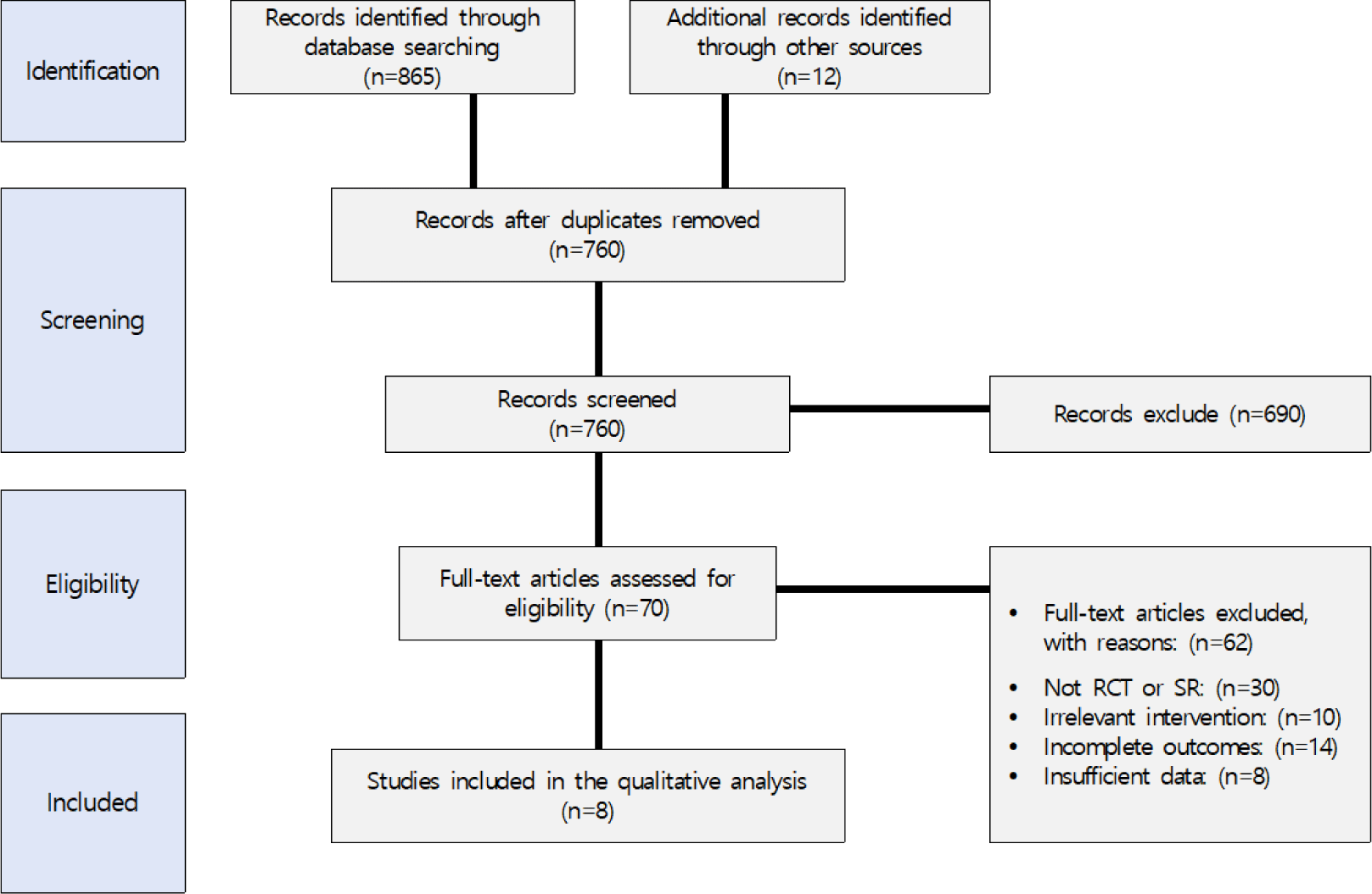
Table 1 summarizes the characteristics of the eight selected studies investigating exercise therapy for the affected shoulder joint in patients with breast cancer. All studies were written in English and structured according to systematic review standards (Table 1).
| No. | Author | Country | Sample size (study type) | Intervention type | Duration (study type) | Key outcomes |
|---|---|---|---|---|---|---|
| 1 | Lauridsen et al.5 | Denmark | 62/77 (RCT) | Early exercise & physical therapy | 6 months | Early exercise & physical therapy improved shoulder motion and function significantly. |
| 2 | McNeely et al.1 | Canada | Meta-analysis (SR) | Exercise interventions (various types) | Systematic review | Consistent positive effects on shoulder function, pain reduction, and quality of life. |
| 3 | De Groef et al.3 | Belgium | Systematic review (SR) | Resistance + mobility training vs. control | Systematic review | Improved ROM and strength; no increase in lymphedema risk. |
| 4 | McNeely et al.22 | Canada | Cochrane review (SR) | Exercise interventions for upper-limb dysfunction | Systematic review | Strong evidence for exercise effectiveness in reducing pain and improving upper limb function |
| 5 | Courneya et al.23 | Canada | 121/121 (RCT) | Aerobic + resistance training vs. usual care | 6 months | Enhanced physical function and upper body strength. |
| 6 | Battaglini et al.4 | USA | Systematic review (SR) | Individualized exercise rehabilitation | Systematic review | Improved ROM, reduced pain, and cancer-related fatigue. |
| 7 | Sagen et al.24 | Norway | 104/100 (RCT) | Stretching + ROM vs. usual care | 6 months | Improved physical activity and decreased shoulder pain in the exercise group. |
| 8 | Schmitz et al.8 | USA | 71/70 (RCT) | Progressive weight training vs. no exercise | 12 months | No lymphedema increase; improved strength and arm function. |
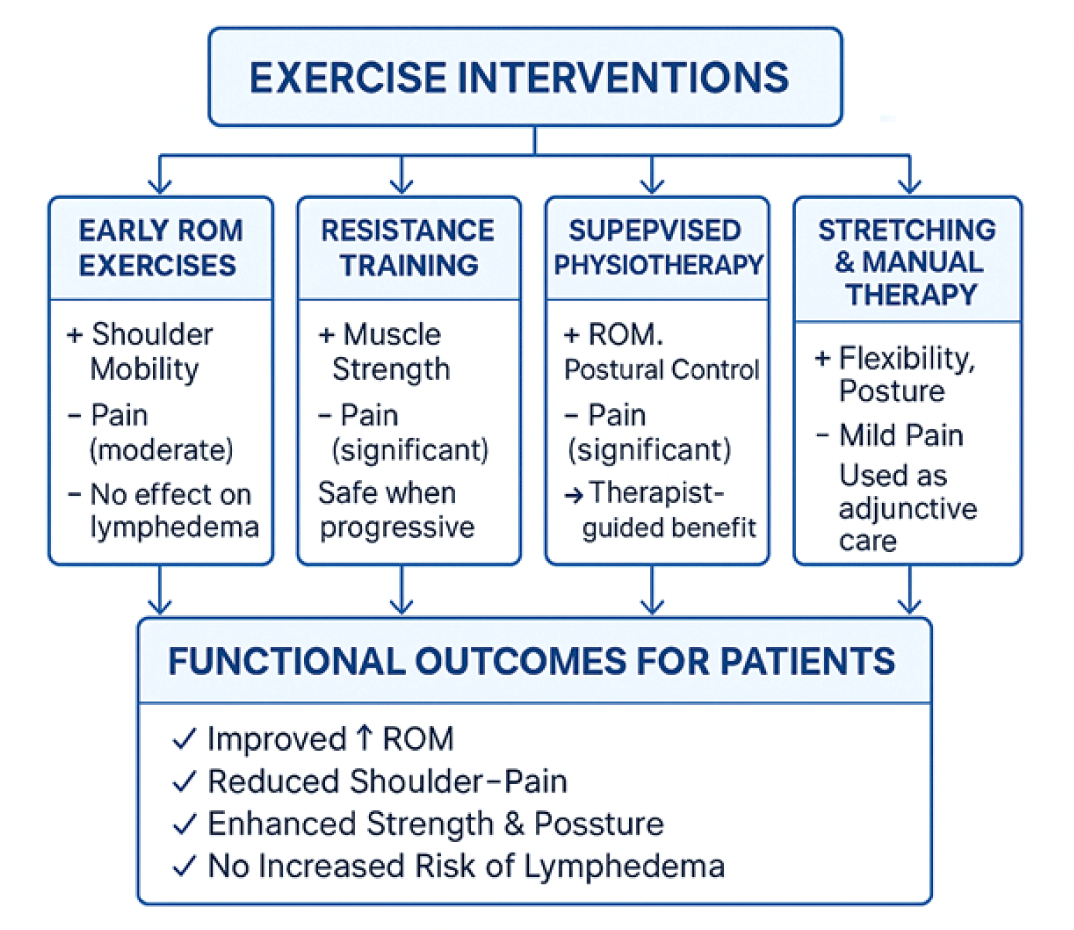
We evaluated the effects of exercise therapy on the affected shoulder joint in patients with breast cancer across five outcome domains categorized by intervention type. The synthesized results are presented in Table 2 and Figure 2.
| Intervention type | Author | Effects on shoulder function | Effects on pain | Qualitative conclusion |
|---|---|---|---|---|
| Early ROM exercises | Lauridsen et al.5 | Improved flexion and abduction; restored ROM earlier than control | Moderate reduction | Safe and effective if initiated early; prevents long-term stiffness |
| Progressive resistance training | Schmitz et al.8 De Groef et al.3 | Improved muscle strength, joint stability, and functional capacity | Significant reduction | Beneficial for strength without adverse effects; supports rehabilitation goals |
| Supervised physiotherapy | Sagen et al.24 | Improved ROM, posture, and movement control | Significant pain relief | More effective when guided by therapists; it encourages adherence and better outcomes |
| Aerobic + resistance training | Courneya et al.23 | General improvement in physical function and endurance | Mild to moderate reduction | Supports overall wellness; may not target shoulder-specific deficits as precisely |
| Stretching & manual therapy | Sagen et al.24 | Increased flexibility, corrected postural imbalances | Mild pain reduction | Supportive modality; effective when combined with active exercise |
DISCUSSION
This review synthesized evidence from eight studies (four randomized controlled trials and four systematic reviews) examining exercise therapy effects on shoulder dysfunction in patients with breast cancer. These findings consistently indicate that structured exercise interventions, particularly those incorporating active range-of-motion exercises, progressive resistance training, and stretching, lead to significant improvements in shoulder mobility, pain reduction, and overall upper limb function. These results highlight the crucial role of exercise therapy as an effective and safe component of rehabilitation for breast cancer survivors.
A consistent finding across studies was the benefit of early intervention. Lauridsen et al.5 and McNeely et al.1 reported that initiating physical therapy within weeks of surgery results in better functional outcomes than delayed approaches, likely due to the prevention of joint stiffness, capsular tightness, and muscle atrophy during the acute postoperative phase. These findings support incorporating early controlled mobilization into clinical practice, rather than prolonged rest or passive care. Moreover, improvements in pain management were consistently reported. Exercise-induced pain relief may be attributed to enhanced blood flow, reduced inflammatory marker levels, and improved neuromuscular control.7 Multiple studies, including that by Sagen et al.24 and systematic reviews by McNeely et al.1,22 have demonstrated that patients engaging in supervised exercise programs reported lower pain scores and greater functional capacity, contributing to an improved quality of life.
These findings are further supported by high-level systematic reviews. McNeely et al.1 conducted a comprehensive meta-analysis demonstrating consistent positive effects of exercise among survivors and patients with breast cancer. The Cochrane systematic review by McNeely et al.22 also provided the strongest evidence for exercise interventions, targeting treatment-related upper limb dysfunction in patients with breast cancer. This review builds upon this foundation and provides updated evidence by incorporating recent studies published through May 2024.
The potential exacerbation of lymphedema with physical activity remains an important concern in breast cancer rehabilitation. However, this review found no evidence that appropriately prescribed and supervised exercise exacerbates lymphedema. Moreover, Schmitz et al.8 demonstrated that progressive weight training can improve lymphatic return and upper limb function without adverse effects. These findings challenge longstanding concerns about resistance training in this population and support its inclusion in rehabilitation programs.
Despite these positive findings, this review identifies several limitations in the existing literature. First, the inclusion of both randomized controlled trials and systematic reviews introduces variability in the levels of evidence presented. Second, substantial heterogeneity in intervention protocols, particularly regarding type, frequency, duration, and supervision, complicates direct comparisons and hinders the identification of optimal approaches. Third, the relatively small sample sizes and short follow-up periods in many studies limit the generalizability and compromise the assessment of long-term outcomes. Finally, few studies have evaluated patient-reported outcomes, including fear of movement (kinesiophobia), adherence levels, or psychosocial well-being; these factors are critical to rehabilitation success.
Clinically, these findings support incorporating individualized exercise therapy into standard breast cancer care. Programs should be tailored to patient-specific factors, including surgical history, pain level, physical conditioning, and personal preferences, to maximize efficacy and adherence. Effective multidisciplinary collaboration among oncologists, physiotherapists, and exercise specialists is crucial for optimizing recovery outcomes.
Future studies should focus on developing standardized exercise protocols, investigating long-term functional outcomes, and incorporating behavioral strategies to enhance adherence. Additionally, large-scale trials with diverse populations are needed to strengthen the evidence base and inform universal clinical guidelines for postoperative shoulder rehabilitation in patients with breast cancer.
CONCLUSIONS
This literature review establishes exercise therapy as a safe and effective intervention for improving shoulder function and reducing pain in patients with breast cancer experiencing post-treatment shoulder dysfunction. Early initiation of tailored exercise programs, including range-of-motion exercises, stretching, and progressive resistance training, enhanced shoulder mobility, muscular strength, and overall quality of life, without increasing lymphedema risk. The consistent positive outcomes across multiple randomized controlled trials, despite variability in intervention protocols, highlight the essential role of exercise in post-treatment rehabilitation.
To optimize recovery, clinicians should implement individualized exercise interventions into routine care plans for breast cancer survivors, accounting for patient-specific factors and preferences. Future well-designed large-scale studies are warranted to develop standardized exercise guidelines, assess long-term effects, and incorporate psychosocial outcomes. Integrating exercise therapy into multidisciplinary breast cancer care represents a potential approach to significantly improving functional outcomes and facilitating survivors’ return to daily activities, while also enhancing overall well-being.


