
 PDF Download
 PubReader
 Export Citation
 Email the Author
 Share Facebook
 Share Twitter
 Cited by 0 Article
 Metrics (View:1,054)







INTRODUCTION
The foot intrinsic muscles, which originate and insert within the foot, are organized into four anatomical layers beneath the plantar fascia. The superficial layers primarily align with the medial and lateral longitudinal arches, whereas the deeper layers are associated with the transverse arch.1 These muscles play a critical role in maintaining arch integrity during weight-bearing activities and contribute substantially to foot stability.2-4 Weakness of the foot intrinsic muscles has been implicated in a variety of foot pathologies, including pes planus, hammer toe, claw toe, hallux valgus, heel pain, and plantar fasciitis, particularly in populations with neuromuscular disorders such as Charcot–Marie–Tooth disease.5-9 Accordingly, strengthening exercises targeting these muscles—such as toe-curl, toe-spread, and short-foot exercises—are widely recommended in both preventive and rehabilitative clinical settings.10-13
Methods for evaluating foot intrinsic muscle strength can be categorized as either direct or indirect. Indirect methods include imaging techniques, such as magnetic resonance imaging to visualize soft tissue structures, ultrasonography to assess muscle cross-sectional area and thickness, and computed tomography, as well as electromyography, which records muscle activity using electrodes.14 Although these indirect methods can distinguish between intrinsic and extrinsic foot muscles, they do not directly quantify force production or contractile strength. Direct evaluation methods include toe-grip dynamometry, plantar pressure measurement, the paper grip test, and the intrinsic-positive test.14 Toe-grip dynamometry measures the strength of the toe flexor muscles by requiring the participant to exert maximal pressure against the device.8,15,16 However, this method is limited by the need for specialized equipment. Plantar pressure measurement estimates toe flexor strength by converting plantar pressure data into force.17,18 The paper grip test, which is easily applied in clinical settings, involves placing a strip of paper under the toes and asking the examiner to pull it away while the participant resists.19 A common limitation of both plantar pressure measurement and the paper grip test is the difficulty of isolating the contribution of the intrinsic muscles from that of the extrinsic muscles. Given these limitations, analysis of kinematic differences between the metatarsophalangeal (MTP) and interphalangeal (IP) joints, as performed in this study, may provide a more nuanced understanding of intrinsic muscle recruitment patterns.
The intrinsic positive test qualitatively evaluates the function of the lesser toes, excluding the hallux, by requiring participants to actively flex the MTP joints while simultaneously extending the IP joints, with the hallux maintained in an extended position. Muscle performance is interpreted according to the observed movement pattern. A pattern is classified as intrinsic-positive when coordinated MTP joint flexion and IP joint extension are successfully achieved, whereas an intrinsic-negative pattern is defined by the inability to perform this combined movement, reflecting a failure to actively flex the MTP joints and extend the IP joints. An intrinsic-negative pattern is considered indicative of weakness of the intrinsic foot muscles. 20 However, the validity and reliability of this qualitative assessment have not yet been established. In addition, a major limitation of this test is that it excludes evaluation of the intrinsic muscles of the hallux. Therefore, there is a clinical need to develop objective measures for assessing hallux intrinsic muscle function, particularly when comparing normal and pes planus foot types.
The intrinsic muscles of the hallux—namely the abductor hallucis, adductor hallucis, and flexor hallucis brevis—primarily insert into the proximal phalanx, whereas the extrinsic flexor hallucis longus inserts into the distal phalanx.21 Due to these anatomical differences, the extrinsic muscle contributes to flexion at both the MTP and IP joints, whereas intrinsic muscles primarily act at the MTP joint without directly influencing IP joint motion. 21 Therefore, the relative contribution of intrinsic versus extrinsic muscles during toe flexion may be inferred from joint-specific kinematic patterns. In particular, excessive IP joint flexion may indicate dominance of the extrinsic musculature, whereas isolated MTP flexion may reflect greater intrinsic muscle activation. Based on this biomechanical rationale, analysis of hallux MTP and IP joint kinematics during toe-curl may provide an indirect yet clinically meaningful indicator of intrinsic muscle function. Therefore, the purpose of this study was to compare the kinematic patterns of the hallux MTP and IP joints during toe-curl between individuals with pes planus and those with normal feet. We hypothesized that individuals with pes planus would exhibit relatively greater IP joint flexion compared with MTP joint flexion during the toe curl task than individuals with normal foot posture.
METHOD
Thirty participants were recruited for this study, including 15 individuals with normal feet and 15 with flat feet. No formal a priori sample size calculation was conducted; the sample size was determined based on reference to previous kinematic study.22 Foot type was classified using the navicular drop (ND) test. Exclusion criteria included high arches (ND<6 mm), a history of inflammatory arthritis, previous foot or ankle surgery, diabetes, lower limb amputation, hallux valgus, malleolar deformities, and claw toe. These criteria were established to minimize confounding factors affecting foot biomechanics and joint kinematics. Previous studies have similarly applied such exclusions to ensure a more homogeneous sample and isolate the effects of foot posture.22, 23 The ND test was used to assess the mobility of the medial longitudinal arch and to classify foot types.
Both lower limbs of all participants were assessed. Each participant was seated with both feet placed flat on the floor and the knees flexed at 90°. While maintaining the subtalar joint in a neutral position, the most prominent aspect of the navicular tuberosity was identified and marked with a pen. To establish the neutral position of the subtalar joint, the foot was gently moved into abduction and adduction until equal palpation was achieved on the medial and lateral aspects of the talus.24 Once this position was established, the height of the navicular tuberosity was measured using a ruler positioned perpendicular to the floor. Participants were then instructed to assume a comfortable bipedal standing posture, with feet shoulder-width apart and body weight evenly distributed. The height of the marked navicular tuberosity was remeasured in this weight-bearing position.24 The ND was calculated as the difference between the seated and standing measurements. Each measurement was performed three times for each foot, and the mean value was used for analysis. Participants were classified into groups based on their ND values: normal feet (6–9 mm) and pes planus (≥10 mm).25 All participants provided written informed consent prior to participation. The study protocol was approved by the Institutional Review Board of Joongbu University (No: 2026031201-01-260318). The general characteristics of the participants are presented in Table 1.
| Group | Gender (male/female) | Age (years) | Body mass (kg) | Height (cm) | ND (mm) |
|---|---|---|---|---|---|
| Normal feet | 8/7 | 24.1 (1.4) | 65.2 (15.1) | 167.5 (8.8) | 7.5 (1.0) |
| Pes planus | 8/7 | 23.6 (1.5) | 63.2 (14.6) | 169.2 (7.90) | 13.5 (1.0) |
To measure the angles of the MTP and IP joints during toe-curl, all assessments were conducted on a standardized wooden table to minimize the influence of friction on force generation. Participants assumed a supine position with the knees flexed at 90°, feet placed flat on the surface, and arms crossed over the chest. Previous studies have suggested that the contribution of extrinsic foot muscles decreases with increasing ankle plantar flexion. Additionally, foot intrinsic muscle recruitment has been shown to increase as postural demands shift from weight-bearing positions (bilateral or unilateral stance) to a seated or non–weight-bearing condition.26–30 Therefore, the supine position was selected to promote intrinsic muscle activation while minimizing extrinsic muscle involvement. Furthermore, this position allowed for a more consistent and standardized posture across participants compared with sitting or standing positions.
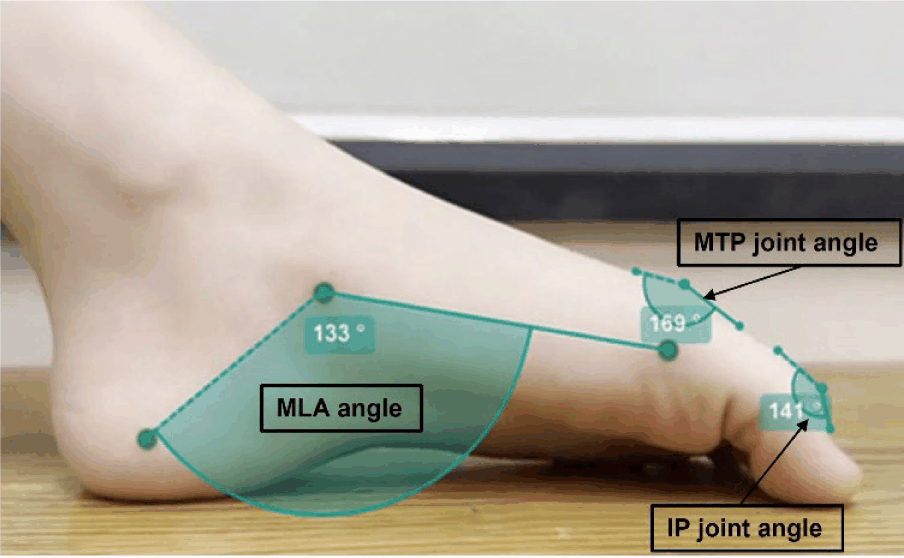
To assess changes in the medial longitudinal arch (MLA) angle during toe curl, three markers were placed on anatomical landmarks: the first metatarsal head, the navicular tuberosity, and the medial aspect of the calcaneus. The calcaneal marker was positioned at a standardized distance of 30 mm (female) or 40 mm (male) from the posterior aspect of the calcaneus, and 30 mm (female) or 35 mm (male) from the floor.31 Video data were recorded using a smartphone (Galaxy S20; Samsung Electronics, Seoul, Korea) with high-definition capabilities (4K resolution, 60 frames per second). The camera was mounted on a tripod positioned 1 m from the table and oriented toward the medial aspect of the foot. Recorded videos were analyzed using Kinovea software (version 0.8.15; Kinovea, Bordeaux, France). This software has been demonstrated to be a valid and reliable tool for two-dimensional motion analysis, showing high intra- and inter-rater reliability as well as good agreement with reference measurement systems.32 For kinematic analysis, the first MTP joint angle was defined as the angle formed by the intersection of lines drawn along the dorsal surfaces of the first metatarsal and the proximal phalanx during the toe-curl. The first IP joint angle was defined as the angle formed by the intersection of lines drawn along the dorsal surfaces of the proximal and distal phalanges (Figure 1). The MLA angle was defined as the angle formed by the intersection of a line connecting the first metatarsal head to the navicular tuberosity and a line connecting the navicular tuberosity to the medial calcaneal marker (Figure 1).31 Measurements were performed on both feet of each participant, and the mean of the bilateral values was used as the representative value for statistical analysis.
To ensure baseline comparability between the normal feet and pes planus groups, independent t-tests were conducted for continuous variables such as age, height, and body weight. The normality of data distribution was assessed using the Kolmogorov–Smirnov test. Following confirmation of normality, independent t-tests were performed to compare the hallux MTP and IP joint angles, as well as the MLA angle, during toe curl between the normal foot and pes planus groups. The level of statistical significance was set at p<0.05 for all analyses. All statistical analyses were conducted using SPSS software (version 22.0; IBM Corp., Armonk, NY, USA).
RESULTS
No significant between-group differences were observed in any of the baseline variables, except for ND variable. There were no significant differences in the MTP joint angle during toe-curl between the normal foot group (157.3±8.8°) and the pes planus group (161.5±12.1°, p=0.294). Similarly, no significant difference was observed in IP joint angle between the normal foot group (134.9±21.7°) and the pes planus group (123.5±11.6°, p=0.083) (Table 2).
At rest, the MLA angle was significantly greater in the pes planus group (138.6±5.6°) compared with the normal foot group (128.2±6.9°, p<0.001). In the final position of the toe-curl exercise, the MLA angle also remained significantly greater in the pes planus group (137.0±6.5°) than in the normal foot group (126.6±8.5°, p=0.001). However, there was no significant difference between groups in the change in MLA angle from rest to the final position (normal: 1.6±3.4°; pes planus: 1.6±2.2°, p=0.979) (Table 2).
DISCUSSION
The purpose of this study was to compare hallux MTP and IP joint kinematics, as well as MLA angles, during toe-curl between individuals with normal feet and those with pes planus. The main findings were that no significant differences were observed in MTP or IP joint angles between groups, whereas the MLA angle was significantly greater in the pes planus group at both rest and during the final phase of the toe-curl. Additionally, no significant difference was found in the change in MLA angle during the task.
The intrinsic hallux muscles that contribute to support of the MLA, particularly the abductor hallucis and adductor hallucis, exhibit relatively large cross-sectional areas and play important roles in maintaining foot stability.33 Although these muscles primarily function to produce abduction and adduction at the hallux MTP joint, their structural characteristics enable the generation of propulsive forces and contribute to stabilization of the hallux and the MTP joint.33 In the present study, hallux curl movements were selected to investigate the characteristics of the medial intrinsic foot muscles. This task was preferred over isolated hallux abduction or adduction movements because it more closely reflects a functional and coordinated action involving both intrinsic and extrinsic musculature. Unlike abduction and adduction, which are relatively isolated and less commonly performed in daily activities, the curl movement engages the hallux in a manner that resembles functional tasks such as gripping or stabilizing the forefoot. Additionally, the toe curl task enables simultaneous assessment of MTP and IP joint kinematics, providing indirect insight into the coordination between intrinsic and extrinsic muscle contributions, although direct muscle activity was not measured.
Contrary to our hypothesis, individuals with pes planus did not demonstrate greater IP joint flexion compared with those with normal feet. Given that the flexor hallucis longus contributes to flexion at both the MTP and IP joints, whereas intrinsic muscles primarily act at the MTP joint,34,35 IP joint motion has been proposed as an indirect indicator of extrinsic muscle dominance. However, the absence of between-group differences in IP joint angles suggests that the toe-curl task used in this study may not have sufficiently differentiated intrinsic and extrinsic muscle contributions. These findings indicate that joint kinematic measures alone, particularly under low-load conditions, may have limited sensitivity in detecting subtle differences in muscle recruitment strategies. A likely explanation relates to the experimental conditions. The toe-curl task was performed in a supine, non–weight-bearing position, which may have reduced the functional demand placed on the intrinsic foot muscles. Previous studies have shown that intrinsic muscle recruitment increases with greater postural and loading demands, whereas reduced loading conditions—such as seated or supine postures—may attenuate their contribution.25,32 In particular, intrinsic foot muscles are more actively engaged during weight-bearing and balance-related tasks, where they contribute to arch stabilization and foot stiffness.27 Therefore, the absence of between-group differences in joint kinematics may reflect insufficient mechanical demand to elicit distinct muscle recruitment patterns between foot types.
Similarly, the absence of a significant difference in MTP joint angles suggests that intrinsic muscle contribution to MTP flexion may not differ substantially, or that compensatory mechanisms may mask such differences during toe curl. It has been suggested that both intrinsic and extrinsic muscles contribute to MTP joint flexion,14 which may limit the ability of MTP joint kinematics to isolate intrinsic muscle function. Taken together, these findings indicate that kinematic variables alone may have limited sensitivity in differentiating intrinsic and extrinsic muscle contributions during low-load, non–weight-bearing tasks.
The significantly greater MLA angle observed in the pes planus group at both rest and during the final phase of the toe curl reflects a structurally lowered arch, consistent with the characteristics of flat feet. However, the lack of a significant difference in MLA angle change between groups suggests that the dynamic response of the arch during toe curl may be similar regardless of foot type. This may be related to the experimental conditions, as intrinsic muscle activation has been shown to increase under weight-bearing or postural demands, whereas non–weight-bearing conditions may limit their functional contribution.27–30 Therefore, the supine toe-curl task used in this study may not have imposed sufficient functional demand to reveal differences in intrinsic muscle function. From a clinical perspective, these findings suggest that toe-curl exercise performed in a non–weight-bearing position may have limited utility for distinguishing intrinsic muscle function between individuals with different foot types. Clinicians should consider incorporating weight-bearing or higher-demand tasks when assessing or training intrinsic foot muscle function. Furthermore, combining kinematic analysis with electromyographic assessment may provide a more comprehensive evaluation of muscle recruitment patterns.
Several limitations should be considered when interpreting these findings. First, the sample size was relatively small, which may limit the generalizability of the results. Second, muscle activity was not directly measured using electromyography, and thus conclusions regarding muscle recruitment patterns are based on indirect kinematic inference. Third, the use of a supine position may not fully reflect functional conditions encountered during weight-bearing activities such as gait or standing. Future studies should incorporate electromyographic analysis to directly assess intrinsic and extrinsic muscle activity, as well as three-dimensional motion analysis to provide a more comprehensive evaluation of foot biomechanics. In addition, investigating these kinematic patterns under weight-bearing conditions and following targeted intervention programs may further elucidate the role of intrinsic muscles in individuals with pes planus.
CONCLUSIONS
These findings suggest that the toe curl task under the present experimental conditions may have limited ability to detect between-group differences in MTP and IP joint kinematics. Further studies are needed to evaluate these outcomes under different task conditions. In addition, the inclusion of objective assessment methods, such as electromyography, is warranted to directly quantify intrinsic muscle activation of the hallux during the toe curl task.


