
 PDF Download
 PubReader
 Export Citation
 Email the Author
 Share Facebook
 Share Twitter
 Cited by 0 Article
 Metrics (View:1,770)







INTRODUCTION
Hip surgery is frequently followed by impaired walking ability during the early postoperative period. Many patients demonstrate reduced gait speed and limited independence at hospital discharge, which can complicate rehabilitation planning and safe reintegration into the community.1 In patients undergoing total hip arthroplasty, gait speed at hospital discharge is markedly reduced and has been identified as a key target of early postoperative rehabilitation.1 Moreover, maximal gait speed has been identified as a simple and useful prognostic indicator of functional recovery after total hip arthroplasty.2 Early postoperative gait parameters may also be associated with longer-term patient-reported outcomes following hip arthroplasty.3 Recovery after hip fracture involves improvements across multiple functional domains, with ambulation and independence being critical for successful return to the community.4 Effective postoperative rehabilitation programs are essential during the early recovery period to optimize functional outcomes and facilitate safe reintegration into the community.5 These findings underscore the clinical importance of interventions that safely facilitate walking performance during early rehabilitation.
Wearable robotic devices have recently been introduced as potential adjuncts to gait rehabilitation. Previous studies have reported that gait training using a wearable hip exoskeleton (WHE) may promote earlier recovery of walking ability after lower-extremity surgery.6 Systematic reviews and meta-analyses have suggested that robot-assisted rehabilitation following hip or knee replacement surgery provides additional functional benefits compared with conventional rehabilitation alone.7 A narrative review further concluded that WHE-assisted gait and support rehabilitation across a wide range of populations.8 In community-dwelling older adults, exercise programs using WHE have been associated with improvements in physical function and walking efficiency.9-11 Advances in device design have also focused on optimizing assistive torque while minimizing mechanical burden during walking.12 In addition, prior work evaluating an assistive walking device reported that measurable changes occurred even after a single exposure in neurological populations, thereby supporting the rationale for examining immediate performance effects.13
Despite these developments, clinical evidence for WHE–assisted gait rehabilitation has accumulated primarily in neurological populations (e.g., chronic stroke), community-dwelling older adults, and patients undergoing total knee arthroplasty (TKA), rather than in inpatients after hip surgery. For example, a pilot randomized controlled trial in individuals with chronic stroke reported that gait training with a WHE improved spatiotemporal gait parameters and walking efficiency.14 In surgical populations, a case-control clinical trial suggested that WHE–assisted walking exercise may promote earlier recovery of walking ability after TKA.6 Moreover, systematic reviews and meta-analyses of robot-assisted rehabilitation after joint replacement have indicated potential functional benefits compared with conventional rehabilitation, while also emphasizing the need for higher-quality studies and verification of long-term effects, particularly in hip replacement populations.7 Consequently, evidence specifically addressing WHE use during early postoperative inpatient rehabilitation after hip surgery remains limited. In particular, it remains unclear whether overground walking with a WHE produces measurable immediate improvements in functional mobility and spatiotemporal gait parameters compared with unassisted walking in this early postoperative inpatient population.
Therefore, the purpose of this study was to investigate the immediate effects of overground walking with a WHE on functional mobility and spatiotemporal gait parameters in inpatients after hip surgery. We hypothesized that WHE-assisted walking would lead to immediate improvements in overground walking performance in inpatients after hip surgery.
METHODS
Twenty inpatients undergoing rehabilitation after hip surgery were initially recruited. Two inpatients declined participation in gait assessments; therefore, 18 participants were included in the final analysis. Table 1 summarizes the participant characteristics, and Table 2 classifies the participants by type of hip surgery.
| Type of surgery | n |
|---|---|
| Total hip arthroplasty | 5 |
| Bipolar hemiarthroplasty | 5 |
| Intramedullary nailing | 6 |
| Plate-and-screw fixation | 2 |
The eligibility criteria were as follows: (1) hip surgery within the previous 30 days; (2) medical clearance for ambulation by an orthopedic or rehabilitation physician; (3) ability to ambulate at least 14 m with a walking aid; and (4) sufficient cognitive function to follow instructions, defined as a score greater than 17 on the Korean version of the Mini-Mental State Examination.15,16 Exclusion criteria included non–weight-bearing status, unstable cardiopulmonary conditions, neurological disorders affecting gait, active infection, or any other condition that could interfere with safe participation.
The study protocol was approved by the Institutional Review Board of Baekseok University (BUIRB-202505-HR-026), and all participants provided written informed consent before participation.
The WHE used in this study was WIM (WIRobotics Inc., Republic of Korea), a device designed to provide bilateral hip flexion–extension assistance during walking (Figure 1). The device employs a single actuator to assist sagittal-plane hip motion in both limbs using an anti-phase torque symmetry strategy, whereby hip flexion assistance is applied to the advancing limb and hip extension assistance to the trailing limb during gait. This assistance pattern is intended to support limb advancement during the swing phase and propulsion during late stance.11,12 The WIM features an ultra-lightweight, compact design, with a total device weight of approximately 1.6 kg and main body dimensions of 21.7 × 11.0 × 5 cm. The thigh frames are foldable to reduce storage volume. The main unit, which integrates a single electric motor, battery, and controller, is positioned at the anterior pelvis and secured using an adjustable waist belt (66.0–91.4 cm) and bilateral thigh frames adjustable from approximately 160 to 350 mm to accommodate individual anthropometric characteristics.11,12 The device operates based on detection of the hip joint angular waveform during walking and generates bilaterally symmetric assistive torques. Torque control is achieved using a current-based estimation method without a dedicated torque sensor. The actuator is designed to minimize passive resistance when assistance is inactive, thereby reducing interference with natural gait mechanics.11,12
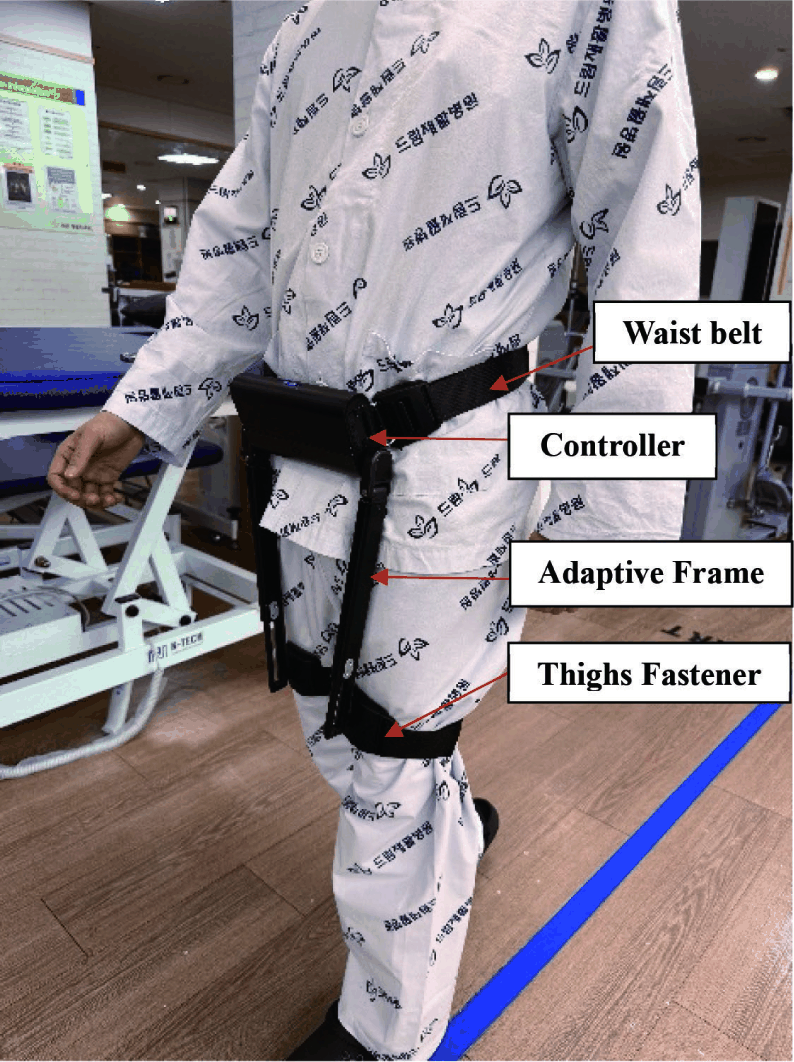
Based on manufacturer specifications, previously pub-lished evaluations, and pilot tolerability testing in early postoperative inpatients, the device was operated in Assist mode at a fixed assist level (Assist Level 2; peak assistive torque of 4.0 Nm) for all participants.11,12 The reported peak assistive torque capacity of the device ranges from approximately 4 to 5 Nm depending on operating condi-tions.11 In early postoperative ambulation, where balance reserve is limited and fall risk is heightened, inappropriate assistance timing or excessive assistance can perturb natural gait control; exoskeleton parameters have been shown to modify stride-to-stride gait variability, and some configurations can adversely affect reactive balance responses to slip- and trip-like perturbations.17,18 In addition, human-in-the-loop optimization studies indicate that meaningful reductions in walking energy cost can be achieved with relatively low assistance magnitudes, and that “more assistance” is not necessarily better across outcomes.19,20 Therefore, Assist Level 2 was selected to provide moderate assistance while avoiding excessive torque that could disrupt gait mechanics or increase perceived instability during early postoperative ambulation. No individualized torque adjustment was per-formed to ensure standardized exposure across participants.
Participants were fitted with the device in a standing position under the supervision of a physical therapist. The rotational axis of the device was aligned as closely as possible with the anatomical hip joint axis, and the waist belt and thigh straps were adjusted to minimize movement or slippage during walking.
Functional mobility and gait performance were assessed using the Timed Up and Go (TUG) test and the 10-Meter Walk Test (10MWT). The TUG measured the time required to stand up from a chair, walk 3 m, turn around, return to the chair, and sit down, with shorter times indicating better functional mobility.21,22 The 10MWT was conducted using a walkway that allowed for acceleration and deceleration, and walking time was recorded over the central 10 m.23 Both the 10MWT and TUG have demonstrated good reliability and validity in patients following total hip arthroplasty, supporting their use in this population.24 Total step count and walking time were used to calculate spatiotemporal gait parameters as follows: gait speed (m/s)=10 m ÷ time (s); cadence (steps/min)=(steps ÷ time) × 60; and step length (m)=10 m ÷ total steps. Step count was recorded as the total number of steps without differentiation between the left and right limbs.
This single-session study used a within-subject design comparing unassisted walking and WHE-assisted walking in the same inpatients. The testing sequence was standardized for all participants and was fixed from the unassisted condition to the WHE-assisted condition. This fixed order was selected to prioritize safety in early postoperative inpatients who had limited independent ambulation and an elevated risk of instability and falls. In addition, first-time use of the WHE and initial apprehension during donning could increase safety risk if device-assisted walking was tested first. Therefore, unassisted assessments were completed first, followed by WHE-assisted assessments.
Using a walker for all assessments was intended to ensure safety and minimize variability related to assistive device selection across conditions. All assessments were supervised by a physical therapist with more than 2 years of clinical experience in gait rehabilitation. Participants were monitored for pain exacerbation, excessive fatigue, skin irritation, near-falls, and discontinuation during all trials.
All participants performed gait assessments using a walker, and the same assistive device was used across both unassisted and WHE-assisted conditions for each participant.
Under the unassisted condition, participants completed the TUG test and 10MWT at self-selected speed (SSS) and fast speed (FS). Each test condition was performed twice, and the mean of the two trials was used for analysis.
Participants rested in a seated position for at least 1 minute between trials, with additional rest provided as needed to minimize fatigue and maintain safe performance during repeated gait-speed testing.12
After completion of all unassisted assessments, partici-pants were fitted with the wearable hip exoskeleton.
A standardized familiarization period was conducted to ensure safety and facilitate initial adaptation, during which participants walked along a flat indoor corridor (approxi-mately 40 m per circuit) and completed one circuit. This familiarization was intended to promote safety and comfort and to allow initial adaptation rather than to serve as a training intervention.25
Following familiarization, participants rested for approx-imately 3 minutes before formal testing to minimize fatigue and ensure safe repeated gait testing.23
Statistical analyses were performed using SPSS version 18.0 (IBM Corp., Armonk, NY, USA). Continuous variables are presented as mean ± standard deviation. Normality of paired differences was assessed using the Shapiro–Wilk test and visual inspection of Q–Q plots. Paired t tests were used for outcomes that met the normality assumption. Because the paired differences for 10MWT FS time violated the normality assumption, a Wilcoxon signed-rank test was used for that outcome. Statistical significance was set at α=0.05, and exact p values are reported unless p<0.001. Effect sizes and 95% confidence intervals were also reported to support practical interpretation beyond p values. Cohen’s d was used for paired t-tests, and r was used for the Wilcoxon signed-rank test; absolute values were reported for all effect sizes.
RESULTS
Eighteen inpatients completed both unassisted and WHE-assisted gait assessments and were included in the analysis. No adverse events, including near-falls, device-related discomfort, or discontinuation, were observed during testing. Functional mobility and spatiotemporal gait parameters under unassisted and WHE-assisted conditions are presented in Table 3. TUG time was significantly shorter during WHE-assisted walking (p=0.015). During the 10MWT at SSS, WHE-assisted walking significantly reduced step count (p=0.024) and walking time (p=0.003) and increased gait speed (p=0.039) and step length (p=0.015). Cadence did not differ significantly between conditions. At FS, WHE-assisted walking significantly reduced walking time (p<0.001) and increased gait speed (p<0.001). Step count, step length, and cadence did not differ significantly between conditions.
DISCUSSION
Wearing the WHE was associated with immediate improvements in straight-line walking after hip surgery. The clearest effects were observed in the 10MWT. At SSS, gait speed increased, accompanied by shorter walking time, fewer steps, and longer step length. This pattern suggests a more efficient spatial gait strategy over a fixed distance and is consistent with the intended role of hip flexion–extension assistance in facilitating limb advancement and forward progression.8,12 Prior studies using WHE in older adults have similarly reported improvements in gait performance and functional outcomes.9-11 In addition, WHE gait training has been shown to improve metabolic walking efficiency in older adults, supporting the broader plausibility of perfor-mance gains associated with hip-assist technology.26 At FS, walking time decreased and gait speed increased, whereas step-derived metrics changed less markedly. Safety constraints during inpatient walking may partly explain this finding, including routine walker use and cautious maximal effort, which can limit spatiotemporal adaptation.31,32
WHE-assisted gait speed increased by 0.05 m/s at SSS and 0.09 m/s at FS. The clinical relevance of these changes can be evaluated against established minimal clinically important difference (MCID) thresholds.27 In older adults, an improvement of approximately 0.05 m/s represents a small clinically important difference, whereas an improve-ment of approximately 0.10 m/s constitutes a substantial clinically important difference.27 Interpreted within this framework, the 0.05 m/s improvement at SSS meets the threshold for a small MCID, whereas the 0.09 m/s improvement at FS closely approaches the threshold for a substantial clinically important difference. Beyond its value as a functional performance measure, gait speed independently predicts survival and long-term outcomes in older adults, underscoring the prognostic relevance of even modest improvements.28 Nevertheless, interpretive caution remains warranted because early postoperative gait assessment is inherently sensitive to testing protocol (e.g., start condition, acceleration and deceleration allowance, and measurement environment), which may introduce variability in performance estimates.23-25,29 Furthermore, in post–total hip arthroplasty populations, reliability characteristics of the 10MWT can vary by condition (e.g., indoor vs outdoor), indicating that measurement error may be nontrivial in early recovery settings.24 Accordingly, the present results are most appropriately characterized as an immediate assistive effect of the WHE during device use rather than as evidence of durable functional recovery. Longitudinal follow-up and randomized, counterbalanced designs are required to determine whether these acute assistive gains translate into sustained improvements throughout rehabilitation.
Cadence did not change significantly despite faster walking. This finding suggests that speed gains were driven primarily by spatial adjustments, such as longer step length, rather than by increased step frequency. In exoskeleton gait training on real-world terrain, speed gains have been reported to be more strongly associated with increased stride length than with higher cadence, supporting the plausibility of a predominantly spatial mechanism.30 Walker use may further limit cadence modulation in inpatients. Assistive devices can alter gait parameters while imposing stability demands and increasing upper-limb load.31,32
Functional mobility improved on the TUG with WHE assistance. The TUG is a composite task consisting of sit-to-stand, straight walking, turning, return walking, and sitting.21 Total time reflects both gait and transitional control demands. Instrumented TUG studies have demonstrated that subcomponents can contribute differently across patients and conditions.33 The 10MWT improvement likely contributed to performance during the straight-walking segments of the TUG. Hip assistance may also support dynamic stability during turning and directional changes. Prior WHE interventions have reported improvements in TUG performance and related functional outcomes in older adults.9,11 A single-subject case study of hip-assist gait training following total hip arthroplasty reported improved TUG performance, supporting the clinical plausibility of WHE-related mobility gains in the hip surgery population.34
Several limitations affect inference. First, the test order was fixed; therefore, learning effects may have influenced performance. Second, the TUG was not analyzed by phase, so the primary contributor to improvement remains unclear. Third, surgical heterogeneity may have increased variability. Fourth, walker use may have constrained spatiotemporal adaptations. Fifth, the exact postoperative day was not recorded for each participant. Therefore, it was not possible to examine whether the magnitude of the immediate WHE effect varied according to time since surgery, which may have contributed to between-participant variability. Despite these constraints, the results support that WHE use can acutely enhance straight-line gait (10MWT) and composite mobility (TUG) in early inpatient rehabilitation after hip surgery. Future studies should use randomized, counterbalanced designs. Longitudinal protocols are needed to evaluate retention beyond the immediate assistive effect observed during device wear.
CONCLUSIONS
In inpatients after hip surgery, overground walking with a WHE was associated with immediate improvements in walking performance, including shorter 10MWT time and higher gait speed at both self-selected and fast walking speeds. These findings suggest that WHE-assisted walking produces measurable, immediate changes in gait performance while the device is worn.


