
 PDF Download
 PubReader
 Export Citation
 Email the Author
 Share Facebook
 Share Twitter
 Cited by 0 Article
 Metrics (View:1,219)







INTRODUCTION
In recent years, generative artificial intelligence (AI) has rapidly expanded across industry, research, and education. Within the educational domain, tools built on large language models (LLMs), such as ChatGPT, Gemini, and Microsoft Copilot, have transformed the students’ learning processes via their natural language understanding and generation capabilities.1,2 Early versions were primarily used for limited functions, including writing assistance and translation, whereas current applications extend to more complex tasks such as problem-solving and report writing.3 These developments have enabled learners to design and execute self-directed learning activities without relying solely on traditional lectures.4,5 The scope and depth of this trend is expected to increase in the coming years.
Recent studies applying frameworks such as the Technology Acceptance Model and the Unified Theory of Acceptance and Use of Technology, examined factors influencing attitudes toward generative AI and intentions to use it, and identified educational benefits, including enhanced information accessibility, improved learning efficiency, and reduced cognitive load.6,7 However, technological advancements do not always yield positive outcomes, and concerns regarding potential adverse effects such as plagiarism, copyright infringement, and biased information are being increasingly debated.8 Dahiya and Kumari reported that university students who had received AI ethics education had greater awareness and a stronger intention for responsible use.9 Such findings underscore the need to address both ethical awareness and corresponding behaviors in AI use. Previous studies have developed instruments for measuring AI ethics awareness and critical evaluation skills in university populations, noting that women students often achieve higher ethics-related scores than their men counterparts.10 Nevertheless, most existing research has either targeted general university cohorts without differentiating by field of study or has focused predominantly on engineering disciplines.11,12 Investigations specifically involving students in health science disciplines, in which face-to-face interaction and communication are central, remain limited. Furthermore, even when sex differences are acknowledged, analyses frequently combine men and women participants without conducting separate examinations.
Sex-based differences in receptivity to emerging technologies extend beyond simple variations in preference or frequency of use. They may encompass broader influences, including attitudes, self-efficacy, and cultural or structural factors embedded in educational experiences.13–15 Meta-analyses have indicated that men generally exhibit more favorable attitudes toward technology and higher self-efficacy, patterns thought to be shaped by intersecting factors such as traditional gender role expectations, access to educational opportunities, and persistent stereotypes.16,17 Recent research suggests that these tendencies also manifest in AI adoption, with men often evaluating AI more positively and adopting it more readily than women.18,19 From the perspective of Social Reproduction Theory, proficiency in using generative AI can be considered a type of cultural capital.20 Accordingly, sex-based disparities in acceptance and use may contribute to learning gaps and potentially foster new forms of inequality within educational settings.
The present study investigated the use, purposes, perceptions, attitudes, and ethical awareness regarding gen-erative AI tools among health science students, and sex-based differences. This pilot study aims to provide foundational data for future large-scale investigations.
METHODS
This study employed a cross-sectional survey design targeting undergraduate students enrolled in a College of Health Sciences at a four-year university. Data collection was conducted on campus using a structured questionnaire. Participation was voluntary, and only currently enrolled students were eligible. Before the survey, all participants were informed regarding the study objectives and provided informed written consent. A total of 35 respondents were recruited for this pilot survey via convenience sampling, without an a priori power analysis. The primary aim was to assess feasibility and generate preliminary data to inform sample size estimation for future large-scale studies. To ensure anonymity, no personally identifying information was collected. This study was approved by the Institutional Review Board of Woosong University (IRB. 1041549-251014-SB-227).
The questionnaire comprised the following six domains and a total of 20 items, including three questions on demographic characteristics:
-
(1) Demographic characteristics (sex, age, and year of study)
-
(2) Experience with generative AI tools (use history, number of tools used, frequency of use)
-
(3) Purposes and usage patterns (information search, exam preparation)
-
(4) Learning outcomes and perceived impact (effects on current learning achievement and critical thinking skills)
-
(5) Ethical awareness and attitudes (perceptions of plagiarism, ethical actions taken)
-
(6) Intentions and outlook for future use (anticipated future impact on learning, willingness to use actively)
Most items were single-choice questions rated on a five-point Likert scale, while some were multiple-choice questions allowing more than one response. The survey was conducted as part of a pilot study and content validity was established through a review of relevant literature and expert consultation.
Prior to statistical analysis, all single-choice responses were coded numerically, and multiple-choice responses were converted into dichotomous variables (1=selected, 0=not selected) in Microsoft Office Excel version 2019. Statistical analyses were performed using SPSS Statistics version 28.0 (IBM Corp., Armonk, NY, USA).
Descriptive statistics were computed for all responses. Single-choice items were summarized as percentages, whereas multiple-choice items were organized as multiple response sets prior to analysis. Crosstabulation and chi-square tests were used to examine associations between categorical variables, including associations between AI usage frequency and selected learning-related variables, as well as sex-based comparisons between men and women participants. Participants who did not report sex were excluded from these analyses. For contingency tables containing cells with an expected frequency<5, Fisher’s exact test was additionally performed to supplement the chi-square results. Adjustments for multiple comparisons were not implemented due to the exploratory nature of this pilot study. The significance level (α) was set at .05.
RESULTS
Descriptive figures present aggregated data to outline overall trends in AI use and perceptions. Sex-based differences were examined through statistical analyses and are presented in the corresponding section.
The sample included an equal number of men and women students (n=17 each), with one respondent not reporting sex (Table 1). Regarding age distribution, 45.7% were 18–20 years, 37.1% were 21–23 years (thus 82.8% were aged≤23 years), 8.6% were 24–26 years, and 8.6% were≤27 years. Year of study was distributed as follows: first year 34.3%, second year 11.4%, third year 37.1%, and fourth year 14.3%.
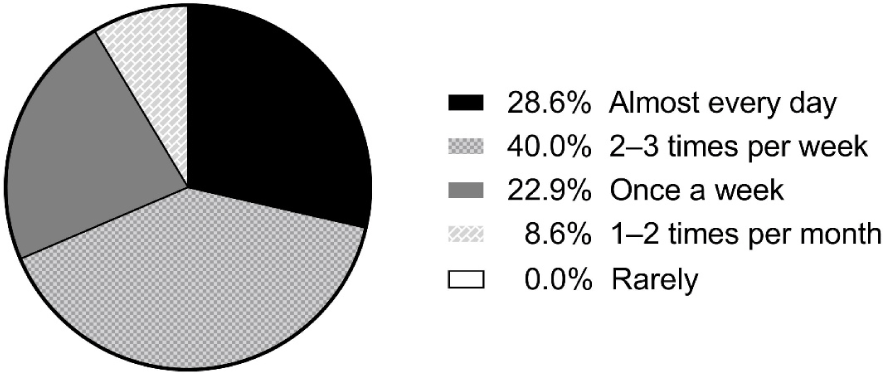
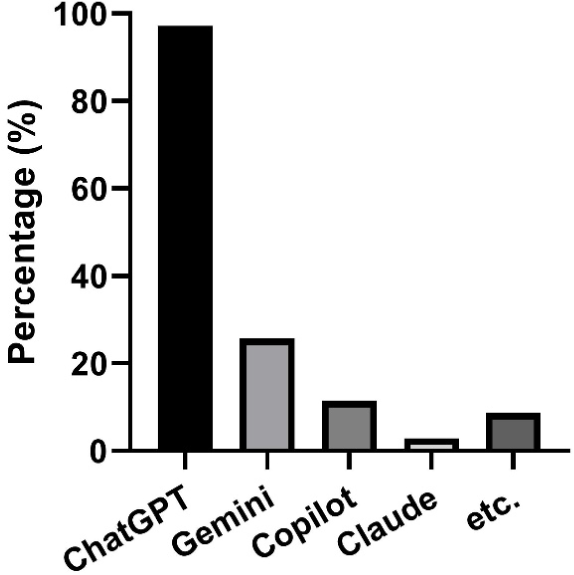
All participants reported prior use of generative AI tools (100%). In terms of usage frequency, the most common response was “almost every day” (28.6%), followed by “two to three times per week” (40.0%), “once per week” (22.9%), and “once or twice per month” (8.6%) (Figure 1). The most frequently used tool was ChatGPT (97.1%), followed by Gemini (25.7%), Microsoft Copilot (11.4%), Claude (2.9%), and other tools (8.6%) (Figure 2).
The most frequently reported purposes for using generative AI tools were information search (80.0%), summarizing and organizing information (57.1%), understanding concepts (51.4%), writing assistance (45.7%), exam preparation (37.1%), translation (37.1%), and report or essay writing (34.3%). The most frequently perceived benefits were time saving (65.7%), increased understanding of study materials (62.9%), improved access to information (57.1%), reduced workload for assignments (54.3%), and enhanced self-directed learning skills (45.7%), while improved creative problem-solving skills was less frequently reported (14.3%). Reported difficulties included lack of accuracy (77.1%), lack of reliability (65.7%), increased dependency (42.9%), plagiarism concerns (31.4%), difficulty in understanding how to use the tools (25.7%), conflicts with assignment guidelines (10.2%), and reduced critical thinking skills (5.7%).
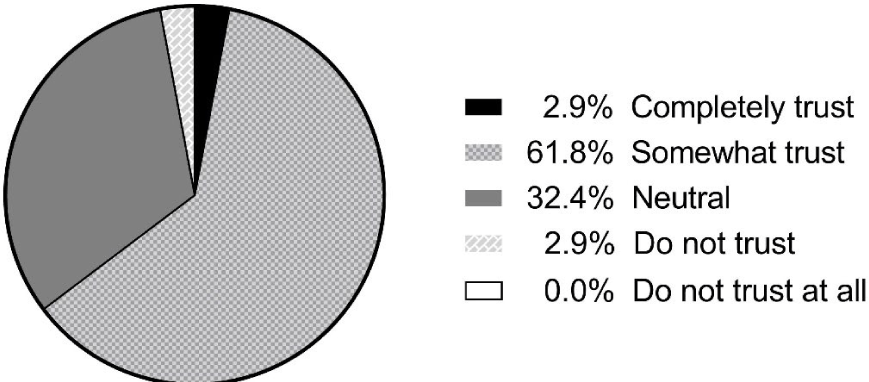
Regarding the impact of AI use on learning achievement, 82.9% of respondents reported a positive effect (“Significantly improved” 34.3% and “Somewhat improved” 48.6%), while 14.3% reported “No change,” and 2.9% reported “Somewhat decreased”; no participant selected “Significantly decreased.” The responses to impact on critical thinking skills were predominantly positive, with 17.1% indicating “Significantly improved,” 42.9% “Somewhat improved,” 25.7% “No change,” and 14.3% “Somewhat decreased.” Regarding trusting the information or responses provided by generative AI tools, the most frequent response was “Trust somewhat” (61.8%), followed by “Neutral” (32.4%), “Completely trust” (2.9%), and “Do not trust” (2.9%); none of the respondents selected “Do not trust at all” (Figure 3).
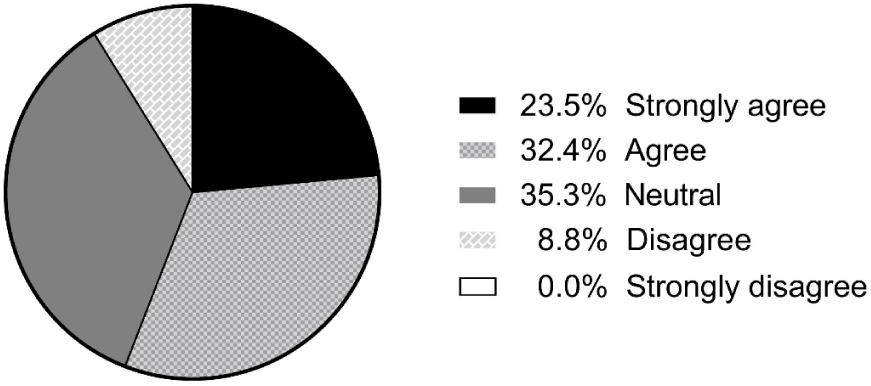
When asked whether using AI-generated text in assignments without modification constitutes plagiarism, 23.5% responded “Strongly agree,” 32.4% “Agree,” 35.3% “Neutral,” 8.8% “Disagree,” and none selected “Strongly disagree” (Figure 4). The most common ethical action taken when using generative AI tools was reviewing and editing AI-generated results (73.5%), followed by limiting the use of generative AI tools (38.2%), citing AI-generated content as a source (26.5%), and following ethical guidelines (20.6%); 5.9% reported taking no specific action. Only 23.5% reported receiving education on AI ethics. Awareness of their institution’s guidelines for AI use was most often “Neutral” (38.2%), followed by “Somewhat aware” (32.4%), “Barely aware” (17.6%), “Very well aware” (5.9%), and “Not aware at all” (5.9%).
Perceptions regarding the potential positive impact of generative AI tools on future learning were generally favorable, with 48.5% responding “Strongly agree” and 36.4% “Agree.” “Neutral” responses accounted for 9.1%, while 6.1% selected “Disagree,” and none selected “Strongly disagree.” A similar pattern was observed for the intention to actively use generative AI tools in the future: “Strongly agree” 48.5%, “Agree” 39.4%, “Neutral” 6.1%, “Disagree” 3.0%, and “Strongly disagree” 0%. The most anticipated future developments were improved accuracy (84.8%) and enhanced personalization features (75.8%), followed by ethical safeguards (39.4%), legal or regulatory frameworks (15.2%), and improved interface or accessibility (9.1%).
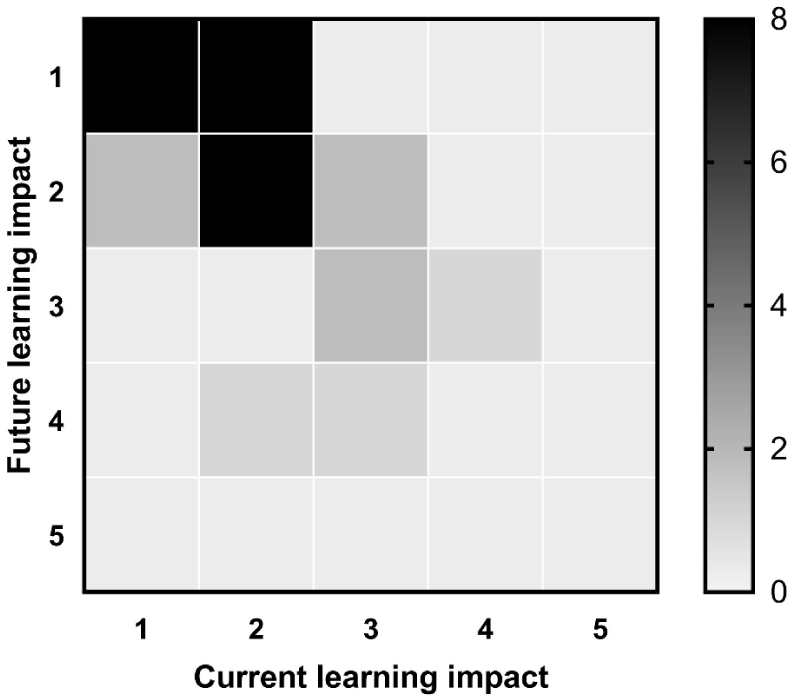
To explore whether the extent of AI use was associated with learning-related perceptions, associations between AI usage frequency and selected learning-related variables were examined. No statistically significant association was observed between AI usage frequency and perceived current learning achievement (χ2=7.395, p=0.596). However, the relationship between usage frequency and expectations for future learning impact trended towards significance. While Pearson’s chi-square test did not reach significance (p=0.092), the Linear-by-Linear Association test indicated a statistically significant association (χ2=6.338, p=0.012). Additionally, the relationship between perceived current learning achievement and future expectations was statistically significant in both Pearson’s chi-square (χ2=25.688, p=0.002) and the Linear-by-Linear Association (χ2=12.096, p=0.001). Figure 5 presents a heatmap of the frequency distribution, where darker shading indicates a higher concentration of responses for each combination of current and future learning impact ratings.
Sex-based comparisons revealed statistically significant differences in three variables. First, perceptions concerning the impact of generative AI tools on critical thinking skills differed significantly between men and women students (Pearson χ2=8.197, p=0.042). All men respondents in the “strongly positive” category represented 100% of that response group, whereas responses from women were distributed primarily across “somewhat positive” and “no change.” Significant differences were observed in expectations of generative AI’s future contribution to learning (χ2=10.705, p=0.013) and in the intention to use generative AI tools actively in the future (χ2=10.583, p=0.014). In both cases, men more frequently selected “strongly agree,” while women more often selected “agree” or “neutral.” Cramer’s V values indicated moderate to large effect sizes (Table 2). No other variables showed statistically significant differences between men and women.
DISCUSSION
Recent advances in generative AI technologies have fundamentally changed how students approach learning and utilize information. While several studies have examined AI use in higher education, research on ethical awareness and sex-related differences remains lacking.
Descriptive analysis indicated that all respondents had prior experience using generative AI tools, with 68.6% reporting regular use at least two to three times per week. Among them, 28.6% reported using generative AI tools almost daily, suggesting that a substantial proportion of university students already integrate these tools into their academic routines. Similar patterns of rapid, year-on-year growth in adopting AI have been observed internationally.21,22 Information search emerged as the most frequently cited purpose (80%), which implies that generative AI tools are not limited to a supportive learning role but have begun to substitute some functions of traditional search engines such as Google23. A comparative study between ChatGPT and Google Search found that ChatGPT required less time for task completion and produced more accurate responses to intuitive queries24; participants highly rated the quality of information and expressed greater satisfaction when using ChatGPT. Moreover, while the performance of Google Search tended to vary with the participants’ educational level, ChatGPT’s performance remained relatively consistent, suggesting its potential to help reduce digital disparities. Following information search, students most often used generative AI tools for summarization, conceptual understanding, writing assistance, and exam preparation.25,26 Translation also ranked highly, likely because health science curricula frequently involve English-language textbooks and international academic resources. Although concerns remain regarding the accuracy and reliability of AI-generated content, students in this study reported positive experiences regarding time savings, improved comprehension, and reduced workload. These findings indicate that generative AI has already evolved beyond a supplementary role to function as a substantive learning tool.27,28 Current issues such as hallucinations are expected to diminish with continued advances in LLM through techniques such as "retrieval-augmented generation," "self-reflection," and "iterative model-level contrastive learning," which may further expand the scope of use.29–31 ChatGPT was by far the most widely used tool (97.1%). A 2023 survey of U.S. adults reported that 79% had at least heard of ChatGPT, and among those under 30, 58% had used it.32 Its early release relative to other generative AI platforms, extensive media exposure, and the availability of multiple model types designed for different tasks (such as GPT-4o for general applications, o3-Pro for reasoning, GPT-4.1 for coding, GPT-4.5 for writing) possibly contributed to its strong brand recognition.
The relationship between AI usage frequency and perceived learning achievement was not statistically significant, indicating that usage frequency does not necessarily translate into perceived qualitative benefits. However, a notable trend emerged between usage frequency and expectations of AI’s future contributions to learning. This suggests that while current experiences may not fully meet students’ expectations, they nonetheless anticipate greater benefits as the technology matures.33 Furthermore, students who perceived generative AI tools as positively influencing their current learning were more likely to hold higher expectations for future impact. This pattern implies that positive experiences and perceptions of learning benefits contribute to sustained intentions to use these technologies.
Only 8.8% of respondents indicated that directly using AI-generated text in assignments without modification would not constitute plagiarism. The term “AI-giarism” was recently introduced, highlighting that students increasingly perceive this as a new form of academic misconduct.34 Despite the generally high level of ethical awareness, practical actions remain lacking. While the most frequently reported action when using generative AI tools was reviewing and editing AI-generated outputs (73.5%), the proportion citing AI-generated content as a source (26.5%) or referring to ethical guidelines (20.6%) was notably low. Interestingly, the percentage opting to “limit AI use” (38.2%) was higher than that for citation, suggesting a tendency to avoid use altogether rather than comply with attribution practices. Overall, the findings indicate that although respondents were aware of potential ethical concerns, their understanding and implementation of specific operational guidelines or behavioral principles did not match this awareness. This gap may not reflect individual negligence but rather structural issues, including the insufficient provision of AI ethics education.35 Most participants in this study lacked prior training and reported low awareness of guidelines, which appears to result in defensive strategies such as limiting usage instead of proper citation. Therefore, higher education should incorporate ethics-related content with a focus on actionable guidance, alongside a need for proactive governmental involvement. This holds particular significance in health science education, where the ethical use of information, critical evaluation, and professional responsibility are integral to clinical reasoning and patient safety. While institutional regulations are important, there is also a need for overarching guidelines similar to those established by institutional review boards. For example, the recent passage of the Artificial Intelligence Act by the European Parliament mandates clear labeling of AI-generated content under its transparency provisions36. However, given the rapid pace of AI development, legislative measures lag behind, underscoring the continued importance of institutional-level initiatives.
Sex-based differences were evident in three variables. First, men were significantly more likely than women to consider the impact of generative AI tools on critical thinking skills as highly positive.37 Furthermore, men expressed stronger expectations regarding generative AI’s future contribution to learning and a greater willingness to use generative AI tools actively. Prior research similarly has shown that men use generative AI more frequently and gained 6.4% more productivity compared to women.38 Additional studies have reported that women tend to be more apprehensive toward AI and had lower usage rates, indicating meaningful sex-based disparities in adoption.19,39 These differences have also been observed from a technology acceptance perspective. For example, studies on adopting new software showed that men were more likely to emphasize perceived usefulness, whereas women prioritized perceived ease of use.19 Taken together, these findings suggest that sex-based differences in AI adoption and attitudes might stem from variations in technology-related self-efficacy and differing approaches to technology acceptance. Theoretical perspectives from the Technology Acceptance Model (TAM) and the Unified Theory of Acceptance and Use of Technology (UTAUT) elucidate these patterns.40,41 Within these frameworks, behavioral intention hinges on core constructs such as perceived usefulness (performance expectancy) and ease of use (effort expectancy), alongside facilitating conditions. Additionally, individual factors including technology-related self-efficacy and anxiety act as significant influences. Accordingly, the observed sex-based differences in this study may reflect differences in technology acceptance and affective responses to AI (e.g., AI-related anxiety), which together influence attitudes toward AI and intentions for continued use.
This study has several limitations. First, although conducted as a pilot at a single institution, the relatively small sample size limits the generalizability of the findings to other health science programs or institutional contexts. Future large-scale, multi-institutional studies involving students from a broader range of academic disciplines are warranted. Second, usage patterns and learning outcomes measures were based on subjective self-assessment, which limits the ability to draw conclusions regarding the relationship with objective indicators such as actual academic performance or task completion quality. Subsequent research should incorporate quantitatively measurable outcomes to evaluate the tangible effects of AI use in relation to user perceptions and behaviors.
CONCLUSIONS
This study examined the use of generative AI tools and related ethical attitudes among undergraduate students in health science disciplines. Most participants were already incorporating tools such as ChatGPT into their learning processes and perceived benefits including time savings and improved comprehension. With regard to ethical awareness, students were highly aware of the potential issues associated with AI use; however, their corresponding corrective actions were often limited. The findings also indicated a notable lack of formal education on AI ethics, underscoring the need for integrating ethical competency training into AI-related curricula. Sex-based analyses revealed higher future expectations and stronger intentions for active use among men, suggesting potential differences in technology acceptance between sexes. Overall, the results indicate that generative AI is evolving from a supplementary learning aid into a significant educational medium that shapes both learning experiences and attitudes. In parallel with this transition, the development and implementation of appropriate ethical guidelines and training are becoming increasingly important. Furthermore, given the possibility of sex-related differences in technology acceptance, instructional strategies may need to be adapted to align with the characteristics and needs of different learner groups. As this was a pilot study with a limited sample size, the findings should be interpreted as hypothesis-generating and are intended to inform the design of future large-scale investigations, rather than to provide definitive conclusions.


