
 PDF Download
 PubReader
 Export Citation
 Email the Author
 Share Facebook
 Share Twitter
 Cited by 0 Article
 Metrics (View:1,418)







INTRODUCTION
Ankle injuries are common musculoskeletal disorders of the lower extremity regardless of age or sex, and inversion sprains are the most prevalent type, typically accompanied by lateral ligament injuries.1,2 Approximately 20% of acute ankle sprains progress to chronic ankle instability (CAI) due to recurrent injuries and functional impairments.3 CAI is classified into mechanical and functional factors,4 with the functional factors including deficits in proprioception, muscle weakness, and impaired postural control.4,5 These functional impairments lead to recurrent ankle injuries and reduced balance ability.6
According to previous studies, individuals with CAI exhibit significantly reduced ankle muscle strength, and such weakness has been reported to be closely associated with walking stability, dynamic balance, and functional performance.7,8 In addition, ankle muscle strength plays a crucial role in various balance tasks, and muscle weakness is known to increase the risk of recurrent injury.6 These findings suggest that strengthening the ankle muscles is essential for individuals with CAI and that interventions targeting both muscle strength and proprioception are necessary to improve balance and functional recovery.
Previous studies on CAI have reported that low-load resistance training using elastic bands9,10 combined with proprioceptive training11 is effective in improving muscle strength and neuromuscular control and in reducing the risk of recurrent injury.12,13 However, traditional high-load resistance training (HLRT) performed at 70–85% of one-repetition maximum (1RM), which is generally recommended for strength gains, may increase mechanical stress on the joints and connective tissues and elevate the risk of musculoskeletal injury due to muscle and tendon overuse. Therefore, caution is required when applying traditional HLRT to individuals with CAI.14-16
As a means to overcome these limitations, blood flow restriction exercise (BFR), which can produce effects comparable to traditional HLRT, has gained increasing attention.17,18 BFR involves applying an inflatable cuff to the proximal portion of a limb to restrict venous outflow while partially maintaining arterial inflow, thereby creating a hypoxic environment within the muscle.17,19 This environment increases metabolic stress and promotes the recruitment of Type II muscle fibers, contributing to strength gains,20 and it has been reported that such adaptations can occur even at low loads, producing effects similar to those of traditional HLRT.21,22
Recently, studies have also examined the clinical effects of BFR in adults with CAI. Previous research reported that the application of LL-BFR for four weeks in adults with CAI resulted in greater improvements in ankle dorsiflexion and eversion strength compared with traditional HLRT. In addition, significant pre- to post-intervention improvements were observed in dynamic balance, as assessed by the YBT, as well as in ankle instability, measured using the Cumber-land Ankle Instability Tool (CAIT).23
However, research examining the effects of interventions that combine proprioceptive training with LL-BFR in individuals with CAI remains limited. Therefore, this study aimed to investigate the effects of LL-BFR combined with proprioceptive training on ankle muscle strength and balance in adults with CAI.
METHODS
This study was conducted over a four-week period beginning in April 2025 with 26 adults with CAI residing in Andong. All participants were informed of the study purpose and procedures and provided written informed consent prior to participation. Participants were randomly assigned to either the experimental group, which performed LL-BFR combined with proprioceptive training, or the control group, which performed traditional HLRT combined with proprioceptive training. The study was conducted following approval from the Institutional Review Board of Daegu University (approval number: 1040621-202503-HR-017).
Sample size estimation was performed using the G*Power software (version 3.1.9.4) based on a two-way mixed measures analysis of variance. A previous study involving adults with functional ankle instability reported effect sizes for the Star Excursion Balance Test ranging from Cohen’s d = 0.598 to 1.209 and this effect size range was used as a reference in the present study.24 To avoid overestimation of the effect size and underestimation of the required sample size, a conservative effect size of f = 0.40 was applied.
Participants were included if they met the following criteria: a score of 24 or lower on the Korean version of the Cumberland Ankle Instability Tool (CAIT-K);25 experience of at least two episodes of ankle giving way within the previous six months; persistent functional impairment or a subjective sense of ankle instability;26 and no comorbid conditions that could limit participation in the study or completion of the assessments. In contrast, participants were excluded if they had a history of lower extremity musculoskeletal surgery; neurological impairments resulting in sensory or motor deficits; or medical conditions such as hypertension, varicose veins, anemia, or cardiovascular disease.
Prior to the intervention, each participant’s arterial occlusion pressure (AOP) and 1RM were measured to determine individualized exercise intensity. Ankle muscle strength and dynamic balance were assessed before and after the intervention. The intervention was conducted three times per week for four weeks, with each session lasting 40 minutes (5 minutes of warm-up, 30 minutes of main exercise, and 5 minutes of cool-down). All assessments and interventions were administered by a physical therapist with more than five years of clinical experience.
AOP was measured according to the procedures described in previous studies.27 After resting in a prone position for five minutes, AOP was measured at the popliteal artery using a sphygmomanometer and stethoscope. The cuff was placed at the distal one-third of the thigh, and pressure was gradually increased until the pulse sound disappeared, which was recorded as the participant’s AOP.
Because direct measurement of 1RM at the ankle joint is difficult, it was indirectly estimated using a 7RM.28 The 7RM measurement was determined based on the elastic band elongation manual, and the Brzycki equation was used to estimate the 1RM. The Brzycki equation has been reported to demonstrate high accuracy in predicting 1RM and was therefore used in this study to estimate 1RM.29
The intervention in this study was conducted in the rehabilitation therapy room of Hospital A, and participants were individually supervised by a physical therapist with more than five years of clinical experience who had received prior training on the study protocol. Both groups participated in an intervention program that commonly included proprioceptive training. The intervention was performed three times per week for four weeks, with each session lasting 40 minutes. Each session consisted of a 5-minute warm-up, a 30-minute main exercise, and a 5-minute cool-down.
Although the exercise intensity and set configuration differed between the two interventions to reflect the physiological characteristics of traditional HLRT and LL-BFR, the total intervention time, including proprioceptive training, was kept identical between the two groups to control for intervention exposure time.
The intensity of ankle resistance exercise using elastic bands was determined based on the 1RM indirectly estimated from an individualized 7RM assessment. Considering the potential safety risks associated with direct measurement, 1RM was calculated using the Brzycki equation following the 7RM test. The experimental group performed LL-BFR at an intensity corresponding to 20% of the estimated 1RM, whereas the control group performed traditional HLRT at an intensity corresponding to 80% of the estimated 1RM.
In this study, both the experimental and control groups performed ankle resistance exercises using the same elastic bands, and the difference between the two interventions was determined by the applied load level and the use of blood flow restriction rather than by the exercise equipment. The resistance of the elastic band was applied by adjusting the elongation while fixing the resting length at 50 cm, and the resistance level corresponding to each elongation was determined based on the manufacturer’s manual. In addition, prior to exercise application, a luggage scale was used to verify that the actual band tension corresponded to the target resistance level, thereby ensuring consistency of exercise intensity.
To control joint angle and range of motion, a target bar was used to visually present the target range of motion of the ankle joint, and all repetitions were performed within the same joint range. All interventions were individually supervised by a physical therapist with more than five years of clinical experience who had received prior training, and band elongation and joint angles were continuously monitored to ensure consistency and reproducibility of exercise intensity across sessions.
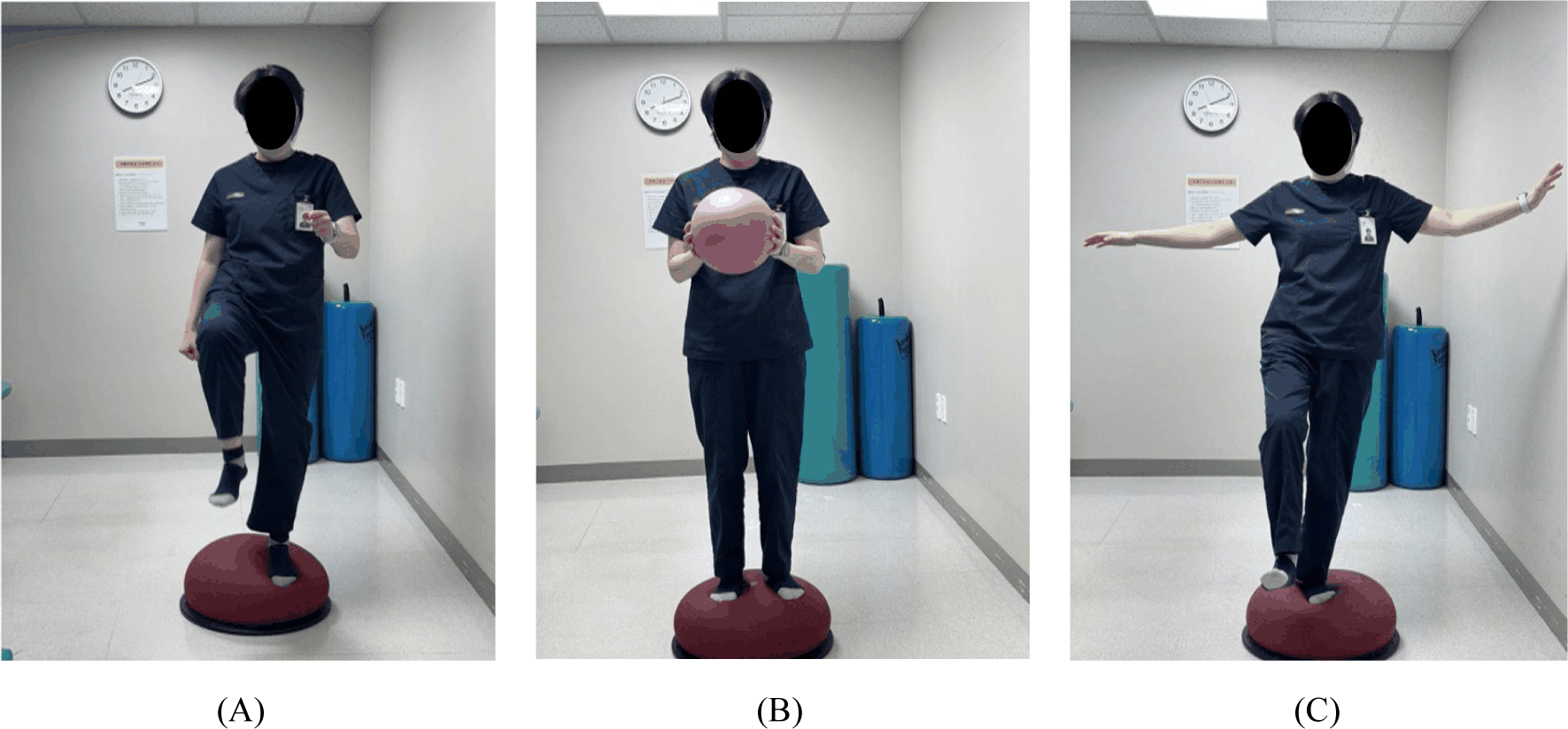
In this study, proprioceptive training was performed on an unstable support surface using a TOGU Jumper® (TOGU GmbH, Prien am Chiemsee, Germany). The exercise program was modified and supplemented based on previous studies and consisted of three tasks: marching in place, standing while tossing and catching a ball with both feet on the surface, and single leg standing,30 These tasks have been reported to be effective in improving balance and sensorimotor function.12,30 The exercise program included the three tasks described above. Each exercise was performed for three sets of 60 seconds, with a 30-second rest between sets (Figure 1).
In BFR, it has been reported that setting the applied pressure relative to an individual’s AOP, rather than using an absolute pressure, is important for ensuring safety and consistency of the training stimulus.33 In particular, Kim et al. reported that LL-BFR performed at approximately 50% of AOP resulted in muscle strength gains comparable to those achieved with traditional HLRT, suggesting that a moderate level of blood flow restriction pressure is sufficient to induce meaningful physiological adaptations.31 Based on these previous findings, as well as considerations of safety and participant adherence in clinical practice, a blood flow restriction pressure corresponding to 50% of each participant’s AOP was applied in this study.
During the intervention period, adverse events related to BFR were monitored at every session. If pain, numbness or sensory disturbances, dizziness, or excessive discomfort occurred, the blood flow restriction pressure was immediately released and the intervention was discontinued, with sufficient rest provided as needed. No adverse events requiring discontinuation of the intervention were reported during the intervention period.
The experimental group performed LL-BFR at 20% of their 1RM while blood flow was restricted to 50% of each participant’s AOP.31 The exercise was performed for four sets consisting of 30, 15, 15, and 15 repetitions, with a 30-second rest between sets.32,33 The exercises were performed using an elastic band and consisted of dorsiflexion, plantarflexion, inversion, and eversion movements (Figure 2).
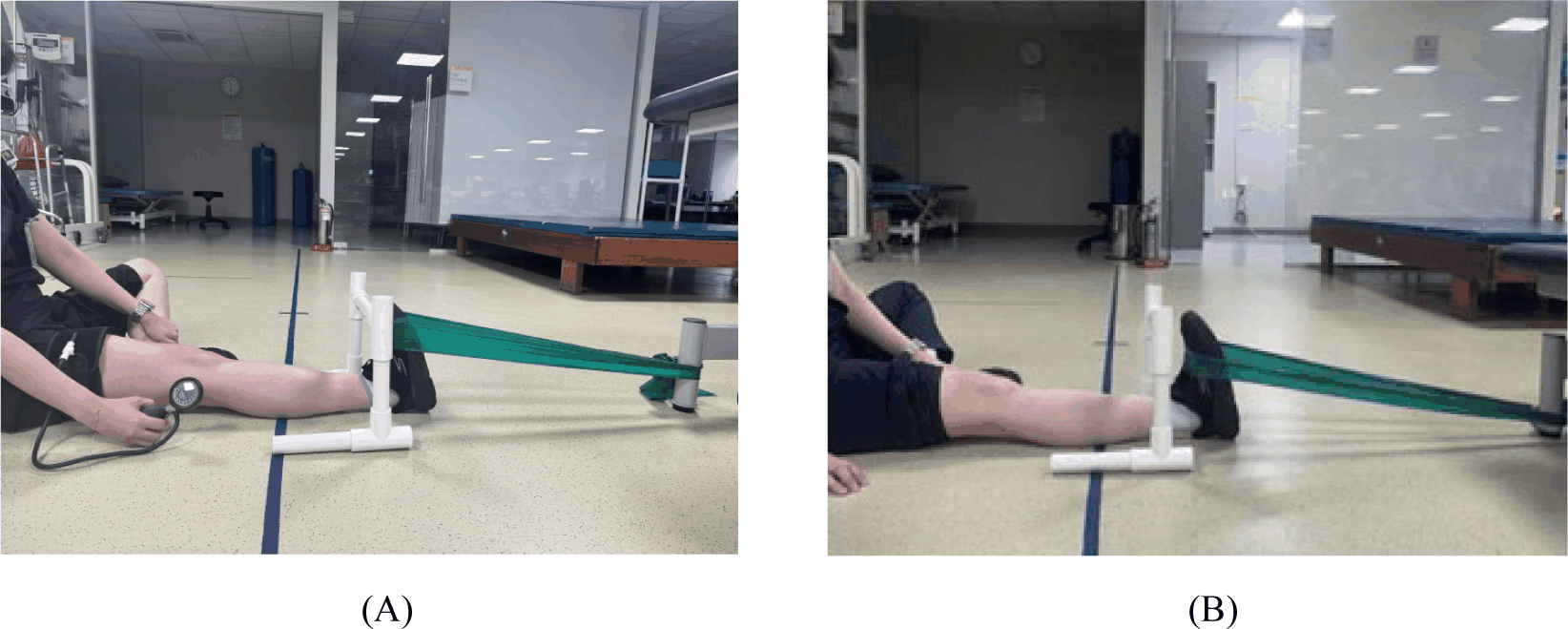
The control group performed resistance training at 80% of 1RM without blood flow restriction. The exercises were performed for three sets of eight repetitions, with a two-minute rest between sets. The exercises were performed using an elastic band and consisted of dorsiflexion, plantarflexion, inversion, and eversion movements (Figure 2).
In this study, ankle muscle strength in dorsiflexion, plantarflexion, inversion, and eversion was measured using a digital dynamometer (LAFAYETTE Handheld Dynamome-ter, USA). Each movement was measured three times during maximal isometric contraction, and the mean value was used for the final analysis. To minimize the effects of muscle fatigue, a 15-second rest period was provided between measurements. According to previous studies, this measure-ment method has demonstrated excellent reliability, with intra-rater reliability ranging from ICC = 0.966 to 0.974 and inter-rater reliability ranging from ICC = 0.868 to 0.904.34
Dynamic balance was assessed using the limit of stability (LOS) test and the YBT. The LOS represents the maximum range within which an individual can shift their center of mass without losing balance. In this study, dynamic balance was assessed using the Biorescue system (RM Ingenierie, Rodez, France). Participants stood comfortably on the platform and followed on-screen instructions to measure the maximum displacement of their center of mass. The test–retest reliability of the LOS assessment using the Biorescue system has been reported to be high, with an intraclass correlation coefficient (ICC) of 0.84.35
The YBT was used to assess lower extremity dynamic balance by measuring the maximum reach distance in three directions: anterior, posteromedial, and posterolateral. The score was calculated by dividing the maximum reach distance by leg length and multiplying the result by 100.36
Data analysis was performed using SPSS version 23.0 (SPSS Inc., Chicago). The normality of the participants’ general characteristics was assessed using the Shapiro-Wilk test. Interaction effects for ankle muscle strength and dynamic balance were analyzed using two-way mixed measures ANOVA. When a significant time × group interaction was found, independent t-tests with Bonferroni correction were conducted for post hoc comparisons (α = 0.025). Within-group pre- to post-intervention changes were assessed using paired t-tests (p <0.05), and for variables showing significant changes, effect sizes (Cohen’s d) were calculated and reported. Effect sizes were interpreted as small, medium, and large based on thresholds of 0.2, 0.5, and 0.8, respectively.
RESULTS
The general characteristics of the participants are presented in Table 1. In ankle muscle strength, both groups showed significant pre- to post-intervention improvements in dorsiflexion, plantarflexion, and eversion (p <0.05), whereas no significant change was observed in inversion (p > 0.05) (Table 2). In addition, neither the main effect of group nor the time × group interaction effect was significant (p > 0.05). In the LOS, only the main effect of time was significant (p <0.05), while the main effect of group and the time × group interaction effect were not significant (p > 0.05). In the YBT, both the main effect of time and the time × group interaction effect were significant (p <0.05) (Table 3). Post hoc analyses indicated that both groups demonstrated significant improvements in the YBT, and although the control group showed a greater magnitude of change than the experimental group, the between-group difference did not reach statistical significance after Bonferroni correction (p = 0.044) (Table 4). All participants completed the intervention protocol, consisting of three sessions per week for four weeks (a total of 12 sessions), and no dropouts occurred.
M±SD, mean±standard deviation; DF, dorsiflexion; PF, plantarflexion; IV, inversion; EV, eversion; EG, experimental group (low-load blood flow restriction exercise combined with proprioceptive training); CG, control group (Traditional high-load resistance training combined with proprioceptive training).
M±SD, mean±standard deviation; EG, experimental group (low-load blood flow restriction exercise combined with proprioceptive training); CG, control group (traditional high-load resistance training combined with proprioceptive training); LOS, limit of stability; YBT, Y-balance test (Values are expressed as percentage of leg length).
| YBT | Pre | Post | Difference value | t | d | p |
|---|---|---|---|---|---|---|
| EG | 70.06±5.26 | 72.96±6.14 | 2.90±3.21 | –3.25 | 0.90 | 0.007* |
| CG | 63.52±6.84 | 69.76±5.54 | 6.24±4.67 | –4.81 | 1.34 | 0.001* |
| t | –2.12 | |||||
| p | 0.044 |
DISCUSSION
This study aimed to investigate the effects of LL-BFR combined with proprioceptive training on ankle muscle strength and balance in 26 adults with CAI. As a result, both groups showed significant post-intervention increases in dorsiflexion, plantarflexion, and eversion strength (p <0.05), which is consistent with previous research suggesting that improvements in muscle strength are an important component of functional recovery in individuals with CAI. Notably, the experimental group showed improvements in muscle strength despite exercising at a low intensity of 20% 1RM. This may be explained by the hypoxic environment and increased metabolic stress induced under blood flow restriction, which promote Type II muscle fiber recruitment and enhance neuromuscular activation.37,38
The control group exhibited greater improvements through traditional HLRT at 80% of 1RM. This finding is consistent with previous studies indicating that traditional HLRT is most effective for increasing muscle strength, as it induces high mechanical tension and extensive motor unit recruitment.39,40 LL-BFR has been reported to induce muscle strength gains comparable to those achieved with traditional HLRT. In particular, Kim et al. reported that LL-BFR resulted in muscle strength improvements similar to those observed with traditional HLRT.31 Considering these previous findings, LL-BFR may serve as a supplementary or alternative intervention for individuals who have difficulty performing high-load resistance exercise.
Inversion strength did not show significant changes in either group (p > 0.05). This may be because the tibialis posterior, the primary muscle responsible for inversion, is a deep medial ankle muscle, and the LL-BFR applied in this study may not have provided sufficient load to effectively stimulate it. In addition, this finding is consistent with previous reports indicating that individuals with CAI show greater impairments in eversion strength than inversion strength.41 It suggests that strengthening the evertors and plantarflexors has a more direct impact on improving balance ability, and that appropriate stimulation methods are required to effectively activate deep muscles.
In this study, both the LOS and YBT showed significant improvements after the intervention in both groups (p <0.05), which is consistent with previous findings indicating that dynamic balance performance is influenced not only by ankle muscle strength but also by proprioception and neuromuscular control.42 Given that both groups received the same proprioceptive training, it is likely that improvements in neuromuscular control played an important role in enhancing dynamic balance. Notably, a significant time × group interaction was observed in the YBT (p <0.05), with the control group showing greater improvements. This result is consistent with previous reports indicating that YBT reach distances are highly correlated with dorsiflexion, plantarflexion, and eversion strength.7,8 The greater increase in muscle strength observed in the control group is thought to have contributed to the larger improvements in YBT reach distance.
Although the LL-BFR in the experimental group resulted in relatively smaller gains in muscle strength, the combined sensory and motor stimulation provided by proprioceptive training and blood flow restriction likely enhanced neuromuscular control, which in turn contributed positively to improvements in dynamic balance. This finding is also consistent with previous research indicating that balance deficits in individuals with CAI are related not merely to muscle weakness, but rather to impairments in muscle coordination, joint position sense, and sensorimotor integration.43,44 The improvements in dynamic balance observed in this study appear to be the result of simultaneous enhancements in ankle muscle strength and neuromuscular control. In particular, the control group, which performed traditional HLRT, exhibited greater gains in muscle strength, which likely contributed to the larger improvements in dynamic balance.
This study has several limitations. First, the relatively small sample size limits the generalizability of the findings to the broader population of individuals with CAI. Second, the intervention period was relatively short (4 weeks), which makes it difficult to determine the long-term effects or sustainability of the intervention. Third, participants’ daily physical activities could not be fully controlled, and therefore their potential influence on ankle muscle strength and dynamic balance cannot be ruled out. Fourth, the total training volume was not equally controlled between the experimental and control groups. In this study, the rating of perceived exertion was not quantitatively assessed, and due to the characteristics of elastic band-based resistance exercise, there were limitations in quantifying training volume using traditional methods. As a result, the total training volume could not be matched between groups, and differences in training volume may have influenced the intervention outcomes. In particular, this should be considered when interpreting the between-group differences observed in the YBT.
In addition, AOP was not measured using precise instruments such as Doppler ultrasound, which may have limited the accuracy of cuff pressure determination. Furthermore, patient-reported outcome measures assessing subjective functional status, such as the CAIT or the Foot and Ankle Ability Measure, were not included as pre- and post-intervention outcome variables. Follow-up assessments to examine the incidence of reinjury after completion of the intervention were also not conducted. Therefore, the findings of this study should be interpreted as being limited to changes in objective physical function, such as ankle muscle strength and balance.
Future studies should adopt research designs that equate total training volume between groups by adjusting repetitions and load, ensure a sufficiently long intervention period, and include participants with diverse age ranges and physical activity levels in order to enhance the generalizability of the findings.
CONCLUSIONS
This study examined the effects of combining pro-prioceptive training with LL-BFR on ankle muscle strength and dynamic balance in adults with CAI. As a result, both the experimental and control groups demonstrated improvements in ankle muscle strength and dynamic balance following the intervention, and a significant time × group interaction effect was observed in the YBT. However, LL-BFR did not demonstrate greater effects compared with traditional HLRT. Considering these findings, LL-BFR may be utilized as a supplementary exercise approach that can be selectively applied to individuals who have difficulty performing high-intensity exercise.


