
 PDF Download
 PubReader
 Export Citation
 Email the Author
 Share Facebook
 Share Twitter
 Cited by 0 Article
 Metrics (View:1,453)







INTRODUCTION
Patellofemoral pain syndrome (PFPS) is a chronic musculoskeletal disorder affecting individuals from adolescence through older adulthood, with a prevalence as high as 35.7% among athletes.1,2 Knee pain is commonly exacerbated by activities that increase patellofemoral joint loading, such as stair climbing, running, and squatting, and PFPS negatively impacts quality of life and functional performance.3 As symptoms progress, individuals may adopt compensatory movement strategies, such as a forward trunk lean, which has been shown to increase hip flexion angles and extensor moments while decreasing knee extensor moments; this shift may be associated with reduced patellofemoral joint loading.4,5
PFPS is considered a multifactorial condition involving not only altered hip kinematics and dynamic valgus, but also lower-extremity alignment, segmental coordination, and rotational factors throughout the kinetic chain. Therefore, investigating how trunk position affects proximal and distal muscle recruitment may provide clinically relevant information for rehabilitation.6 Muscle imbalances, specifically between the vastus lateralis (VL) and vastus medialis oblique (VMO), along with weakness of the gluteus medius (GMed), contribute to patellar malalignment and excessive patellofemoral joint stress.7,8 Consequently, strengthening the VMO and GMed is considered beneficial in preventing PFPS-related dysfunction, whereas excessive reliance on the tensor fasciae latae (TFL) due to insufficient GMed activation may lead to muscle strain and inflammation.9
Among closed kinetic chain exercises, the single-leg squat (SLS) is widely utilized because it replicates functional weight-bearing activities and elicits substantial activation of the GMed and gluteus maximus (GMax).10 While the SLS can provoke pain or compensatory patterns in patients with PFPS, standardized task protocols have demonstrated high reliability and validity in prior studies,11 and SLS tasks have been conducted to examine kinematics and neuromuscular activation patterns in individuals with PFPS.12,13
Recent research has emphasized the role of trunk posture in modulating lower-limb muscle recruitment during weight-bearing tasks, with forward trunk lean shown to increase GMax activation and alter joint moments, which may influence patellofemoral stress.5,14,15 During squatting tasks, rectus femoris (RF) activation showed a tendency to decrease with increasing trunk lean, whereas trunk flexion angles exceeding 30° have been reported to substantially increase lumbar extensor activation and spinal loading.16 Despite these insights, the effects of graded trunk lean on lower-limb muscle activation specifically during single-leg squat hold (SLSH) in individuals with PFPS have not been systematically examined, limiting evidence-based clinical strategies for this population.
Therefore, the purpose of this study was to investigate differences in lower-limb muscle activity across three trunk-lean conditions (0°, 15°, and 30°) during SLSH in individuals with PFPS. Although the RF may contribute to anterior knee loading during squatting, the present study focused on muscles more directly associated with frontal-plane control, patellar stabilization, and hip-dominant compensation strategies; thus, the RF was excluded from the primary electromyographic analysis. We hypothesized that a greater trunk lean would progressively increase hip extensor activity, particularly the GMax, while reducing activation of the quadriceps and TFL.
METHODS
Participants were recruited from a rehabilitation hospital in South Korea. Inclusion criteria required self-reported anterior or peripatellar knee pain during at least two activities, such as stair climbing, squatting, prolonged sitting, or rising from a chair, with a symptom duration of at least 2 months.17-19 Additionally, participants had to demonstrate a typical daily pain intensity of 3 or higher on an 11-point numeric pain rating scale (NPRS) and a positive result on the Clarke's test, defined as the reproduction of retropatellar pain during resisted quadriceps contraction. Functional impairment was further confirmed using the Kujala Patellofemoral Score, with eligible participants scoring between 40 and 70 points.20 Exclusion criteria included a history of knee surgery or traumatic injury, such as ligamentous or meniscal tears, clinical signs of knee joint effusion or patellar tendinopathy identified through visual inspection and palpation, and neurologic conditions affecting the lower limbs. An a priori power analysis conducted using G*Power (α = 0.05, effect size d = 0.25, and power [1−β] = 0.85) indicated that a minimum sample size of 32 participants was required. Accounting for a potential 20% dropout rate, 37 participants were initially recruited. Five participants withdrew, resulting in a final sample of 32 participants (15 males, 17 females).
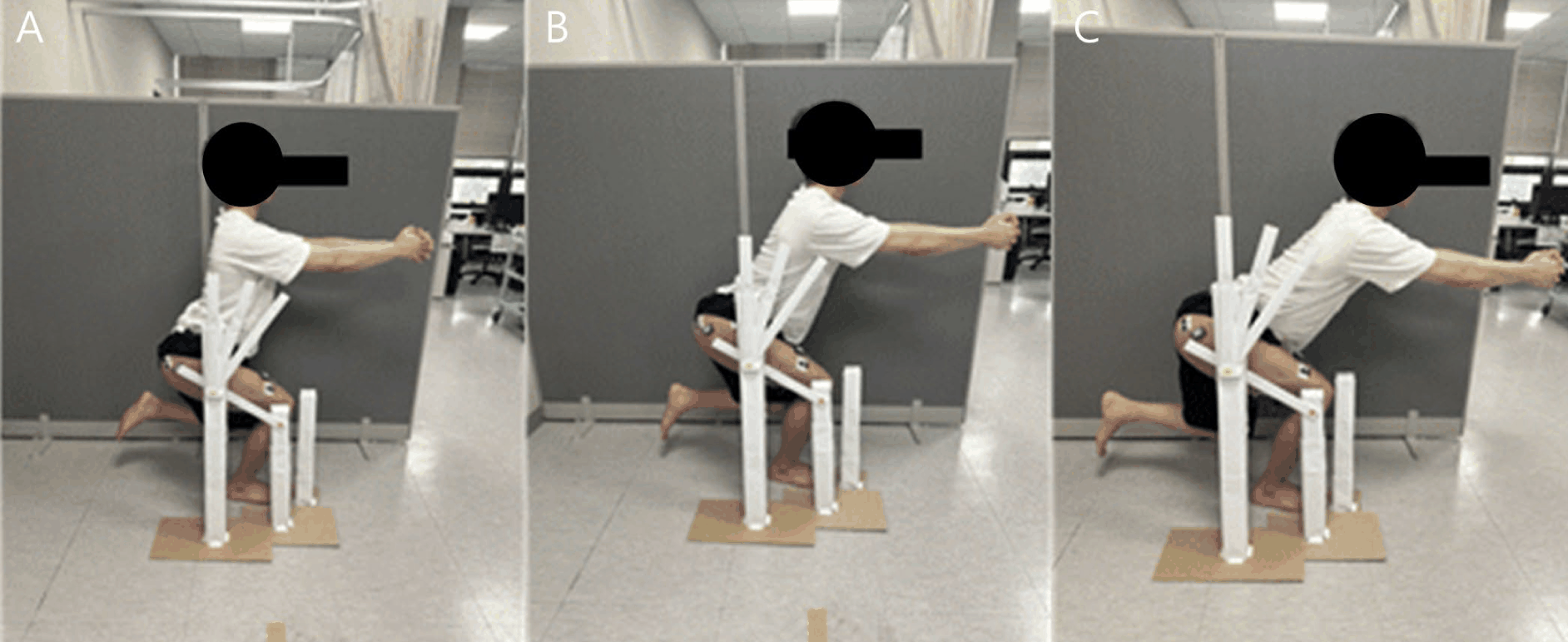
Participants received standardized verbal instructions and demonstrations for each experimental condition, followed by a 5-min practice period to familiarize themselves with the SLSH. To ensure the accuracy of the trunk lean angles (0°, 15°, and 30°), the target posture was initially set and verified using a manual goniometer and reflective markers placed on the knee joint. During the trials, participants received real-time verbal feedback from the examiner to maintain the target posture. All procedures were supervised by the same examiner to ensure intra-rater consistency. The knee flexion angle was standardized at 60° using a custom-bent rod positioned alongside the tibia, ensuring that the knee did not extend beyond the toes.21 Participants were initially seated on a height-adjustable manual table to acquire the 60° knee flexion position, then shifted their body weight onto the tested leg while maintaining the knee angle. They were instructed to maintain a neutral lumbar curve and transfer their body weight onto the tested limb while standing on one leg. The apex of the patella was aligned with the second toe to ensure proper knee joint alignment.22
A vertical rod placed anterior to the toes was used to prevent forward knee displacement. While this standardized 60° knee angle was adopted to improve experimental consistency, we acknowledge that anthropometric differences among participants may have influenced the individual biomechanical demands of the task. This should be considered when interpreting the muscle activation data. Participants held the SLSH at 60° of knee flexion for 5 s while muscle activity was recorded. To minimize fatigue, a 3-min rest was provided between conditions. Each condition was performed five times, and the mean of the middle three trials was used for analysis (Figure 1).
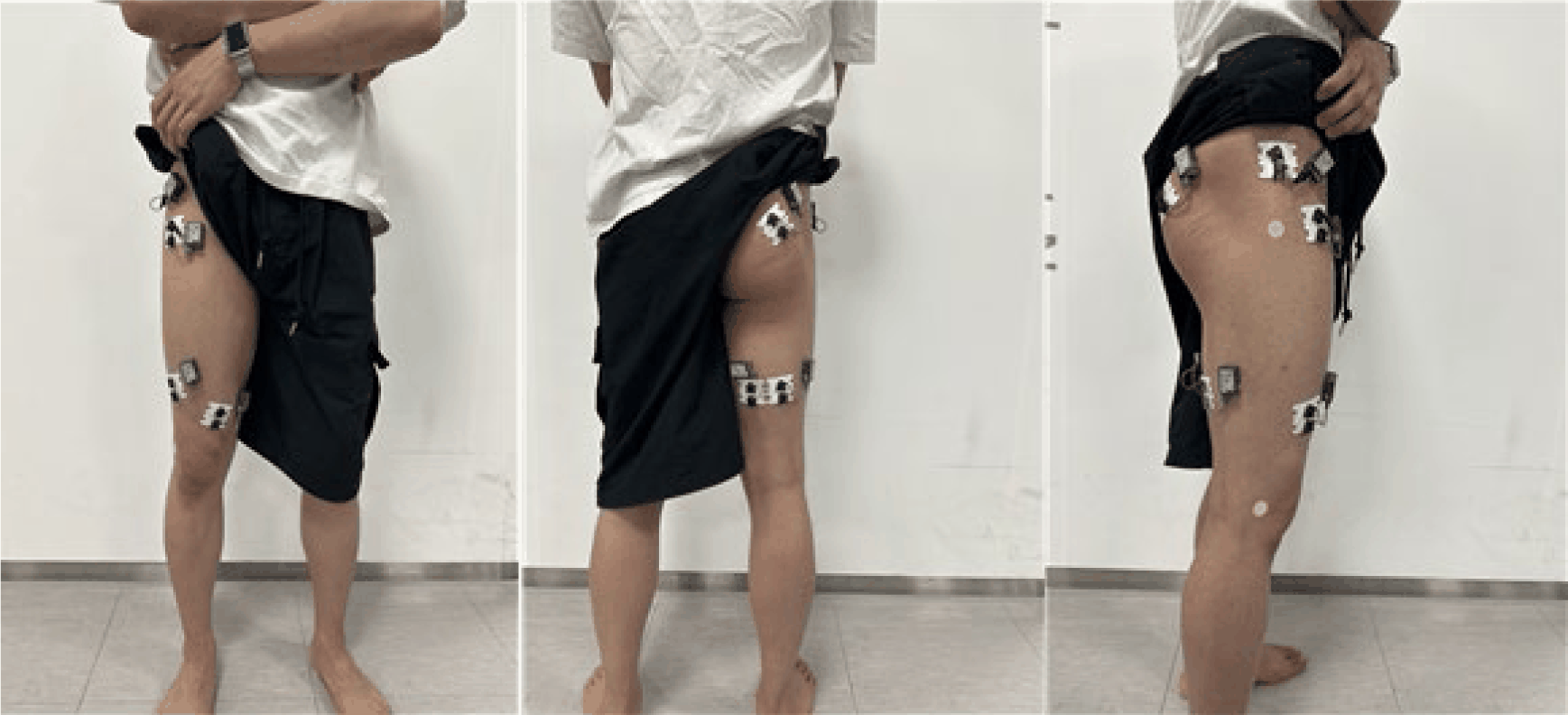
Muscle activity was recorded for the VMO, VL, GMax, TFL, GMed, semitendinosus (ST), and BF. A wireless surface electromyography (sEMG) system (TeleMyo DTS 12CH, Noraxon, Scottsdale, AZ, USA) was used to measure lower limb muscle activity during the experimental tasks. The sampling rate was set at 1,000 Hz, and a band-pass filter of 40–250 Hz was applied. Signals were full-wave rectified, converted to root mean square (RMS) values, and stored for analysis. A 60-Hz notch filter was applied to remove electrical noise. All signals were processed using MyoResearch XP 1.72 software. Electrode placement followed the Surface Electromyography for the Non-Invasive Assessment of Muscles (SENIAM) guidelines, developed as part of the European BIOMED II program, which provide standardized electrode locations.23
The VMO electrode was placed at 80% on the line from the anterior superior iliac spine (ASIS) to the joint space in front of the anterior border of the medial ligament, oriented almost perpendicular to this line. The VL electrode was placed at 2/3 on the line from the ASIS to the lateral side of the patella, oriented in the direction of the muscle fibres. The GMax electrode was placed at 50% on the line from the sacral vertebrae to the greater trochanter, oriented from the posterior superior iliac spine toward the middle of the posterior thigh. The TFL electrode was placed at the proximal 1/6 of the line from the ASIS to the lateral femoral condyle. The GMed electrode was placed at 50% on the line from the iliac crest to the greater trochanter, oriented in the direction of this line. The ST and BF electrodes were placed at 50% on the lines from the ischial tuberosity to the medial and lateral epicondyles of the tibia, respectively, oriented in the direction of each line. Electrode placement locations are further illustrated in Figure 2.
The accuracy of these guidelines is supported, with a mean distance error of 2.7% between the SENIAM-recommended and optimal electrode site in healthy individuals.24 Their reliability has also been demonstrated with intraclass correlation coefficients (ICCs) ranging from 0.948 to 0.994 during isometric contractions across various muscle groups.25 To minimize measurement error, the skin at electrode sites was shaved, cleaned with alcohol, and dried prior to electrode application. Muscle activity was recorded three times for each muscle, and the mean RMS value of the three trials was used for analysis.
Maximal voluntary isometric contractions (MVICs) were obtained for each muscle to normalize EMG signals, which were expressed as a percentage of MVIC (%MVIC). MVICs for the VMO, VL, GMax, TFL, GMed, ST, and BF were measured following standard manual muscle testing protocols. Each contraction was maintained for 5 s, and the RMS values were calculated using the middle 3 s, excluding the first and last 1 s. The mean of three repetitions was used to represent 100% MVIC for each muscle.
All data were analyzed using the Statistical Package for the Social Sciences (SPSS) software, version 28.0 (IBM, Armonk. NY, USA). Descriptive statistics summarized participant’s general characteristics. A repeated-measures analysis of variance was used to compare muscle activity across the three trunk lean conditions (0°, 15°, and 30°) during the SLSH. When significant differences were observed, Bonferroni post hoc tests were conducted for pairwise comparisons. The statistical significance was set at p<0.05. However, for multiple comparisons, the Bonferroni-adjusted alpha level was applied, resulting in a significance threshold of p<0.017.
RESULTS
All variables were normally distributed. Significant differences in the EMG activity were observed for the VMO, VL, GMax, and TFL across the three trunk lean conditions (p<0.05), while no significant differences were found for GMed, ST, or BF (p>0.05). Post hoc analysis indicated that VMO activity significantly decreased at 15° compared with 0°, with no significant differences between 0° and 30° or 15° and 30°. VL activity was significantly lower at both 15° and 30° compared with 0°, with no difference between 15° and 30°. GMax activity increased significantly at 15° and 30° compared with 0°, and at 30° compared with 15°. TFL activity decreased significantly at 15° and 30° compared with 0°, with no significant difference between 15° and 30° (Table 1).
DISCUSSION
PFPS is characterized by intermittent sharp pain localized to the anterior knee, peripatellar region, or posterior aspect, exacerbated during activities including squatting, stair ascent and descent, or prolonged sitting.26,27 This study investigated changes in the electromyographic activity of the VMO, VL, GMax, TFL, GMed, ST, and BF during SLSH performed with 0°, 15°, and 30° of trunk lean at 60° of knee flexion, aiming to identify effective neuromuscular re-education exercise strategies for PFPS rehabilitation.
Higher GMax activation has been observed during static lunges, forward step lunges, and forward walking lunges when the trunk is inclined rather than upright, indicating that forward trunk lean increases the demand for hip stabilization and extension to maintain balance and posture.14 Forward trunk lean during SLSH similarly increases hip flexion angle, induces eccentric contractions of the hip and thigh muscles, and subsequently enhances GMax activation.15 Consistent with these findings, the present study demonstrated that the forward trunk lean likely shifts the center of mass anteriorly, increasing the demand for pelvic and trunk stabilization and thereby elevating GMax activity.
GMed activity did not differ significantly across trunk lean conditions. SLSH have been reported to produce substantial GMed activation due to the muscle’s role in controlling knee valgus.28 GMed activation is also higher when the trunk is flexed compared with an upright posture during single-leg slide squats.29 This increased activation may reflect the muscle’s role in resisting hip internal rotation, particularly during the eccentric phase of the squat.
During SLSH, the anterior, middle, and posterior fibers of the GMed have demonstrated activation levels of 48%, 40%, and 48% MVIC, respectively, indicating that the anterior and posterior fibers contribute more to balance control during the task.30 Because trunk movement in this study occurred primarily in the sagittal plane, activation of the anterior and posterior GMed fibers may have been greater than that of the middle fibers, potentially explaining the insignificant differences. However, this interpretation should be considered with caution, as surface EMG does not allow differentiation of fiber-specific activation patterns within the GMed, and the contribution of individual fiber regions to the observed results cannot be determined from the present data. GMed activation also increases when the non-weight-bearing limb moves laterally during single-leg slide squats, increasing the center-of-mass shift and balance demands due to instability of the sliding disc.29 Conversely, the non-weight-bearing limb was fixed in the present study, which may explain the contradictory findings. GMed also plays an essential role in preventing contralateral pelvic drop during single-leg stance, contributing to mediolateral stability. Because trunk lean in this study involved only anterior–posterior movement, GMed activation remained largely unchanged across conditions.
We observed a decrease in TFL activity upon increase in trunk lean. TFL contributes to hip flexion, abduction, and internal rotation, and excessive activation may laterally displace the patella, exacerbating PFPS symptoms. Abnormal hip kinematics and impaired hip muscle function are associated with musculoskeletal disorders such as PFPS.8 Individuals with PFPS demonstrated reduced hip abduction, external rotation, and extension strength, along with increased hip internal rotation and knee valgus during functional tasks compared with asymptomatic individuals.31 Excessive TFL activation during therapeutic exercises may promote hip internal rotation and be counterproductive for individuals with musculoskeletal disorders.32 Trunk position during single-leg stance also influences hip and knee muscle activity, with forward trunk posture increasing activation of posterior sagittal plane muscles while reducing anterior muscle activation.33 Sagittal plane trunk lean may have contributed to the observed decrease in overall TFL activity. However, because surface EMG cannot differentiate between the anterior and posterior fiber regions of the TFL, it remains unclear whether this reduction reflects a uniform decrease across all fiber regions or differential changes in specific fiber contributions. Therefore, the clinical implications of this finding for PFPS management should be interpreted with caution.
Although ST and BF activity did not differ significantly across trunk lean conditions, an increasing trend was observed. Increased GMax and BF activation has been observed during squats performed with 30° of trunk flexion, and BF and erector spinae activation substantially increases during unsupported forward trunk flexion.16 Forward trunk lean during repeated squats has also been associated with erector spinae fatigue and lower back discomfort.5,15 Although trunk position did not significantly influence BF activation in one study, greater erector spinae activation was required when trunk stability demands increased.14 Altogether, the observed increasing trend in hamstring activity with greater trunk lean in the present study suggests a potential role in enhancing hip muscle recruitment, improving knee stability, and limiting hip internal rotation.
The lack of statistically significant differences, however, warrants further discussion. The static nature of the SLSH task may not have imposed sufficient hip extension demand to elicit measurable hamstring recruitment changes across conditions. It has also been reported that hamstring loading increases patellofemoral cartilage pressure, which may be particularly relevant in individuals with PFPS.34 Whether PFPS-specific pain-avoidance strategies contributed to attenuated hamstring responses during this task remains speculative and cannot be determined from the present data alone. Future studies incorporating kinematic analysis and pain monitoring during task performance would be needed to clarify this relationship.
VMO and VL activity decreased as trunk lean increased. Although reduced VMO activity may reflect decreased quadriceps demand and potentially reduced knee loading, it may also indicate a reduced contribution of a muscle commonly considered essential for patellar stabilization. Therefore, the clinical value of trunk-inclined squat strategies should be interpreted in relation to specific rehabilitation goals: while it may be effective for reducing overall knee joint stress, it may not be the primary choice when the specific goal is to enhance medial patellar stabilizers. Decreased VMO activation is clinically significant because insufficient VMO activity allows excessive lateral patellar pull, disrupting tracking and potentially increasing subchondral bone loading.35 Various interventions were designed that selectively enhanced VMO activation in PFPS, which includes squat and lunge exercises combined with isometric hip adduction.36 Cadaveric studies indicate that hip adduction stabilizes the knee by enabling the VMO to generate greater force through its shared origin with the adductor magnus.
Dynamic knee valgus during SLSH has been described as a combination of hip adduction and internal rotation with knee abduction and external rotation.37 Such altered knee joint motion is associated with PFPS and other lower-limb injuries.38 Hip-focused squats have been recommended to decrease knee pain and enhance functional movement, and hip-dominant movement strategies have been associated with reduced PF joint stress in prior biomechanical studies.39 The observed increase in GMax activity and decrease in quadriceps-related activity may suggest a shift toward a more hip-dominant strategy, which could be associated with lower patellofemoral loading in the present population. However, patellofemoral joint stress was not directly measured in the present study, and these results represent an associative inference rather than a direct measurement of joint loading.
Several limitations of this study should be acknowledged. First, the cross-sectional design precludes the determination of long-term effects of trunk-inclined exercises. Second, the absence of a healthy control group limits the ability to com-pare these activation patterns with normal movement strategies. Future studies should include a healthy control group to determine whether muscle activation patterns in response to trunk lean differ between individuals with and without PFPS. Third, the use of a static hold task may not fully represent the neuromuscular demands of dynamic squatting. Fourth, the precision of postural control relied on manual goniometry and verbal feedback, which may intro-duce subtle variability. Lastly, because only EMG variables were measured, the actual changes in joint stress and kinematic alignment remain to be verified in future studies utilizing force plates and three-dimensional motion analysis.
CONCLUSIONS
This study evaluated the effects of trunk lean (0°, 15°, and 30°) during SLSH on the muscle activity of the VMO, VL, GMax, TFL, GMed, ST, and BF in individuals with PFPS to assess its therapeutic potential. The results demonstrated that GMax, TFL, VMO, and VL activity differed significantly across trunk lean conditions (p<0.05), whereas no significant differences were observed for GMed, ST, or BF (p>0.05).
Overall, increasing trunk lean during SLSH may enhance GMax activation while reducing TFL and quadriceps-related activity in individuals with PFPS. Performing the SLSH with forward trunk lean may facilitate a shift toward a hip-dominant strategy, which could be associated with reduced patellofemoral joint loading based on prior biomechanical evidence. However, it should be noted that patellofemoral joint stress was not directly measured in the present study, and this inference is based on indirect evidence from muscle activation patterns rather than kinetic or kinematic data.
From a clinical perspective, these findings suggest that incorporating 15° to 30° of forward trunk lean during SLSH may be considered for individuals with PFPS, particularly those who experience anterior knee pain during upright squatting. This trunk lean angle range may promote GMax activation and reduce TFL contribution, supporting a hip-dominant movement strategy that may be better tolerated by this population. However, because VMO activity was reduced with greater trunk lean, this approach should not be used in isolation. This trunk lean strategy should therefore be complemented with exercises targeting VMO activation to ensure adequate patellar stabilization throughout the rehabilitation process.


