
 PDF Download
 PubReader
 Export Citation
 Email the Author
 Share Facebook
 Share Twitter
 Cited by 0 Article
 Metrics (View:3,173)







INTRODUCTION
Plantar fasciitis (also referred to as plantar fasciopathy) is the most common cause of plantar heel pain in adults and is typically characterized by pain on the first steps in the morning or after periods of rest. Although the term “fasciitis” implies inflammation, accumulating evidence supports a predominantly degenerative process in many chronic.1-4
Most patients improve with conservative management such as stretching, orthoses, non-steroidal anti-inflammatory drugs, and physical therapy.5 However, a subgroup experiences persistent symptoms and develops chronic or recalcitrant plantar heel pain, making decisions about the timing and intensity of second-line interventions more complex.
The application of extracorporeal shock wave therapy (ESWT) has been postulated as a means to establish a tissue-healing milieu and to modulate nociceptive pathways.6 The therapeutic modality of ESWT can be categorised into two distinct modalities: focused and radial ESWT. In focus ESWT (fESWT), pressure increases rapidly and energy can be absorbed up to 12 cm deep. In radial ESWT (rESWT), the pressure generated through a pneumatic system increases at a significantly slower rate than in fESWT, and the depth of energy absorption is 3-4 cm, but the radial effect area is wide.7 A substantial body of evidence has emerged to support the efficacy of radial ESWT (rESWT) in the management of chronic plantar fasciopathy.8-10 From a rehabili-tation perspective, rESWT can function as a "bridge intervention," thereby alleviating pain and facilitating active rehabilitation modalities such as stretching, strengthening, and gradual resumption of weight-bearing activities.3,11
Despite evidence of efficacy, translating “ESWT works” into “which protocol should be used” remains challenging. Clinical decision-making requires practical and reproducible guidance on key parameters (intensity, impulses, frequency, number of sessions, and interval), yet trials report heterogeneous protocols. This heterogeneity undermines effect-size interpretation and clinical reproducibility and limits the development of standard protocols.12-14
Therefore, the purpose of this systematic review was to identify and evaluate RCTs applying rESWT for chronic/ recalcitrant plantar fasciitis and to summarize essential protocol components to inform a clinically reproducible prescription framework that can be integrated with exercise-based rehabilitation.
METHOD
This study is a systematic review of RCTs designed to inform protocol development for rESWT in chronic plantar fasciitis. The review protocol was registered on the Open Science Framework (OSF; DOI: 10.17605/OSF.IO/2CVWR), and the review was conducted and reported according to PRISMA 2020. The Cochrane Handbook for Systematic Reviews of Interventions (version 6.3) was used as a methodological reference.
The research question was formulated using the PICOS framework: Participants adults with chronic plantar fasciitis/fasciopathy; Intervention rESWT; Comparison no intervention, conventional physical therapy, injections, placebo/sham, or other non-rESWT interventions; Out-comes—pain, function, quality of life, and related clinical outcomes; Study design—randomized controlled trials.
Eligible studies were full-text English RCTs published between January 2015 and November 2025. Studies were excluded if participants did not have chronic plantar fasciitis, if the intervention was not rESWT, or if the study design was not an RCT. Intervention duration, number of sessions, and concomitant therapies were not used as exclusion criteria.
A systematic search was performed between November and December 2025 in PubMed, Embase, CINAHL, SCOPUS, Web of Science, and SPORTDiscus. Search terms included combinations of “plantar fasciitis” and “extracorporeal shockwave therapy,” adapted for each database. Reference lists of included studies were also screened to identify additional eligible trials. Detailed search strategies are provided in Table 1.
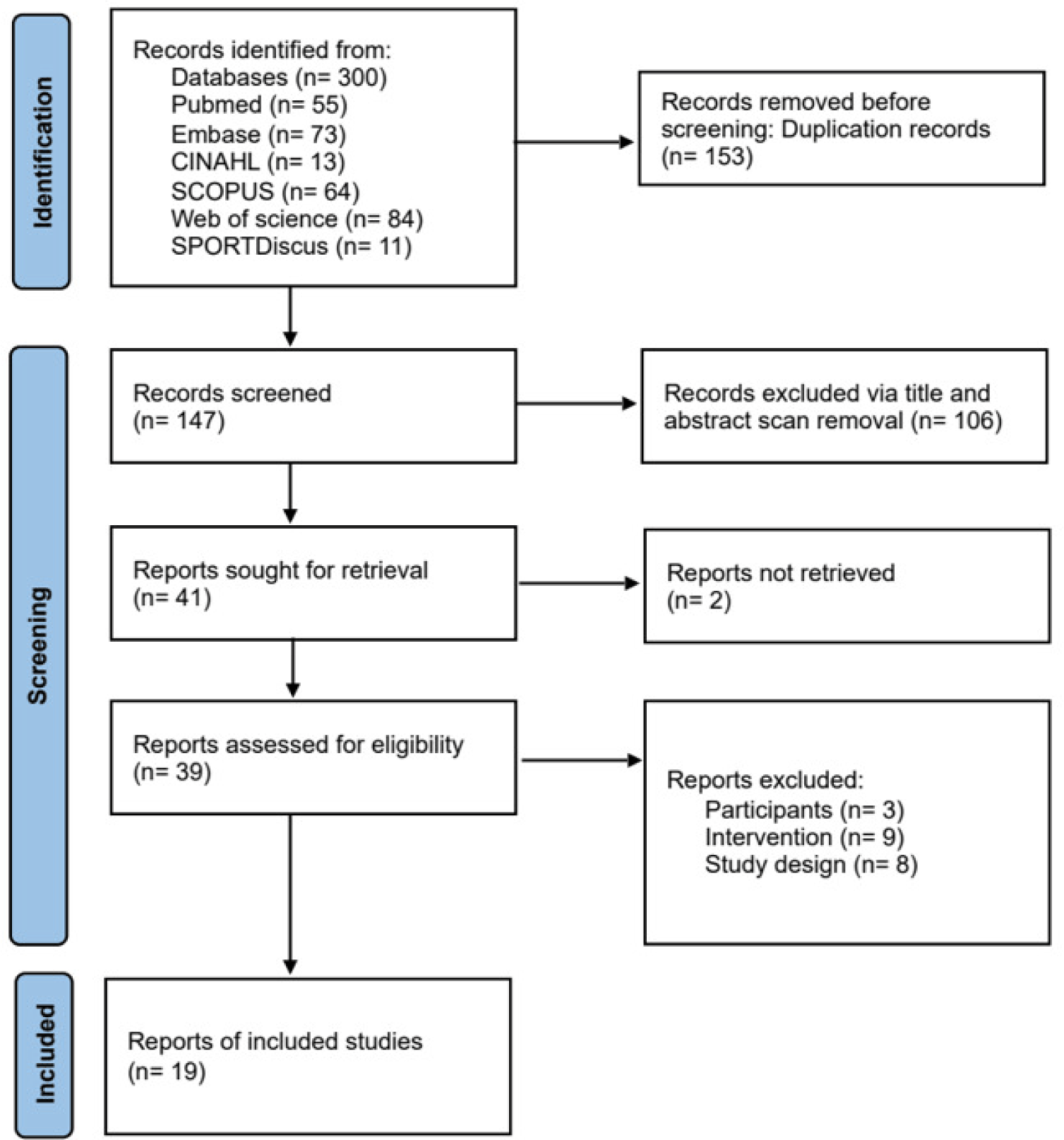
Three reviewers independently screened titles and abstracts using pre-defined inclusion and exclusion criteria and then assessed full texts for eligibility. Disagreements were resolved by discussion and consensus. The selection process and reasons for full-text exclusions are summarized in Figure 1.
From each included trial, data were extracted on sample characteristics, comparator interventions, outcome measures, and rESWT protocol parameters: intensity (pressure in bar or energy flux density), frequency (Hz), impulses per session, number of sessions, and treatment interval.
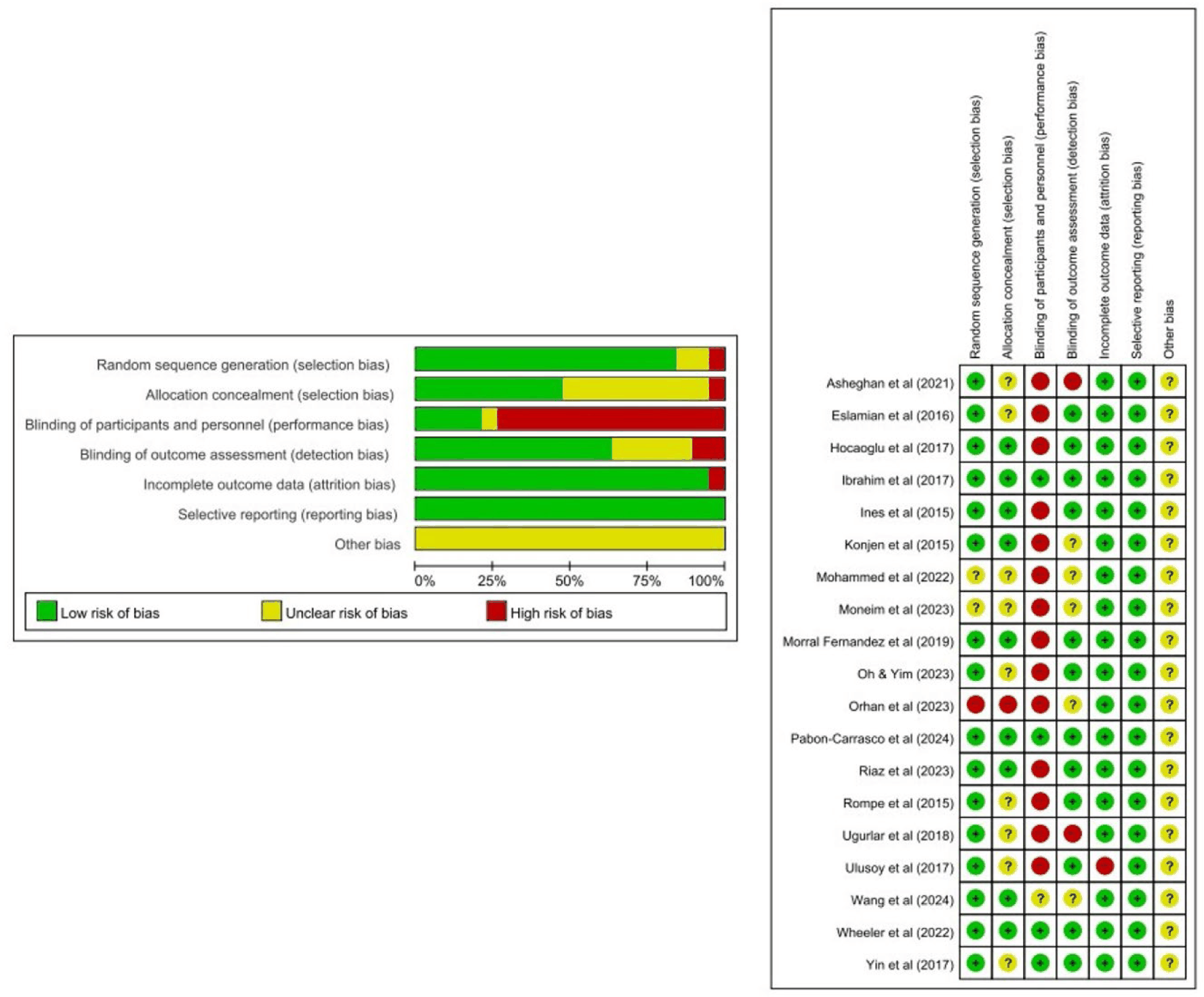
Risk of bias was assessed using the Cochrane Risk of Bias 1.0 tool across domains of random sequence generation, allocation concealment, blinding of participants and personnel, blinding of outcome assessment, incomplete outcome data, selective reporting, and other bias. Domain-level judgments are presented in Figure 2.
RESULTS
A total of 300 records were identified from databases. After removal of 153 duplicates, 147 records were screened. Of these, 106 were excluded based on title and abstract. Forty-one full-text reports were sought for retrieval; two could not be retrieved. Thirty-nine reports were assessed for eligibility, and 20 were excluded (participants, n=3; interventions, n=9; study design, n=8). Ultimately, 19 RCTs were included (Figure 1).
Nineteen RCTs published between 2015 and 2025 were included. Studies evaluated rESWT against a range of comparators, including CSI, prolotherapy, platelet-rich plas-ma, ultrasound, laser therapy, iontophoresis, kinesio taping, placebo/sham, dose comparisons, and adjunctive combi-nations. Key rESWT protocol characteristics are summarized in Table 2.
rESWT, radial extracorporeal shockwave therapy; US, ultrasound; CS, corticosteroid; LLLT, low-level laser therapy; PRP, platelet-rich plasma; KT, kinesio taping; LV, local vibration; HILT, high-intensity laser therapy; Trps, trigger points; TUS, therapeutic ultrasound; CSI, corticosteroid injection; SD, standard deviation; M, male; F, female; wks, weeks; mos, months; PF, plantar fasciitis.
Across the 19 RCTs, random sequence generation was judged as unclear in two trials15,16 due to insufficient reporting, and low in the remaining trials. Allocation concealment was rated low in nine trials, unclear in nine trials, and high in one trial.17 Blinding of participants and personnel was low in four trials,18-21 unclear in one trial,22 and high in the remaining trials. Blinding of outcome assessment was unclear in five trials and high in two trials.23,24 Incomplete outcome data were generally low risk, except for one trial with >10% attrition.25 Selective reporting was judged as low risk in all trials (Figure 2).
A total of 1,738 participants were included. Individual study sample sizes ranged from 30 to 250 participants. Most trials compared two groups, while several used three- or four-arm designs. Mean age typically ranged from approxi-mately 37 to 56 years. Among studies reporting sex, females were more prevalent than males. Symptom duration criteria varied, with the shortest minimum duration being ≥6 weeks; most studies included participants with symptoms lasting ≥3 months or ≥6 months.
rESWT protocols varied substantially (Table 2). Intensity was reported either as pressure (bar) or as energy flux density (EFD, mJ/mm2). Pressure-based protocols ranged approximately from 1.4 bar to 4.0 bar. Frequency ranged from 2 Hz to 10 Hz, with 10 Hz being most common (42.1%), followed by 8 Hz and 6 Hz. Impulses per session were relatively consistent: 2,000 impulses per session were used in 17 trials (89.5%), with a few trials applying higher counts (e.g., 2,400–2,500 impulses). The number of treatment sessions ranged from 2 to 10, with 3 sessions being most frequent (approximately 58%). Treatment intervals were commonly weekly, although some trials used shorter (e.g., every 3 days) or twice-weekly schedules.
Comparators included injection therapies (CSI in 8 trials, prolotherapy in 2, and platelet-rich plasma in 1), physical therapy modalities (ultrasound in 3, low-level laser therapy in 1, high-intensity laser therapy in 1, and iontophoresis in 1), other comparators (kinesio taping, placebo/sham, dose comparisons, and device appearance comparisons), and combined approaches (e.g., rESWT plus stretching, trigger-point therapy, or local vibration).
Pain was most commonly assessed using a visual analogue scale (VAS; 16 trials) or numeric rating scale (NRS; 3 trials). Functional outcomes included the Foot Function Index (FFI; 7 trials), AOFAS (3 trials), FAAM (1 trial), and PFPS (1 trial). Structural outcomes included plantar fascia thickness (8 trials) and heel temperature (2 trials). Patient-reported outcomes included satisfaction (3 trials), PGIC (1 trial), and quality of life (EQ-5D; 1 trial).
When compared with CSI, several trials suggested time-dependent differences. Orhan et al.17 reported that CSI produced superior early pain relief at 6 weeks, whereas rESWT showed greater long-term improvements in pain and AOFAS compared with CSI and kinesio taping. Hocaoglu et al.26 reported faster early relief with CSI but more sustained benefits with rESWT up to 6 months. In contrast, Mohammed et al.15 reported greater pain reduction at 6 months in the CSI group (p<0.05). Uğurlar et al.24 reported CSI superiority at 1 month, but treatment effects were not maintained at 36 months across intervention arms.
| Author (Year) | Pressure | Frequency | Impulses | Session | Main findings |
|---|---|---|---|---|---|
| Konjen et al., (2015) | 2 bar | 10 Hz | 2,000 impulses | 6 sessions | Pain (VAS): both improved; rESWT > US (p<0.001). Function (PFPS mobility): rESWT better (p<0.001). Satisfaction: 80% vs 33% (p=0.025). |
| Rompe et al. (2015) | 4 bar | 8 Hz | 2,000 impulses | 3 sessions | At 2-4 mos: rESWT+stretching > rESWT alone for FFI and satisfaction (p<0.001). At 24 mos: no between-group difference. |
| Eslamian et al. (2016) | 0.2 mJ/mm2 | 2 Hz | 2,000 impulses | 5 sessions | Both groups improved (VAS/FFI, p<0.001). Between-group difference not significant (FFI at 8 w, p=0.072); ESWT showed higher satisfaction/success trend. |
| Hocaoglu et al. (2017) | 0.16 mJ/mm2 | 10 Hz | 2,000 impulses | 3 sessions | Pain: steroid showed faster early relief, but rESWT effects were more sustained to 6 mos; plantar fascia thickness decreased in both groups. |
| Ibrahim et al. (2017) | 3.5 bar | 8 Hz | 2,000 impulses | 2 sessions | rESWT > placebo for pain and Roles & Maudsley score across follow-ups (p<0.001); benefits maintained at 24 mos. |
| Ulusoy et al. (2017) | 2.5 bar | 10 Hz | 2,000 impulses | 3 sessions | All groups improved (VAS/AOFAS/HTI, p<0.001). LLLT and ESWT were similar; both outperformed ultrasound for function and response rates. |
| Yin et al.(2017) | 0.2, 0.4, 0.6 (respectively) mJ/mm2 | 8 Hz | 2,400 impulses | 3 sessions | Success rate: 66.9%. Predictors of response included baseline VAS, edema, and heel spur; model accuracy 89.6%. |
| Uğurlar et al. (2018) | 4 bar | 6 Hz | 2,000 impulses | 3 sessions | Pain: CSI best short-term (1 mos), ESWT best mid-term (3-6 mos). At 36 mos, no differences among treatments (effects not sustained). |
| Morral Fernández et al. (2019) | 2.0 bar | 8 Hz | 2,500 impulses | 3 sessions | Device appearance had no effect. All groups improved over time; no between-group differences in VAS, FFI, or plantar fascia thickness. |
| Asheghan et al. (2021) | 2 bar | 10 Hz | 2,000 impulses | 3 sessions | Pain (VAS): both improved with no between-group difference. Function: ESWT improved FAAM-Sport more than prolotherapy (p=0.038). |
| Mohammed et al. (2022) | 0.2 mJ/mm2 | 2 Hz | 2,000 impulses | 6 sessions | Early follow-up showed no clear between-group difference; at 6 mos, the comparator (steroid injection) showed greater pain reduction (p<0.05). |
| Wheeler et al. (2022) | 2.4 bar | 10 Hz | 2,000 impulses | 3 sessions | Dose comparison: no between-group differences at any time point. Both groups improved; no superiority of the 'recommended' vs 'minimal' protocol. |
| Moneim et al. (2023) | 2.5 bar | 10.0 Hz | 2,000 impulses | 4 sessions | Both groups improved; ESWT produced greater pain reduction at 12 wks (p=0.004). Thickness decreased in both; CSI+TUS reduced thickness more at 4 wks, but not at 12 wks. |
| Orhan et al. (2023) | 3 bar | 6 Hz | 2,000 impulses | 4 sessions | 6 wks: CSI provided the greatest early pain relief. 3-6 mos: ESWT showed superior longer-term improvement (pain and AOFAS) compared with CSI/KT. |
| On & Yim (2023) | 3 bar | 9 Hz | 2,000 impulses | 10 sessions | Both improved. Adding local vibration to ESWT improved pain (NRS) and plantar fascia thickness more than ESWT alone (p<0.05); FFI not different. |
| RIAZ et al.(2023) | 1.4 bar | 10 Hz | 2,000 impulses | 2 sessions | All groups improved over time; between-group differences for pain/function were not statistically significant at follow-up. |
| Pabón-Carrasco et al. (2024) | 0.20 mJ/mm2 | 5 Hz | 2,000 impulses | 3 sessions | Early: rESWT had lower pain at 3 wks (p≤0.0001). By 5 wks, both groups reached pain remission. rESWT showed greater fascia-thickness reduction and higher PGIC/EQ-5D. |
| Wang et al.(2024) | 2.0 bar | 10 Hz | 2,000 impulses | 3 sessions | Both improved (p<0.001). rESWT+Trps showed greater NRS reduction and heel temperature decrease at 12 wks. |
| Ines et al.(2025) | 2.0 bar | 10 Hz | 2,000 impulses | 2 sessions | Both groups improved; no between-group differences in VAS or FFI. ESWT showed greater heel temperature reduction; success rate difference was not significant. |
rESWT, radial extracorporeal shock wave therapy; wks, weeks; mos, months; EFD, energy flux density; VAS, visual analogue scale; NRS, numeric rating scale; FFI, foot function index; AOFAS, American Orthopaedic Foot & Ankle Society score; FAAM, foot and ankle ability measure; CSI, corticosteroid injection; KT, kinesio taping; LLLT, low-level laser therapy; TUS, therapeutic ultrasound; PGIC, patient global impression of change; Trps, trigger points; EQ-5D, EuroQol 5-Dimension; PFPS, plantar fasciitis pain and disability scale.
For adjunctive approaches, Rompe et al.27 reported that rESWT combined with stretching produced superior outcomes over 2–4 months compared with rESWT alone (FFI and satisfaction; p<0.001), although differences were not maintained at 24 months. Wang et al.22 reported greater improvements in NRS and heel temperature reduction with rESWT plus trigger-point therapy at 12 weeks, and On & Yim28 reported greater improvements in NRS and plantar fascia thickness with local vibration added to ESWT (p<0.05), without between-group differences in FFI.
Compared with other physical therapy modalities, Ulusoy et al.25 reported improvements across groups and suggested that low-level laser therapy and rESWT were broadly comparable, with both performing better than ultrasound on some functional outcomes and response rates. Konjen et al.29 reported greater improvements with rESWT than ultrasound, including higher satisfaction (80% vs 33%; p=0.025). Ines et al.30 reported improvements in both groups with no between-group differences in VAS or FFI, although heel temperature reduction was greater with rESWT.
For prolotherapy, Asheghan et al.23 reported improvements in pain in both rESWT and prolotherapy groups without clear between-group differences; rESWT showed greater improvement in FAAM-Sport (p=0.038). Dose-comparison trials suggested that higher-dose protocols were not consistently superior: Wheeler et al.20 reported no between-group differences between a recommended-dose and a minimal-dose protocol at any time point. A device appearance comparison trial reported no between-group differences, suggesting that cosmetic device differences did not influence outcomes.31
DISCUSSION
This systematic review indicates that rESWT is a safe, non-invasive intervention associated with improvements in pain and function in chronic plantar fasciitis. When compared with corticosteroid injection, several trials suggest that CSI may yield faster short-term analgesia, whereas rESWT may provide comparable or more sustained benefits at mid-term follow-up in some settings; however, findings were not fully consistent across trials. Structural changes such as reduced plantar fascia thickness were also reported in multiple trials, supporting a potential biological response alongside symptomatic improvement.4,18,23,32
Our findings can be contextualized within the broader rESWT literature for musculoskeletal disorders. Storheim et al.33 reviewed ESWT and rESWT for various chronic musculoskeletal pain conditions and reported similar heterogeneity in protocol parameters, a limitation that persists in plantar fasciitis studies. Castro et al.34 reported short-term pain relief with ESWT for shoulder tendonitis using treatment parameters similar to those in this study (2,000–2,500 impacts per session). These results are thought to be due to the similar structures of the plantar fascia and shoulder tendons, and differences due to differences in site should be considered.35 A meta-analysis of rESWT for upper extremity tendonitis by Xiong et al.36 reported significant pain improvements at 3- and 6-month follow-up. At 3-month follow-up, rESWT was effective in reducing VAS scores in patients with tendonitis in various upper extremity regions. This finding is similar to the long-term analgesic effect observed in this study, but should be interpreted with caution given the unique biomechanical loads associated with weight-bearing activities in plantar fasciitis.
A central issue for protocol standardization is the number of sessions and the treatment interval. Across included trials, three sessions delivered approximately weekly was the most common configuration, although protocols ranged from two to ten sessions and intervals varied from every 3 days to twice weekly in select studies. The most consistent parameter across trials was impulses per session, with 2,000 impulses per session being used in nearly 90% of trials.19,21,26,37-39
Shock wave therapy induces controlled microtrauma that triggers neovascularization and growth factor release, with new blood vessel formation persisting from one week to 12 weeks or longer.40 Takahashi et al.41 reported that repeated shock wave application delays nerve remodeling and prolongs analgesic effects, providing mechanistic support for the 3-7 day treatment intervals commonly observed. In vitro studies on tendinopathic cells similar to plantar fascia demonstrated that 2,000 impulses produce greater microtrauma and capillary proliferation than 1,000 or 1,500 impulses, consistent with the predominant use of 2,000 impulses across trials.4,5 Optimal energy dosage varies by device, tissue type, and anatomical location. Future research should explore individualized treatment timing based on symptom location and chronicity.35
Frequency commonly fell within an 8–10 Hz range. Intensity reporting, however, was heterogeneous: some trials reported pressure in bar, whereas others reported energy flux density (EFD). This inconsistency is a major barrier to defining a single “standard protocol” and complicates cross-trial comparison. Future trials should report a minimum common set of protocol variables (device type, intensity unit and setting, impulses per session, number of sessions, and interval) to improve reproducibility and allow more definitive.12,14,23
From a rehabilitation perspective, rESWT may be most useful when conceptualized as a bridge intervention that reduces pain and enables active rehabilitation (e.g., stretching and strengthening). Evidence from included RCTs suggests that combining rESWT with stretching, trigger-point–oriented approaches, or local vibration may yield additional benefits in some outcomes, although the evidence base remains heterogeneous and should be interpreted cautiously.11,27,28
Future trials should (1) clearly distinguish focused vs radial ESWT where relevant, (2) standardize intensity reporting and provide sufficient device parameters to permit replication, (3) design and report sham procedures that support credible participant blinding where feasible, and (4) better control and transparently report concomitant interventions that may modify outcomes (e.g., stretching programs, taping, ultrasound, or injections).19,37,42-45
Several limitations warrant consideration. First, substantial heterogeneity in reported treatment parameters, particularly inconsistent documentation of energy flux density and total energy delivered, limits our ability to establish definitive dose-response relationships. Second, despite the confirmation of high convergent validity through the combined use of VAS and NRS scales in pain outcome analysis, there is a possibility of inducing measurement heterogeneity. Third, the time-dependent effects across different comparators (e.g., CSI vs rESWT) were found to be inconsistent, and the long-term follow-up results exhibited variability across trials. Fourth, the lack of standardized follow-up durations across studies prevents comprehensive evaluation of long-term treatment efficacy. Finally, the incomplete reporting of key protocol parameters and blinding procedures in several trials introduces uncertainty in risk-of-bias judgments and makes it difficult to isolate the specific therapeutic contribution of rESWT to observed clinical outcomes.12,23,32
CONCLUSIONS
rESWT is an effective non-invasive intervention for improving pain and function in chronic plantar fasciitis. The most frequently used protocol configuration across RCTs was approximately three sessions at weekly intervals, 2,000 impulses per session, and frequencies around 8–10 Hz; however, intensity reporting was inconsistent (bar vs EFD) and adjunctive interventions varied. Standardized reporting and more rigorously designed RCTs are needed to establish a reproducible, evidence-based protocol framework suitable for integration into exercise-based rehabilitation.


